
Happy Tuesday, my dear friend!
I’ll never get tired of telling you how much I appreciate your support for my newsletter and my blog — you truly are beyond awesome.
Today, it’s time for a new episode of My Travel Diary Chronicles, and this story takes us back to a place Tamara had already visited once before.
She went to the Lofoten in winter (you can find that article here), and she told me she was so amazed that she decided to return there in summer.
And, of course, she wanted to share this new experience with us again.
Take a seat and enjoy!
I had left the Lofoten Islands in the silence of the polar night, when the light shrinks to just a few hours of oblique reflections. Now, in August, I return, when the day seems unwilling to fade away.
As the ferry approaches Moskenes, the sharp peaks greet me like old acquaintances.
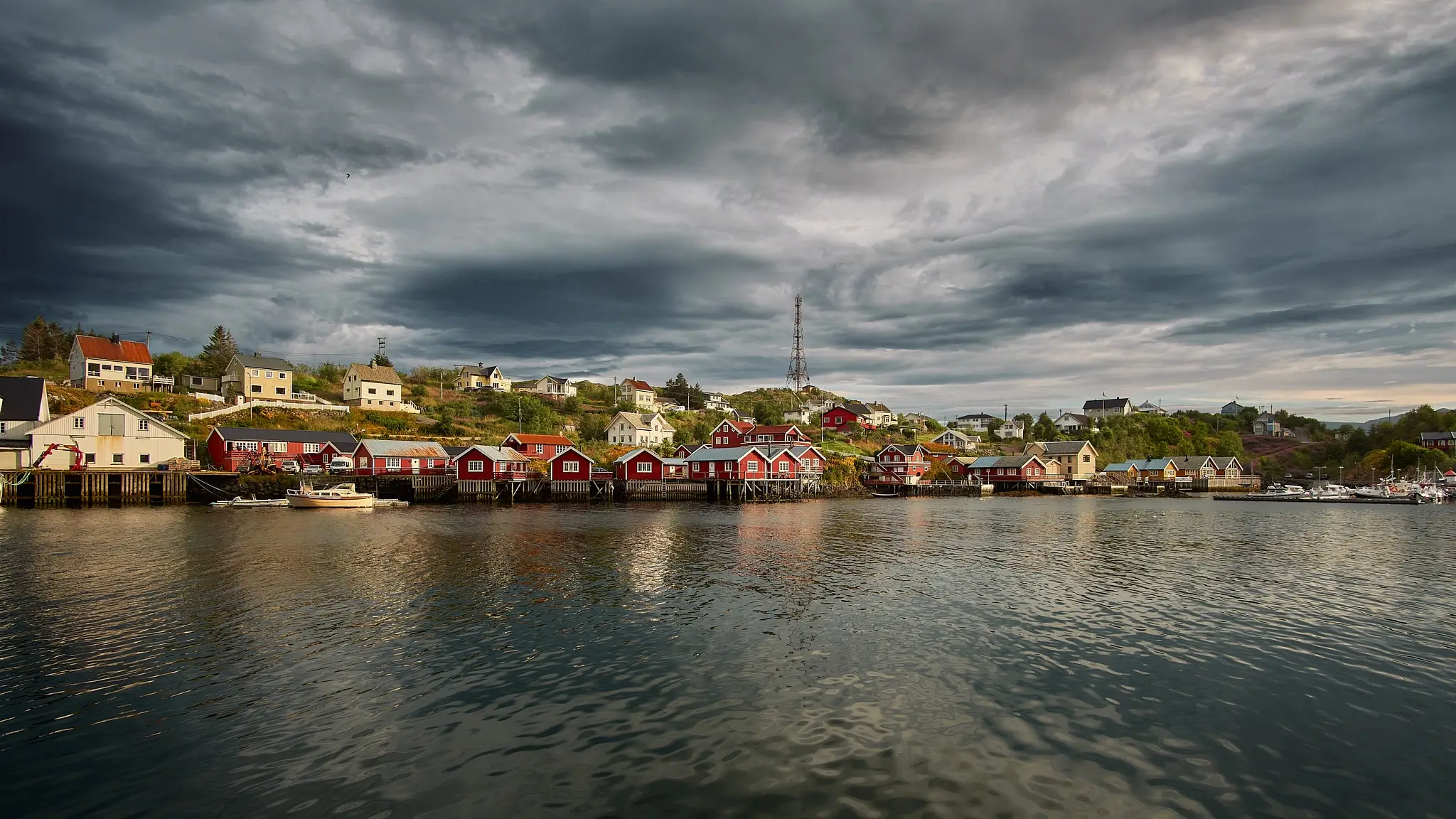
Dark granite and glacier-carved spires rise from the waves like theatrical wings.
Beneath them, the life of fishermen has unfolded since the Middle Ages, in pursuit of the Arctic cod.
People who breathe salt and wind, with skin burnt by the cold and lips cracked by the sea. Calloused hands grasping nets, arms outstretched against the waves. Blood of souls mingling with that of the skrei1.
Exposed to the elements like ancient bark, these lands evoke an age-old drama, already described by Schønnebøl in 1591:
“… no one on earth suffers so much for their meagre sustenance as these poor, miserable people here in Nordland.”
“God help those who are forced to drag their life and old age through this wretched end of the country, for the lamentation and compassion one hears and sees daily among these poor people would bring tears even to a heart of stone.”
Nevertheless, I, who come from mild lands and generous hills, perceive no deprivation, but a form of unexpected fullness.
Facing these peaks that cleave the horizon, I breathe a profound sense of well-being: it is the vertigo of beauty, the contrast between harshness and wonder.
In the evening, the small harbour of Sørvågen glows with light the colour of amber.
It lingers, suspended, unreal. I dine while gazing beyond the white window frames, as a fisherman cleans his boat and seabirds circle above, claiming the day’s leftovers.
The next morning, I take the E10 on foot.
As it unfolds, the road winds through the archipelago skirting villages of rorbuer— the ancient fishermen’s huts built by King Øystein in 1120 for those who, venturing into these desolate lands, found shelter only beneath their overturned boats.
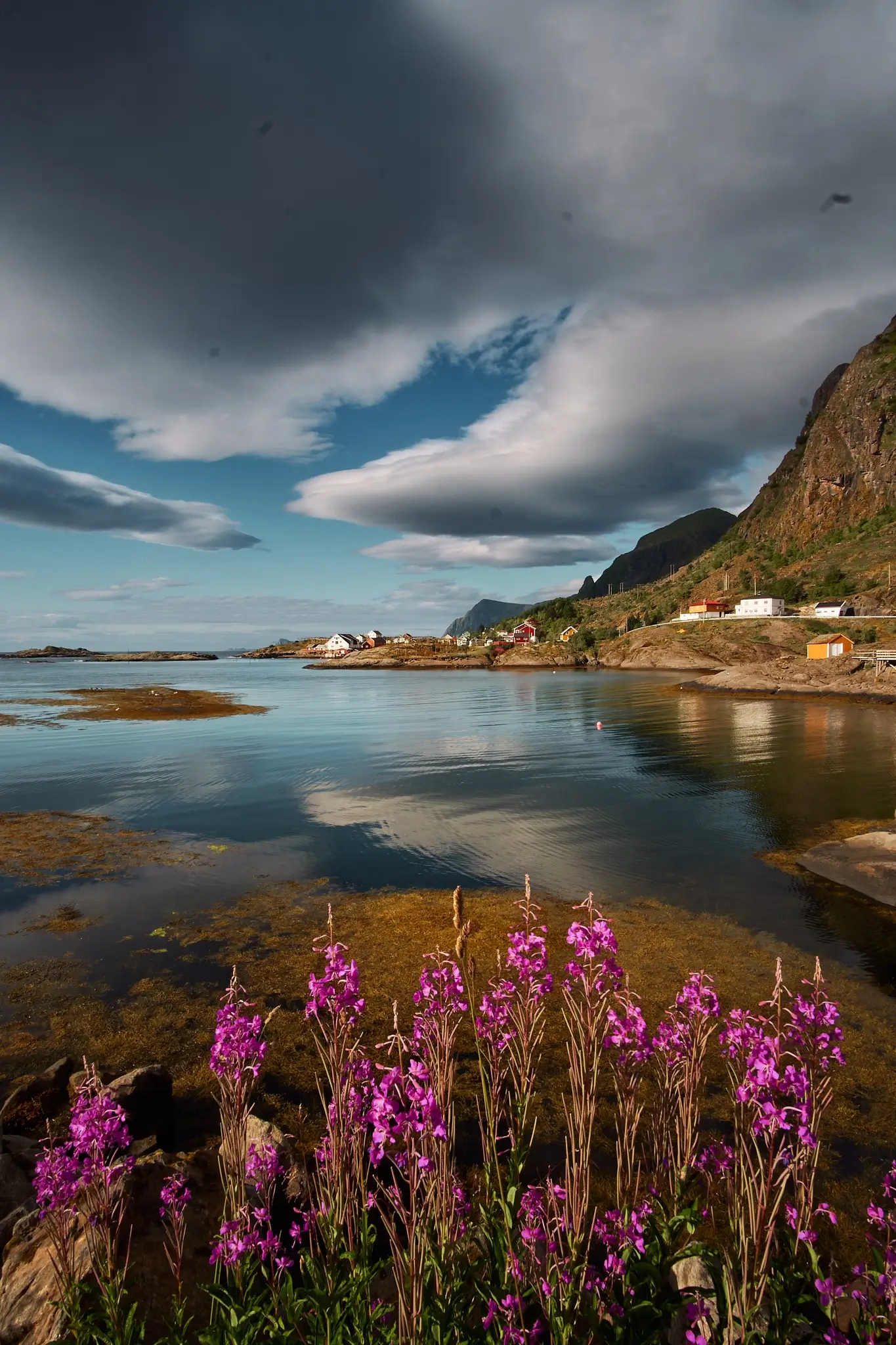
Under my feet, the wooden walkways creak as I cross Tind, glimpsing the water between the planks.
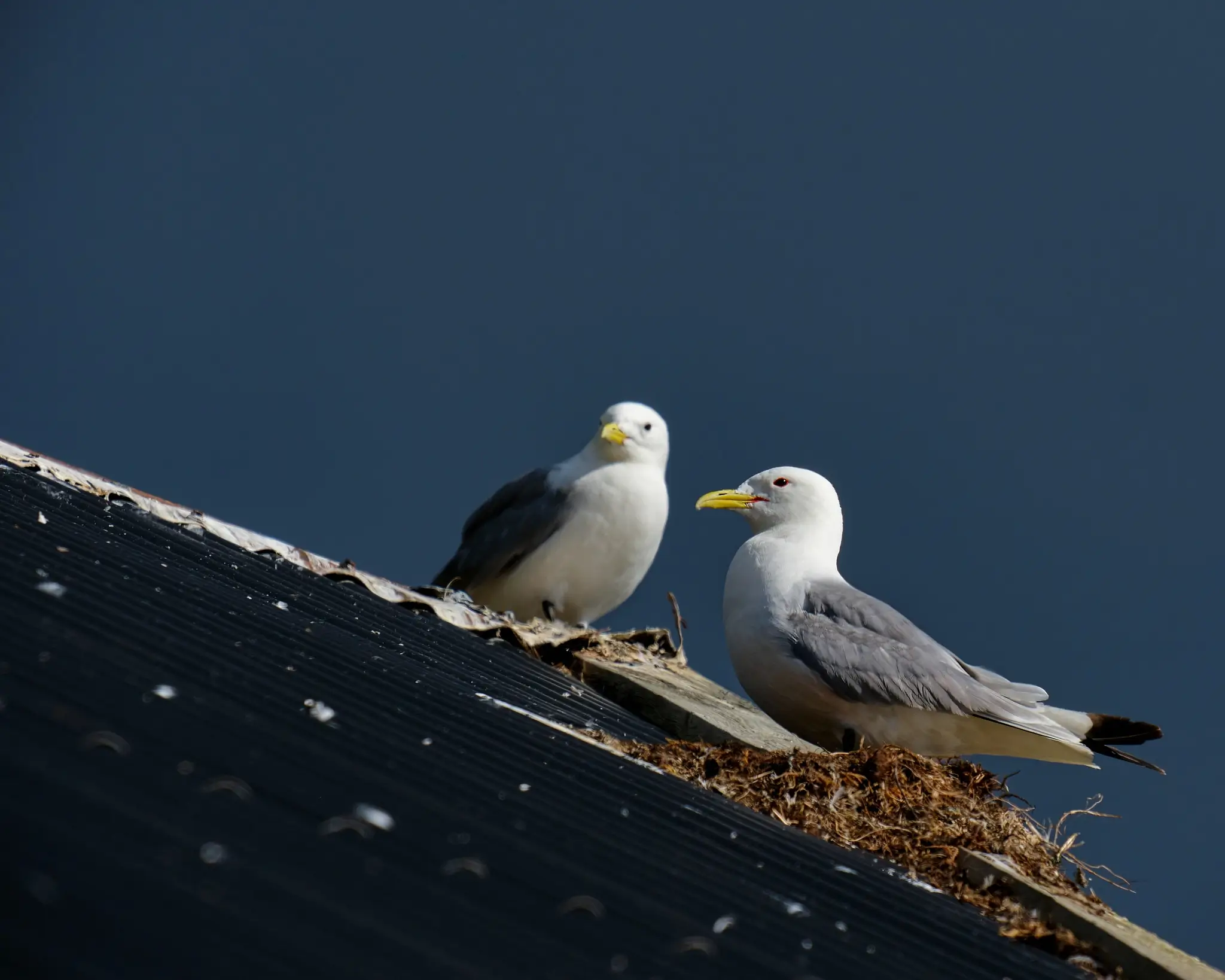
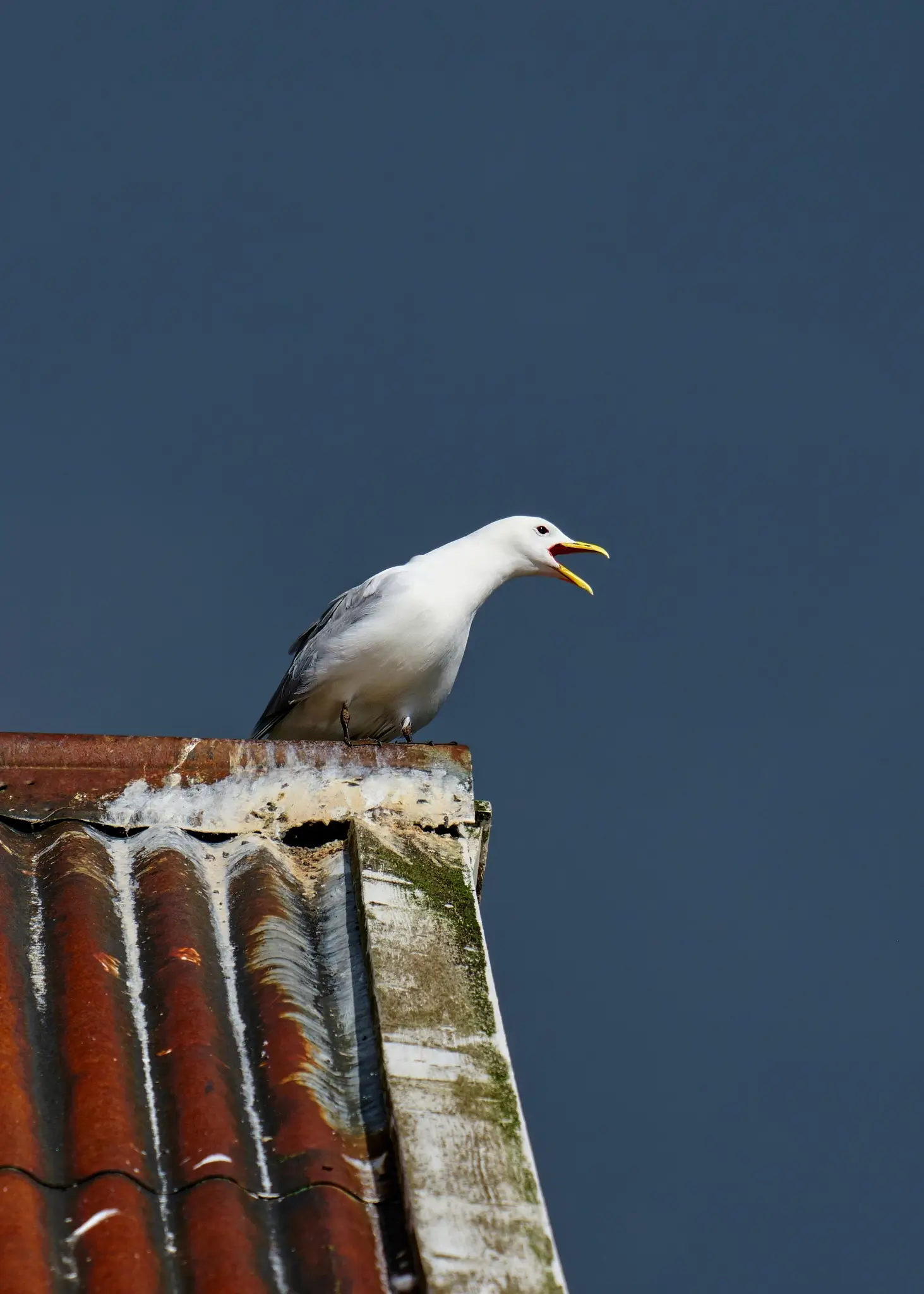
Above me, the shrill cries of gulls nesting on the roofs of old yellow sheds blend with the sound of the waves, accompanying me towards Å, the village with the shortest name in the world.
From the hill, my gaze embraces a few houses, the wooden racks for drying cod, and jagged ridges stretching into endless cliffs.
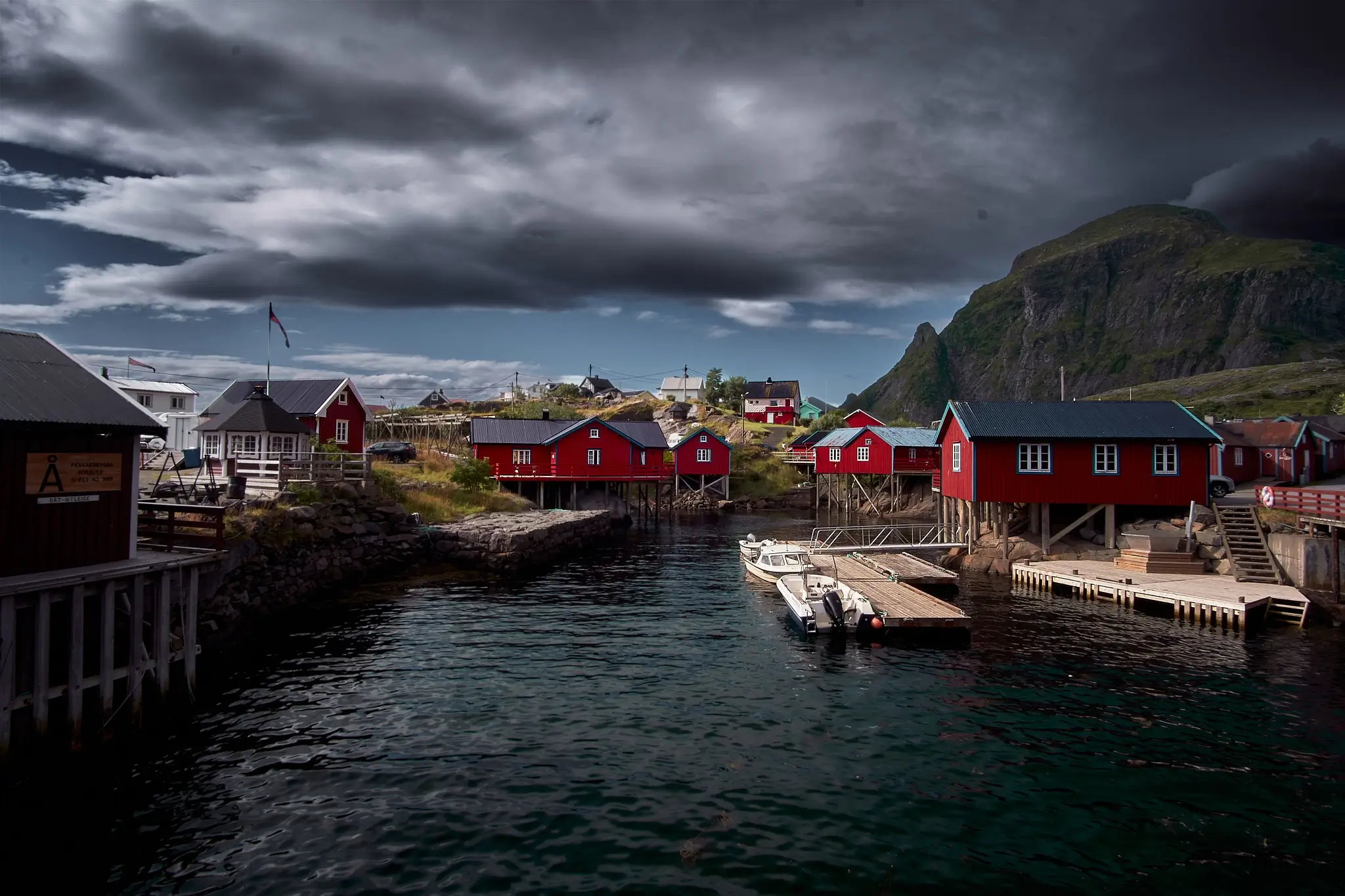
I linger, imagining the suspended life of those who live here — between fishing nets and tourist bookings, between the toil of the sea and the new trade of hospitality.
Over time, those austere dwellings have become symbols of identity: windows overlooking emerald waters, doors opening onto the echo of seabird flocks and the acrid smell of fish left to the wind.
Later in the day, I reach Reine — the pearl of the Lofoten.
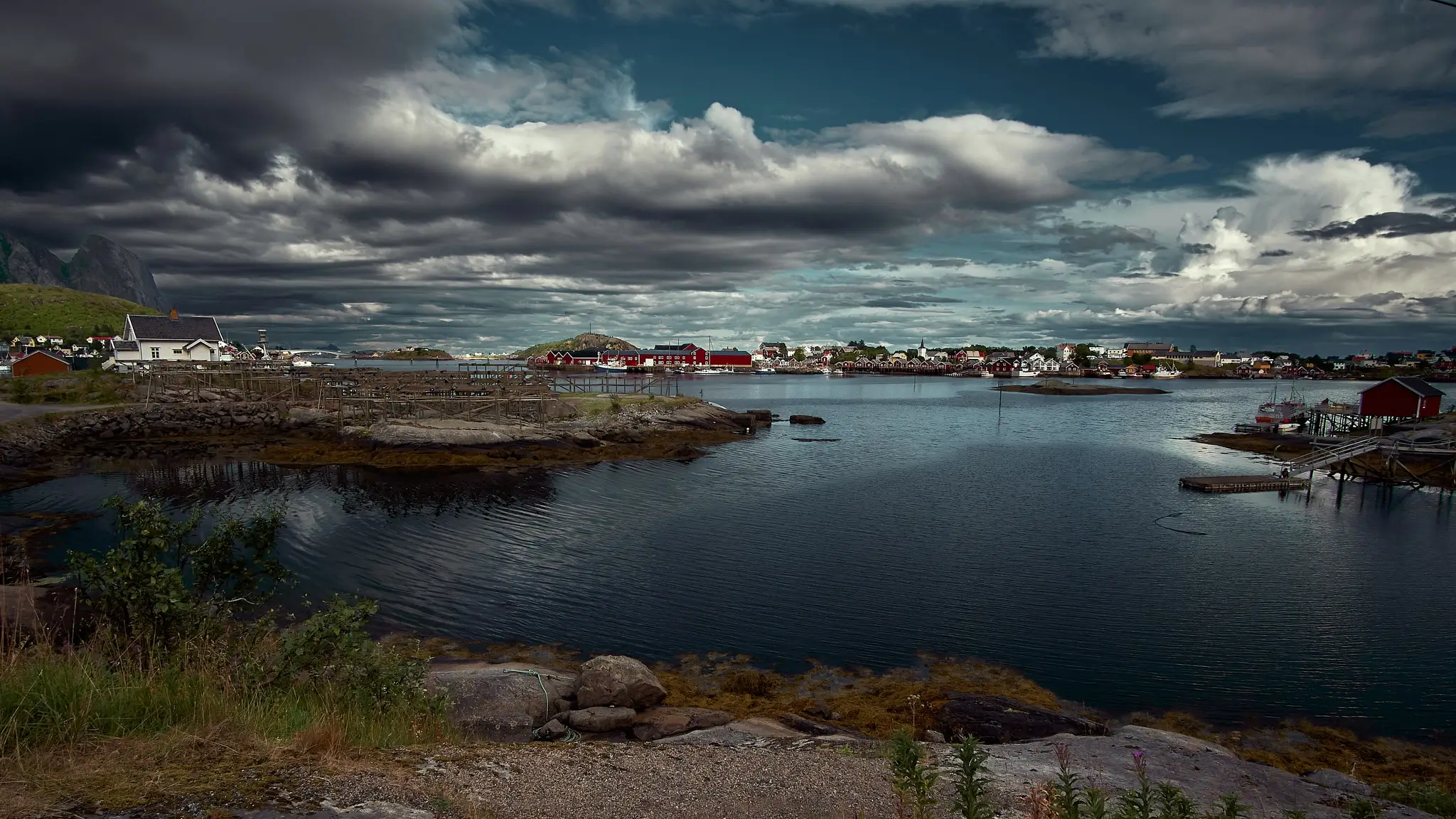
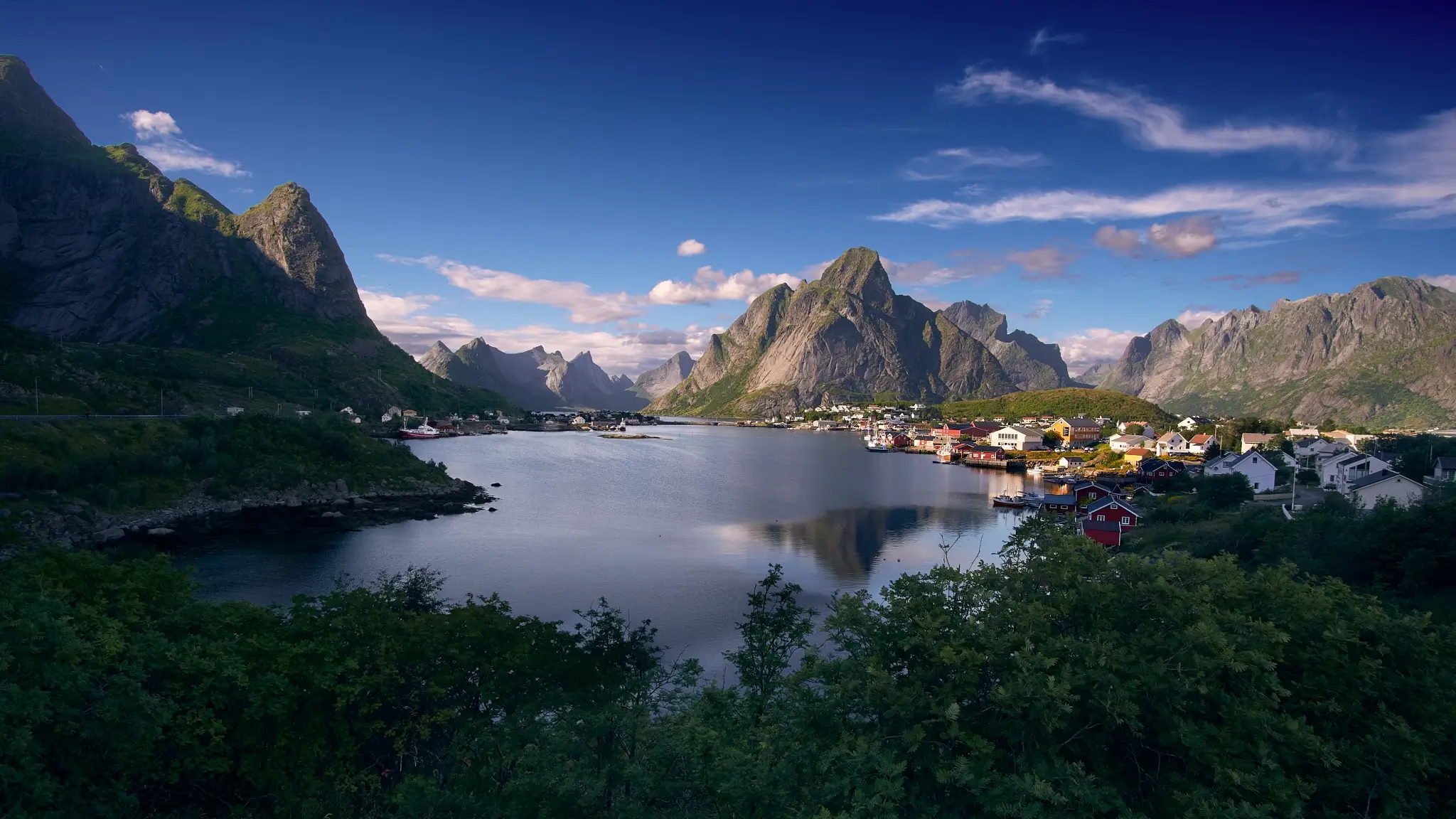
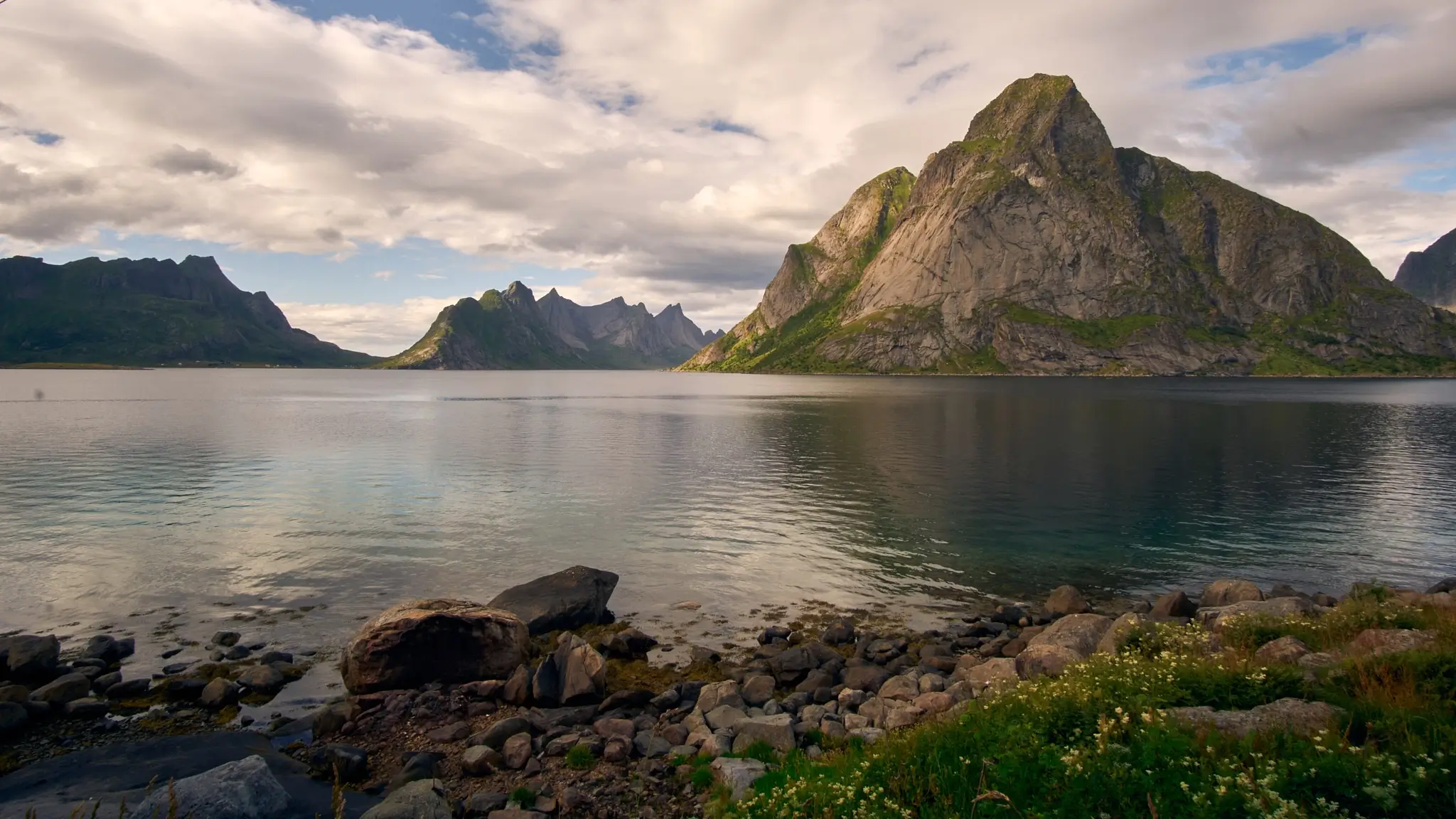
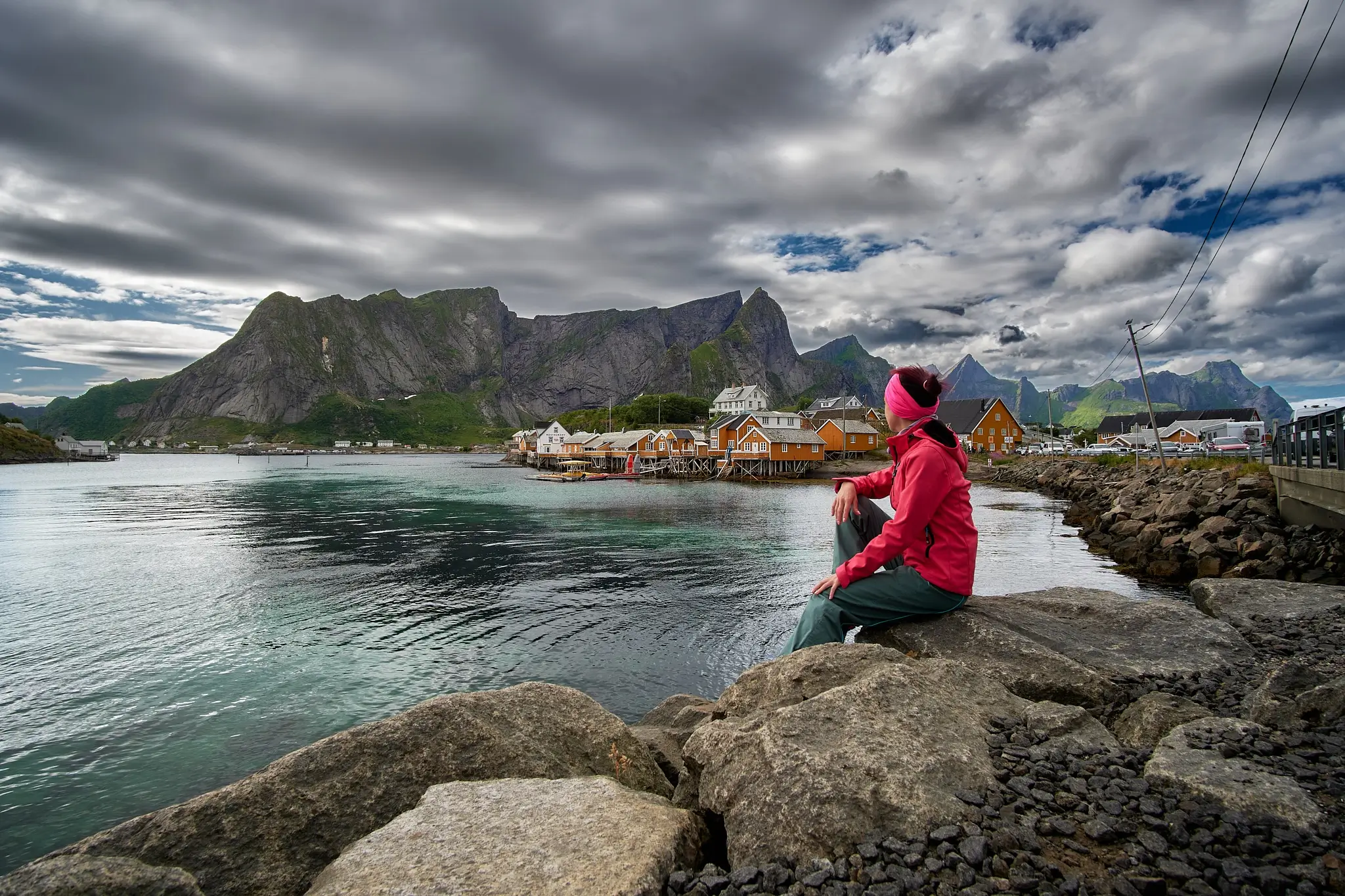
I had seen it in January, wrapped in white snow; now I find it immersed in a different palette: deep greens climbing grey cliffs, turquoise reflections dancing on the placid bay that opens beneath the austerity of Reinebringen2.
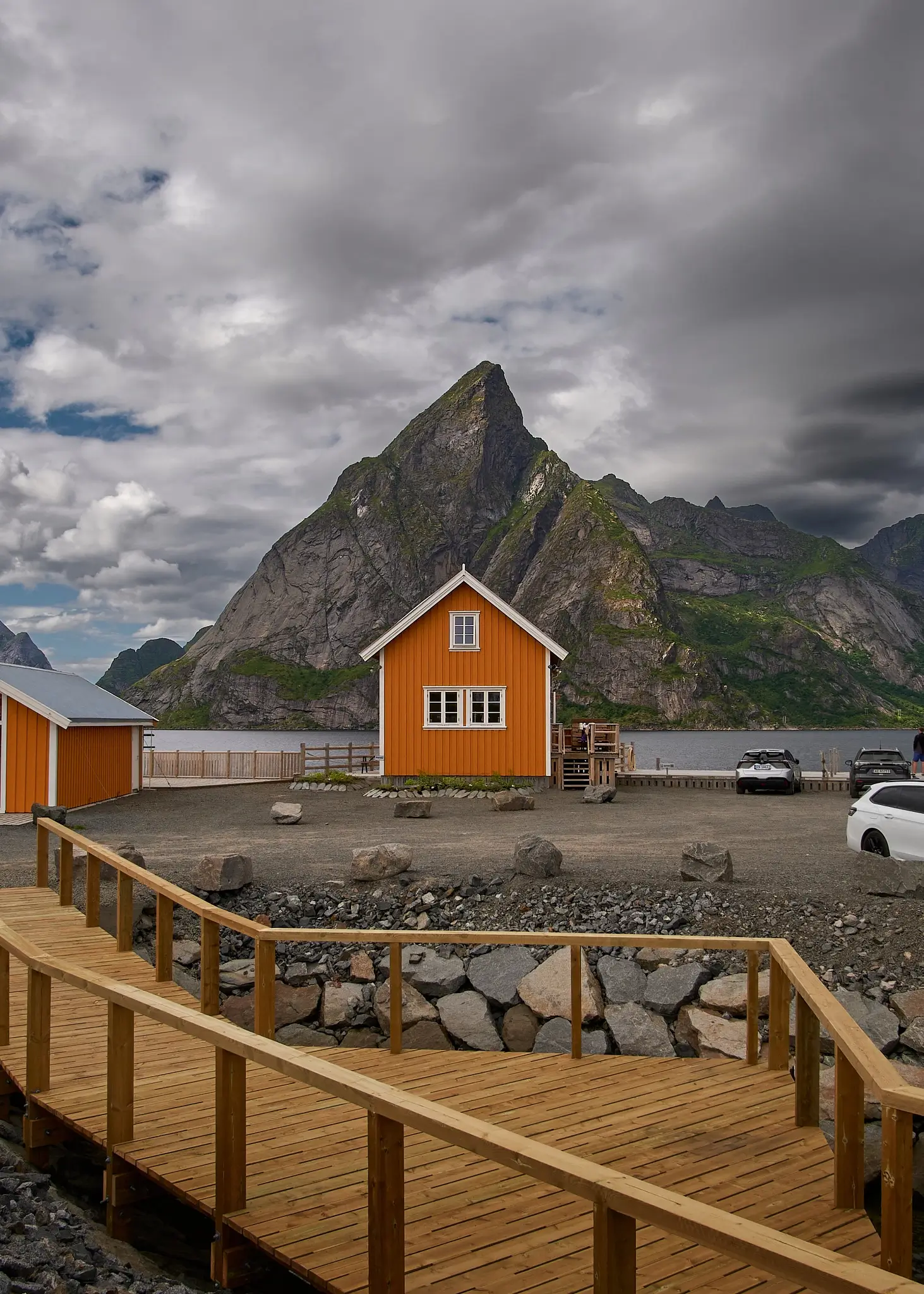
Further on, the ochre rorbuer of Sakrisøy glow with warm light, contrasting with the cool tones of the sea.
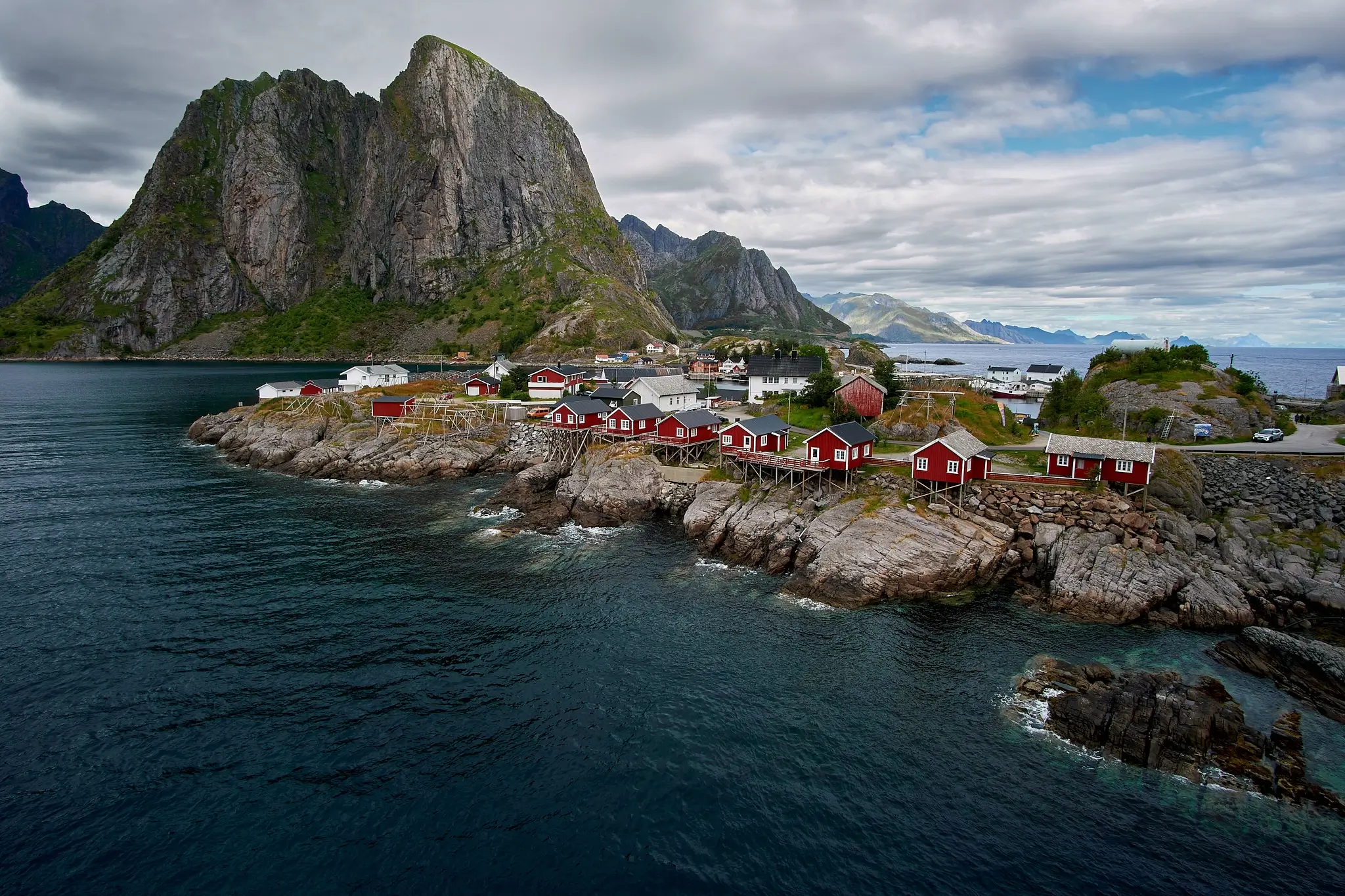
The currents grow ever more turbulent approaching Hamnøy, where a whirlpool entangles the mirrored image of red houses, evoking the legendary Maelstrom — the powerful vortex of northern Lofoten that haunted sailors’ tales and nightmares.
Immortalized by Jules Verne in Twenty Thousand Leagues Under the Sea, it became the symbol of the blind and untamed power of these waters.
The following day, the bus drops me off along the E10.
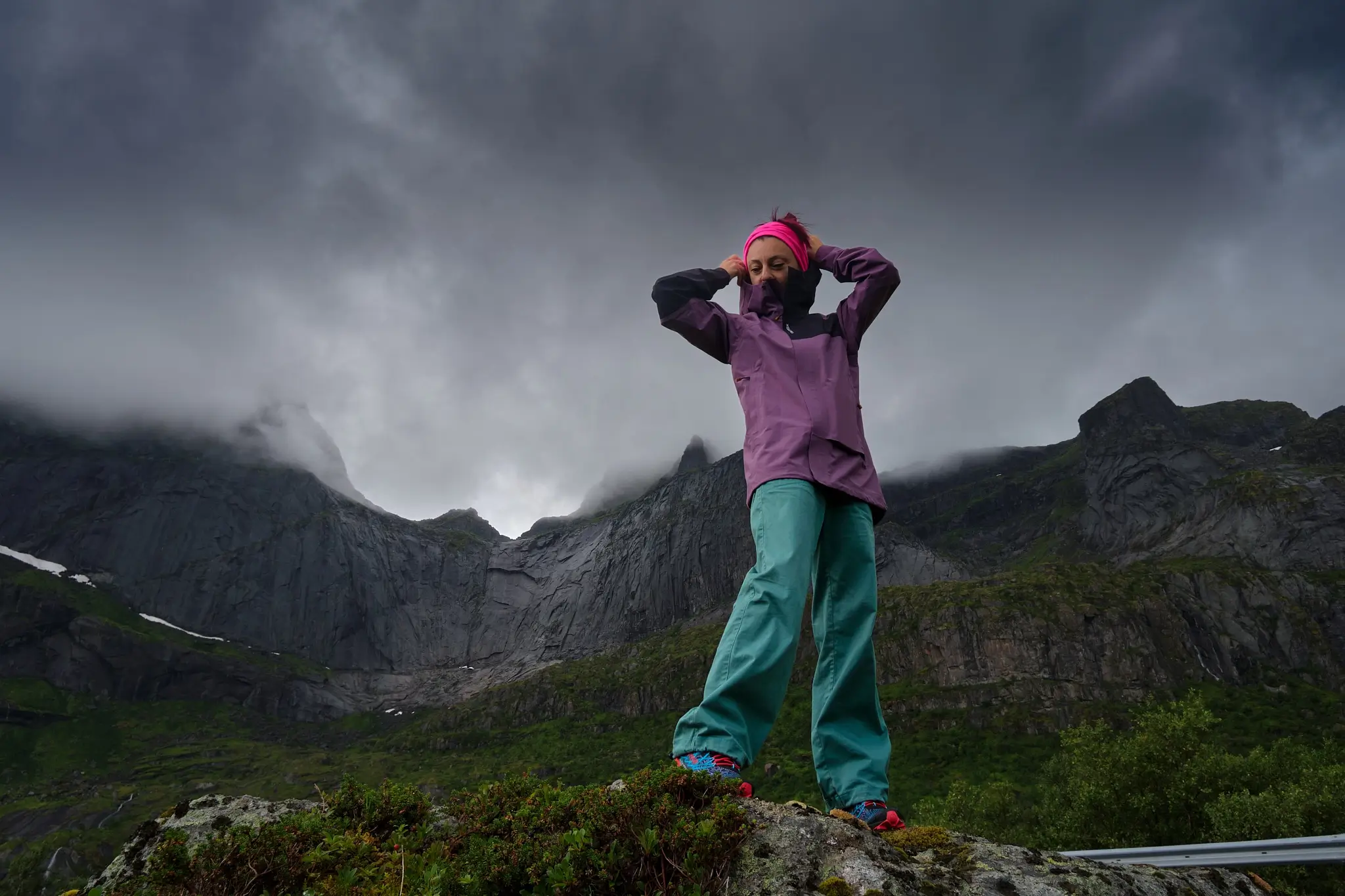
From there, only footsteps remain: six kilometres of silence and rain. With my head down, under the hood that vibrates with the drumming of the drops, I breathe the damp, metallic air.
Then I look up: the dark road slashes through the bright green moss wrapping the valley. Before me, where the asphalt curves as if to conceal its fate, rises a wall of rock black as coal — imposing, severe, almost frightening. It seems to have come straight out of a fantasy tale, a fragment of legend made real, a threshold to shadowed realms.
And yet, within that menace lies a sombre allure that captivates without escape.
It is an unsettling beauty, one that holds the gaze despite the shiver it provokes — a diabolic temptation. Spellbound, I realise there is no need for sunlight, nor for the rain to stop.
That wall of shadow is so damnably beautiful it makes me forget the soaked clothes clinging to my skin.
I arrive in Nusfjord, the oldest village in the Lofoten: a silent bay with red and yellow rorbuer perfectly restored, which, until fifty years ago, remained isolated from the rest of the land.
Today, this place is a true open-air museum. The air is thick with history: the old sawmill with its blackened beams, the smokehouse still scented with wood and fish, the bakery where cinnamon buns baked according to an ancient recipe — all make tangible the everyday life of a bygone time.
Here the skrei has written the destiny of a people: food, wealth, survival.
On the wooden racks, the wind carries the pungent smell of dried fish — an olfactory memory of centuries of labour and resilience.
Though transformed by time and tourism, the village has preserved its soul intact.
A fragile balance between authenticity and change, between memory and renewal.
To walk across these islands means far more than observing a landscape: it is to cross a weave of light and memory, of nature and culture.
Here, indeed, beauty is not mere scenery — it is an ancient root, imprinted in the history of the North.
Take care and talk soon!
- Skrei is the Norwegian name for the Arctic cod (Gadus morhua) during its annual migration from Barents Sea to the Lofoten Island, where it spawns between January and April. ↩︎
- Reinebringen is a mountain in the Lofoten Islands that offers one of the most iconic views of the archipelago; a long stone staircase built by Nepalese sherpas leads to the summit, known for its steep ascent. ↩︎