
Happy Tuesday my dear friends! Thank you so much again to be here and to support my newsletter and blog. You are amazing!
Let’s get back to our usual appointment with Tamara‘s stories for My Travel Diary Chronicles. And what better than a wonderful travel to the Swedish Lapland in search of auroras and reindeers.
Once more, Tamara is able to take us to a breathtaking place, filling her story with emotions and wonder.
Make yourself comfortable and enjoy!
There are cities that prepare you for the North, and then there are the remotest Northlands, where the landscape stops flattering and begins to reveal itself. After two days among historic museums that unveil the roots of Stockholm, cafés scented with cardamom, and bridges suspended over the Mälaren1, I still feel as if I am standing on the edge of a world that begins where human measure ends.
I realize this the evening I board the overnight train to Abisko. The lights of the capital slowly fade behind the windows of the sleeper car, while the scenery sinks into the darkness of the forests.
When I wake, the train has stopped at Abisko Turiststation.
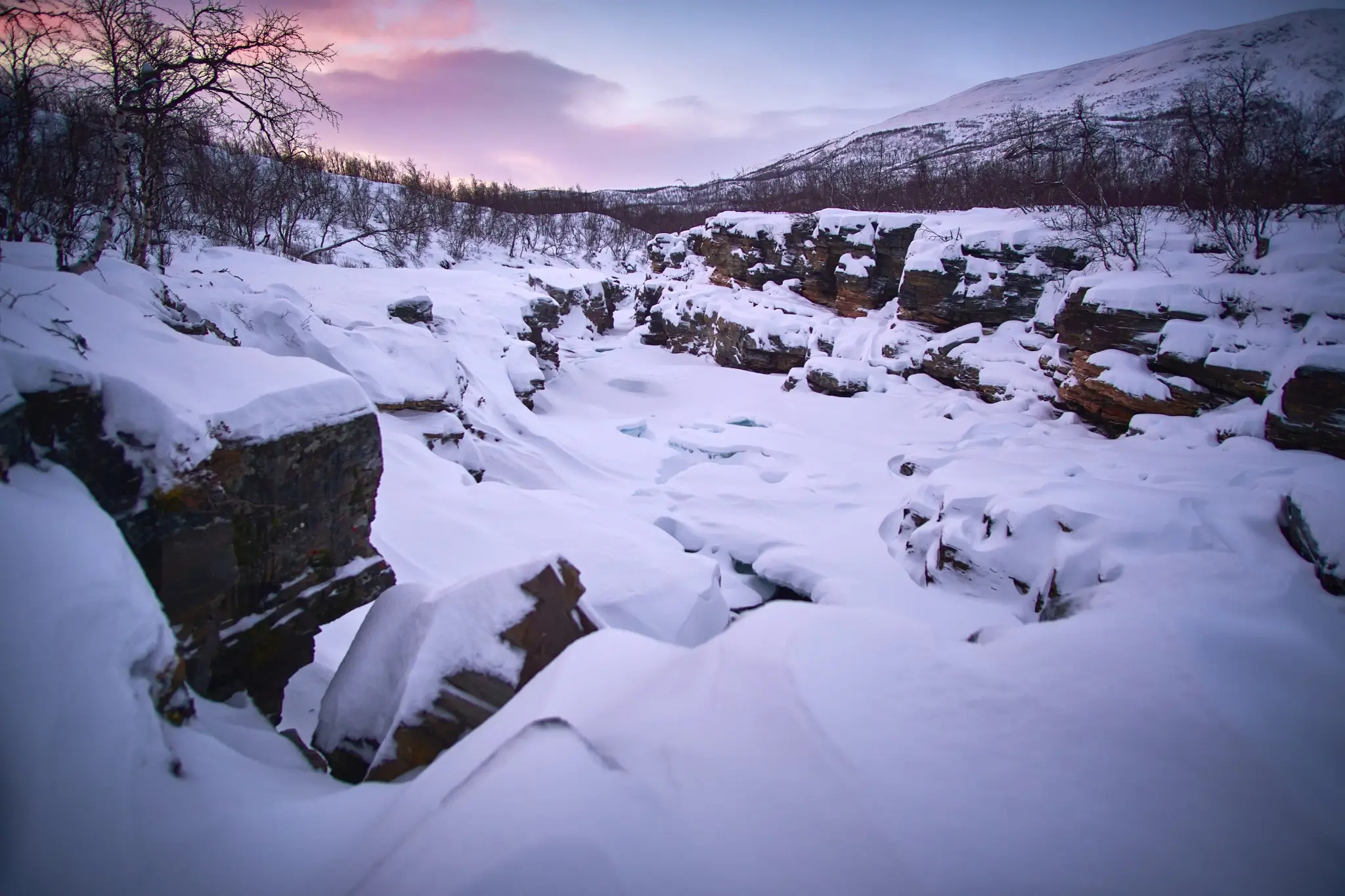
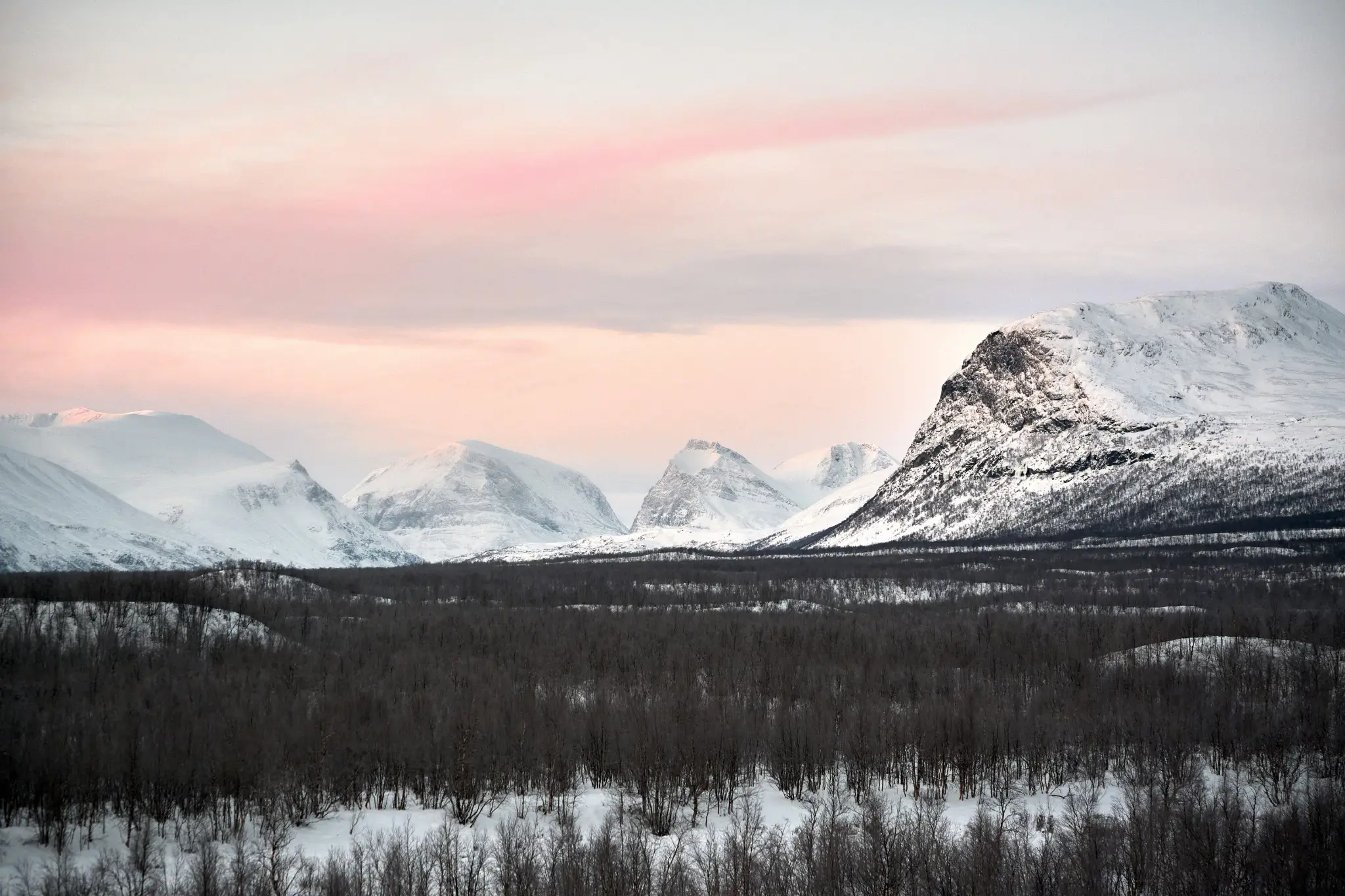
I step out of the carriage: the pale blanket crunches under my boots like shattered glass. Before me stretches an immobile expanse, broken only by the dark outline of the Abisko Alps, ink-colored silhouettes against a milky sky. The Arctic birches, bent under the ice, seem to rest upon the ground rather than take root, shy figures in a world that lives by subtraction.
Abisko is famous for a unique phenomenon: a “blue hole” that opens above Lake Torneträsk.
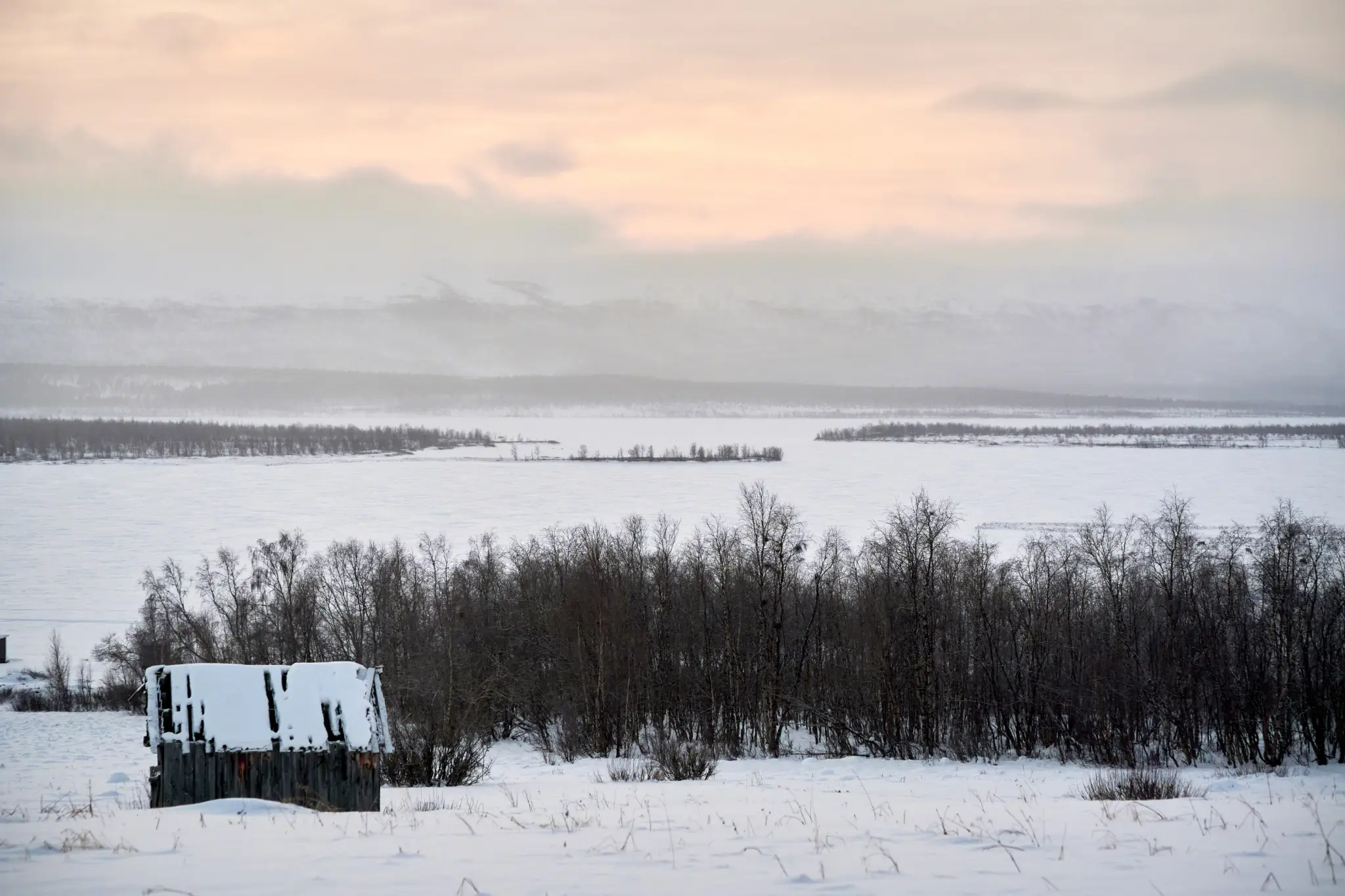
It creates a corridor of clear sky that persists even when everything else is covered by clouds. It is a natural window onto the polar winter, a gateway that promises, to those who know how to wait, the appearance of the northern lights.
In the following mornings, during treks in the National Park, the air is so clear it seems mineral: you breathe it as if brushing a sharp blade. The trail threads along the Abiskojåkka canyon, where frozen waterfalls trap veins of blue beneath opalescent layers. The sound of water pulses like a slow heart.
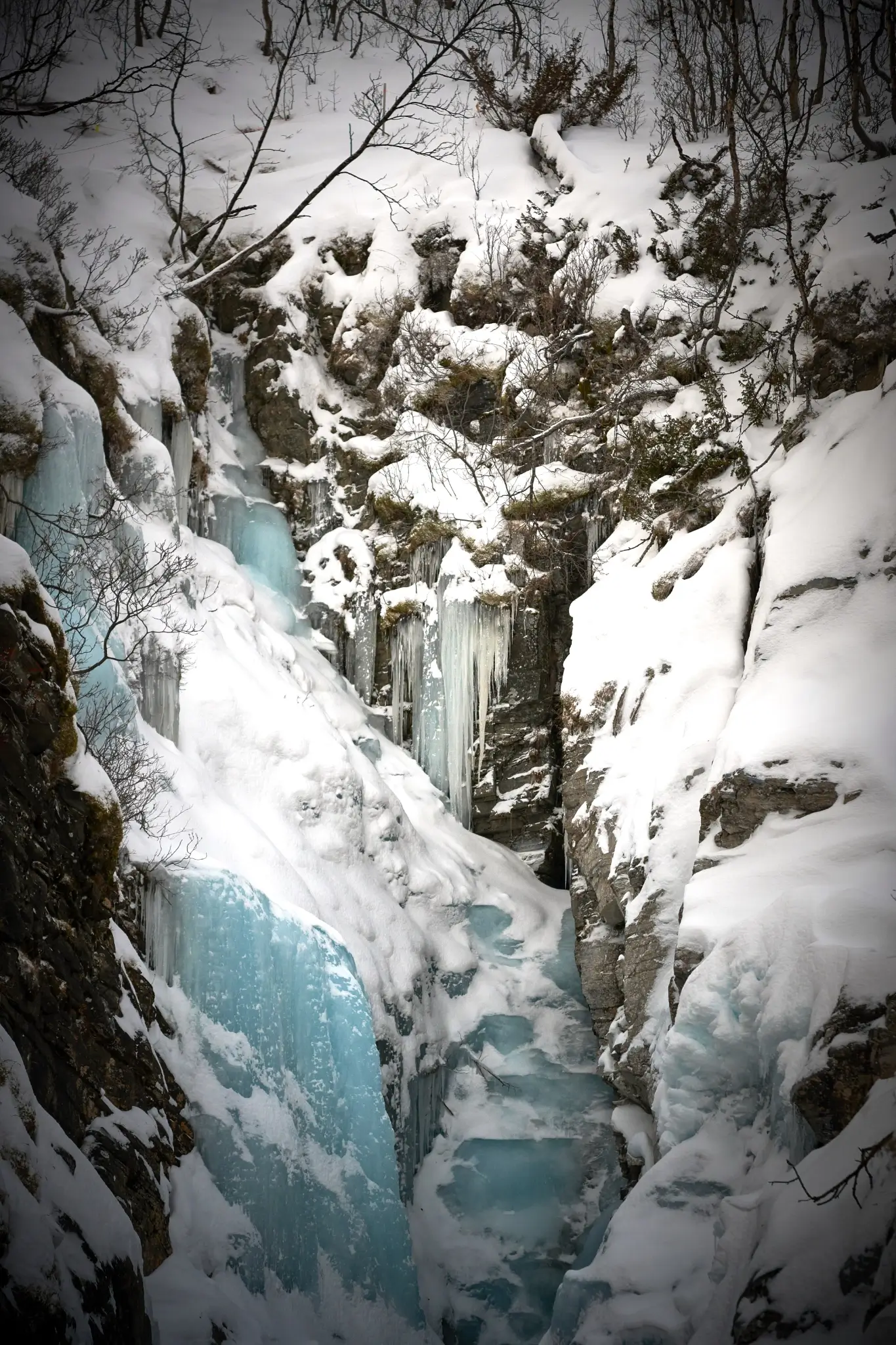
Some days up there, life appears in black and white. Everything seems lifeless, until the northern wind breaks the silence and lifts frozen dust from the ground. In the grip of cold and in the presence of the essential, one feels the vibrant force of nature.
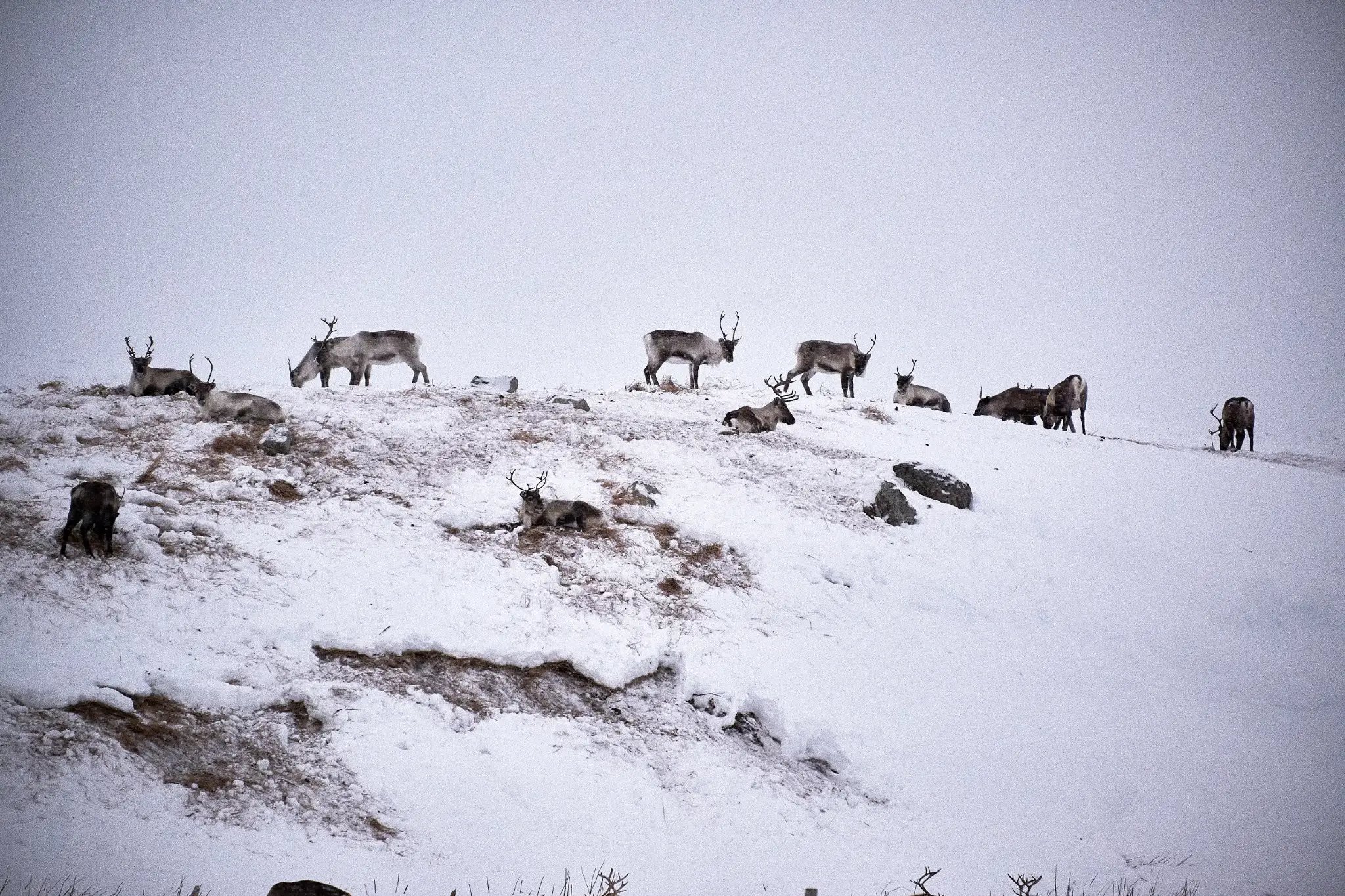
From time to time, a herd of Sami reindeer crosses the valleys. They appear as moving shadows, cut out against the pale light, and vanish with the same discretion with which they arrive: epiphanies granted for just a single moment.
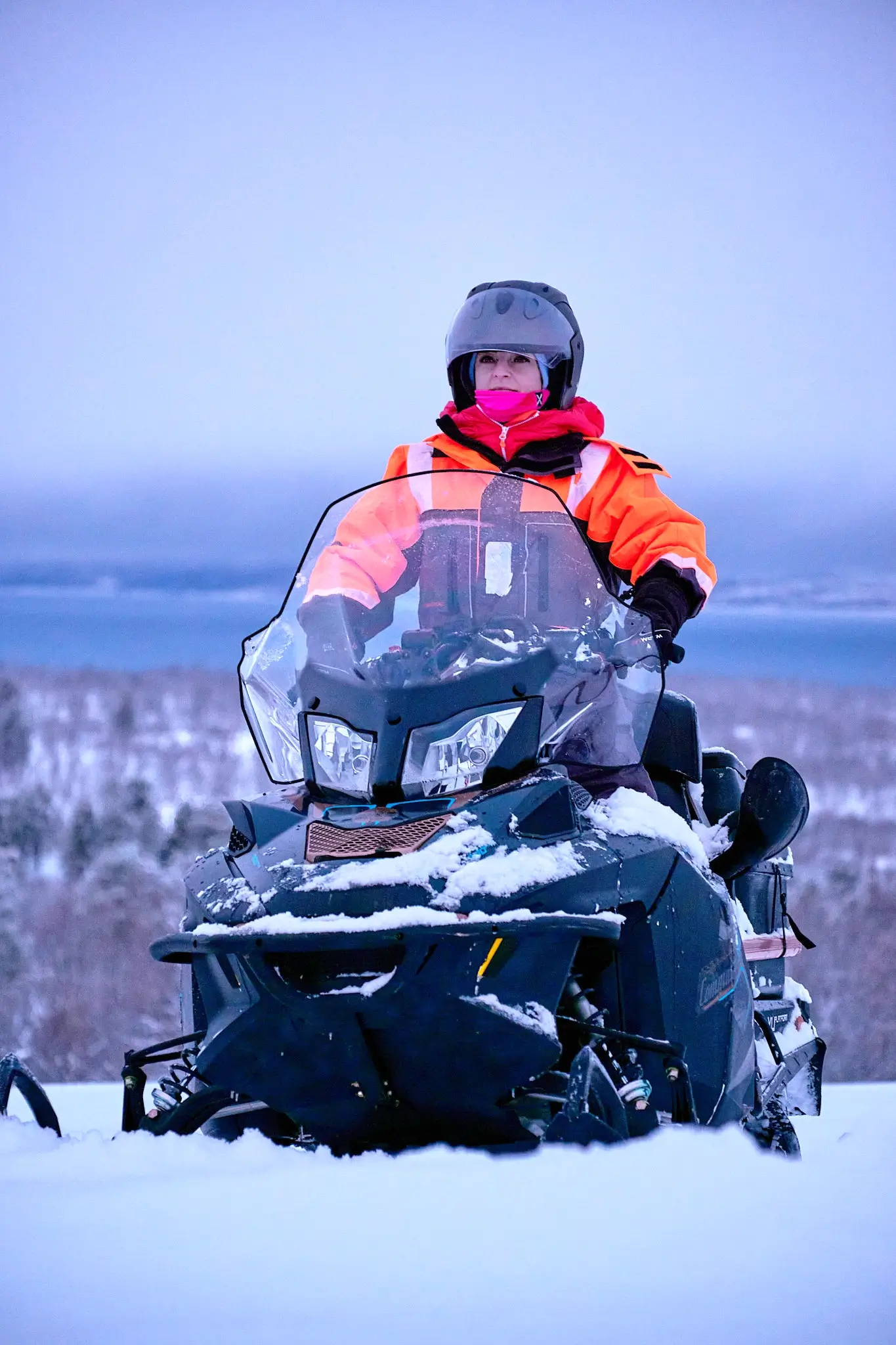
Driven by the desire to go further, I rent a snowmobile and head toward higher latitudes.
The expanses seem limitless, and the few hours of daylight are consumed in shades of pink and orange before yielding to darkness.
With my feet in the snow and my eyes on the sky, my camera is aimed north.
On nights of black moon we hunt for the northern lights, a game of chess with physics, driven by a primordial impulse. Like hungry hunters in search of prey, willing to endure the cold and lose hours of sleep to witness the spectacle.
A white shadow, hard to tell if it is a cloud or the first hint of aurora, comes alive and shimmers in pastel green. Draperies of emerald light sway across the cold Arctic skies.
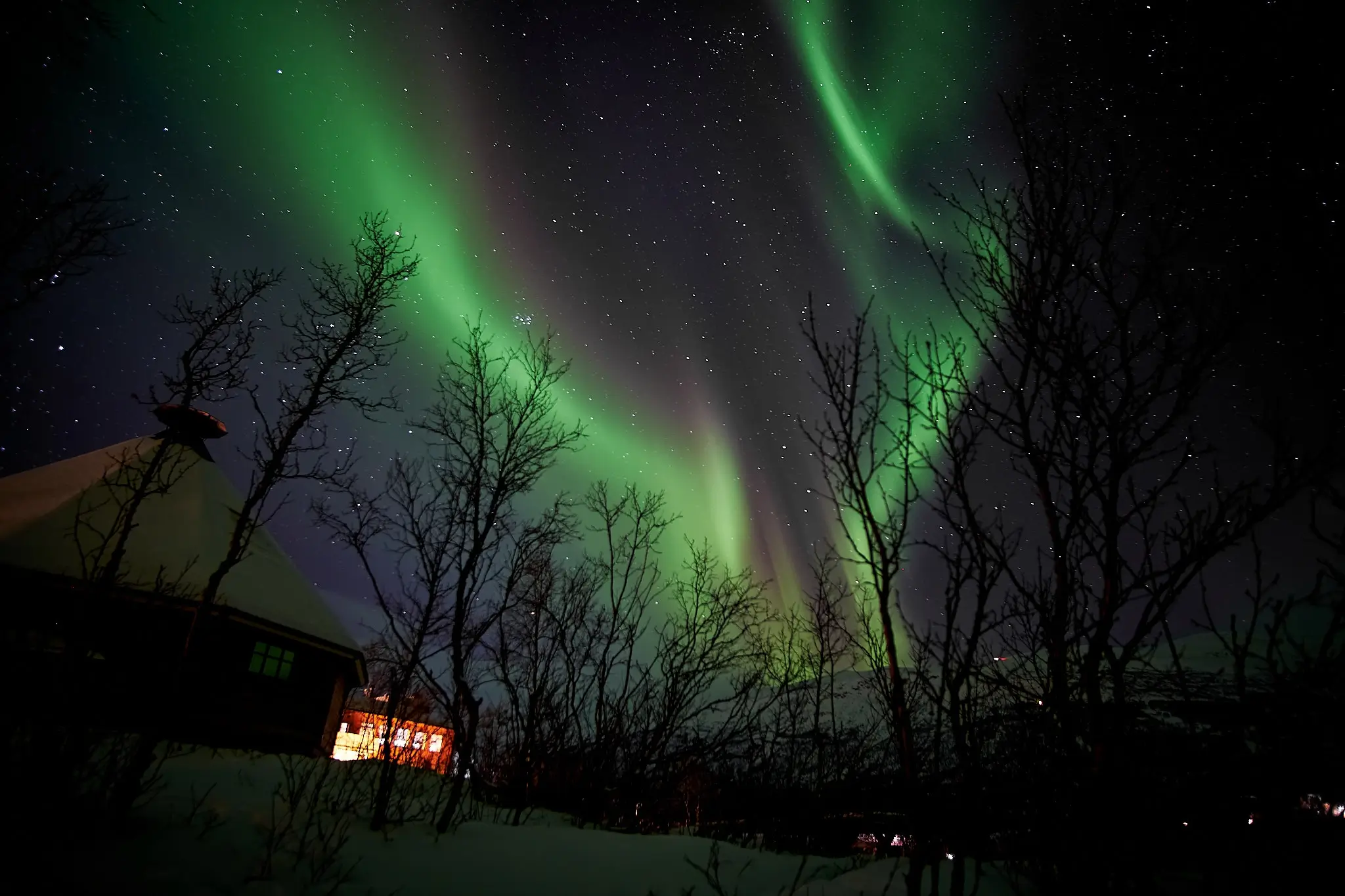
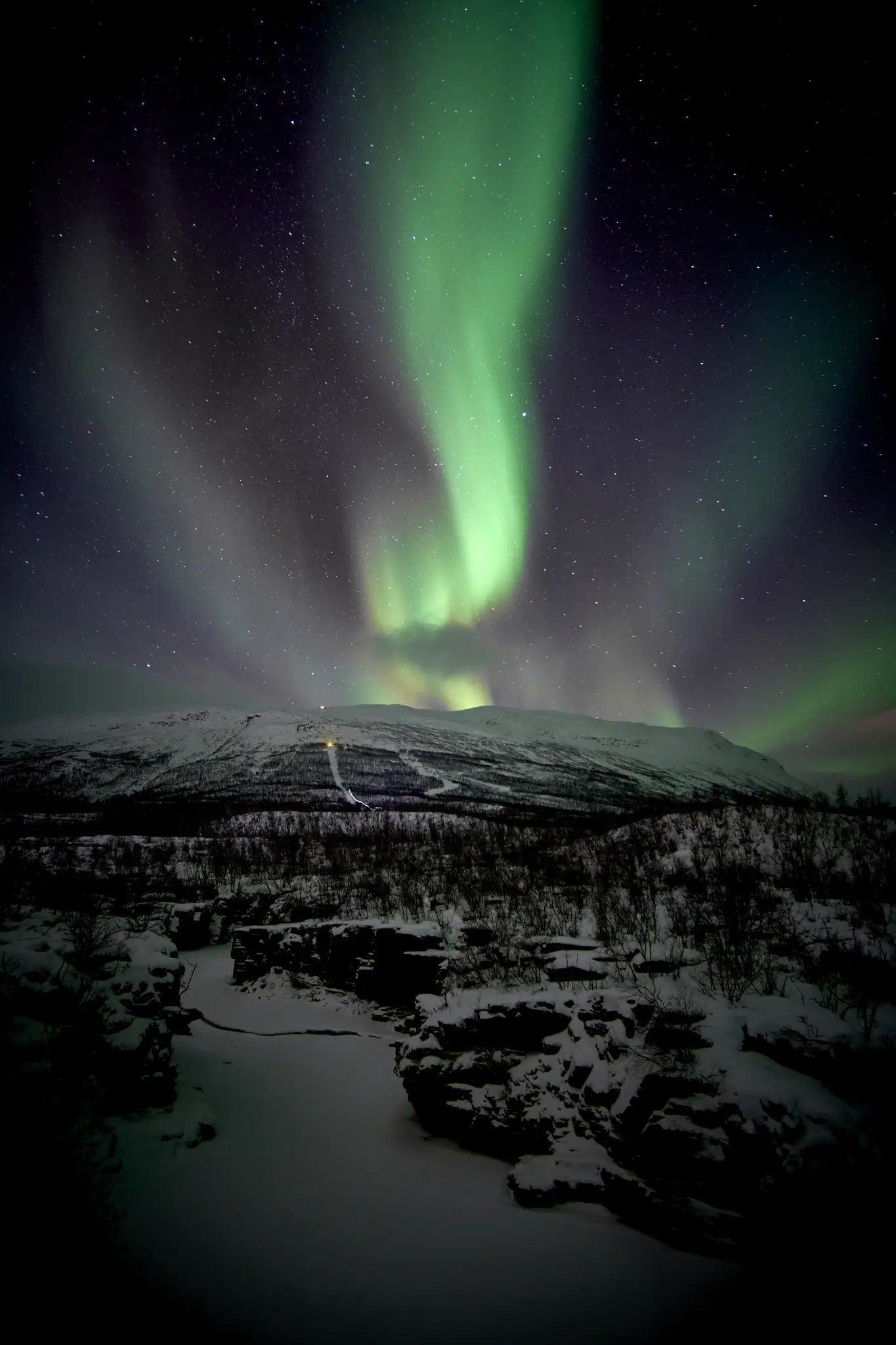
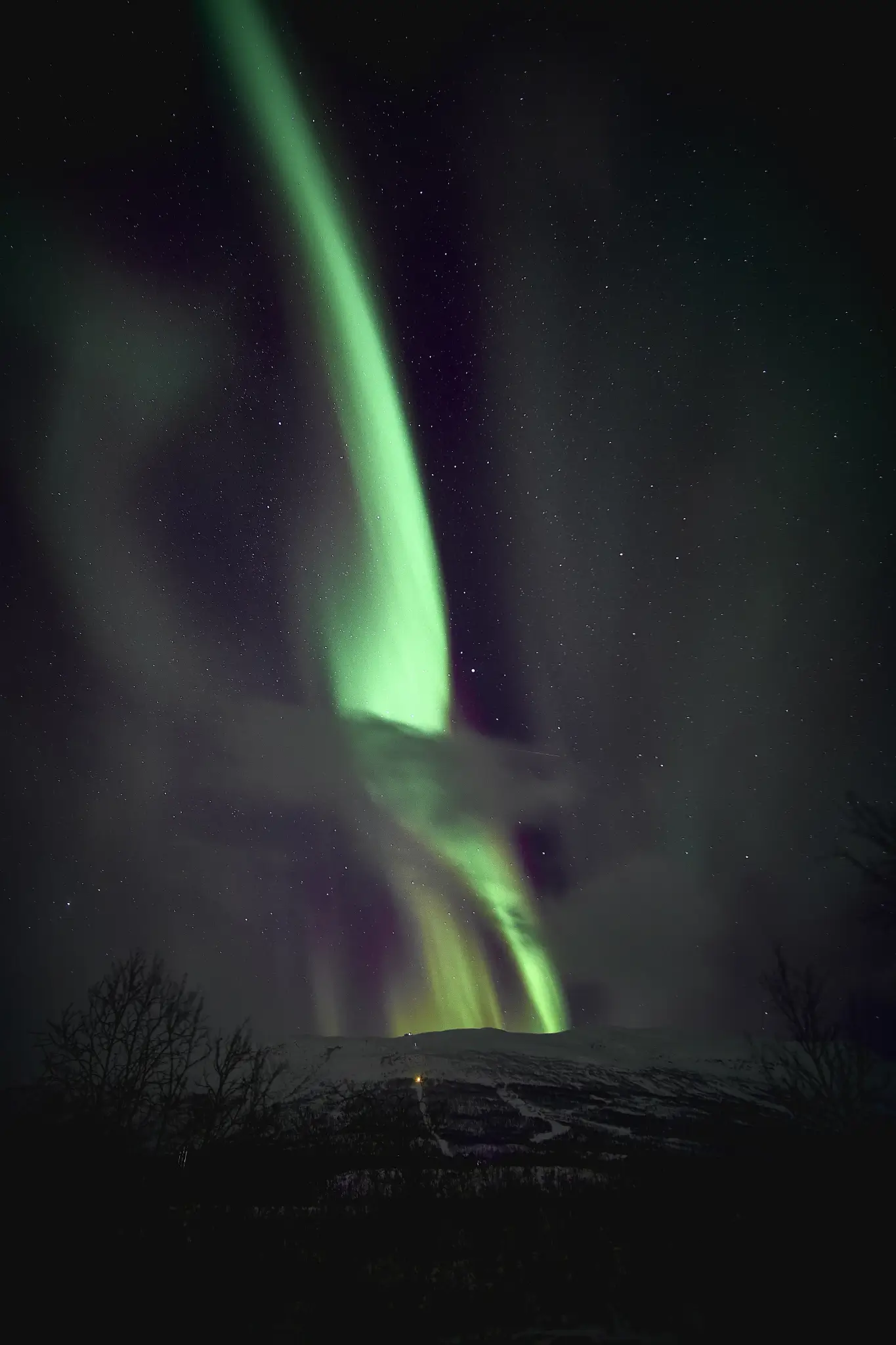
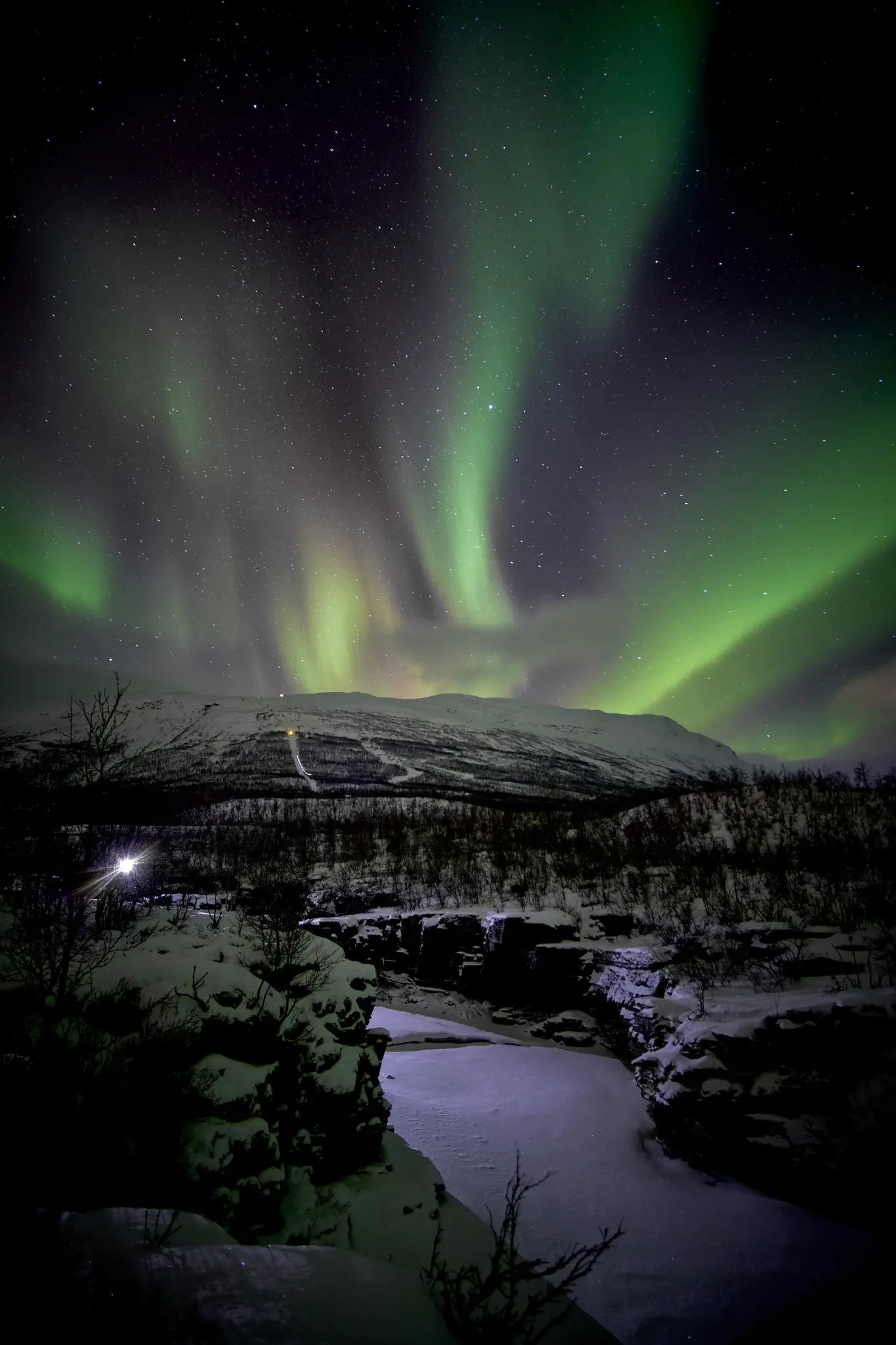
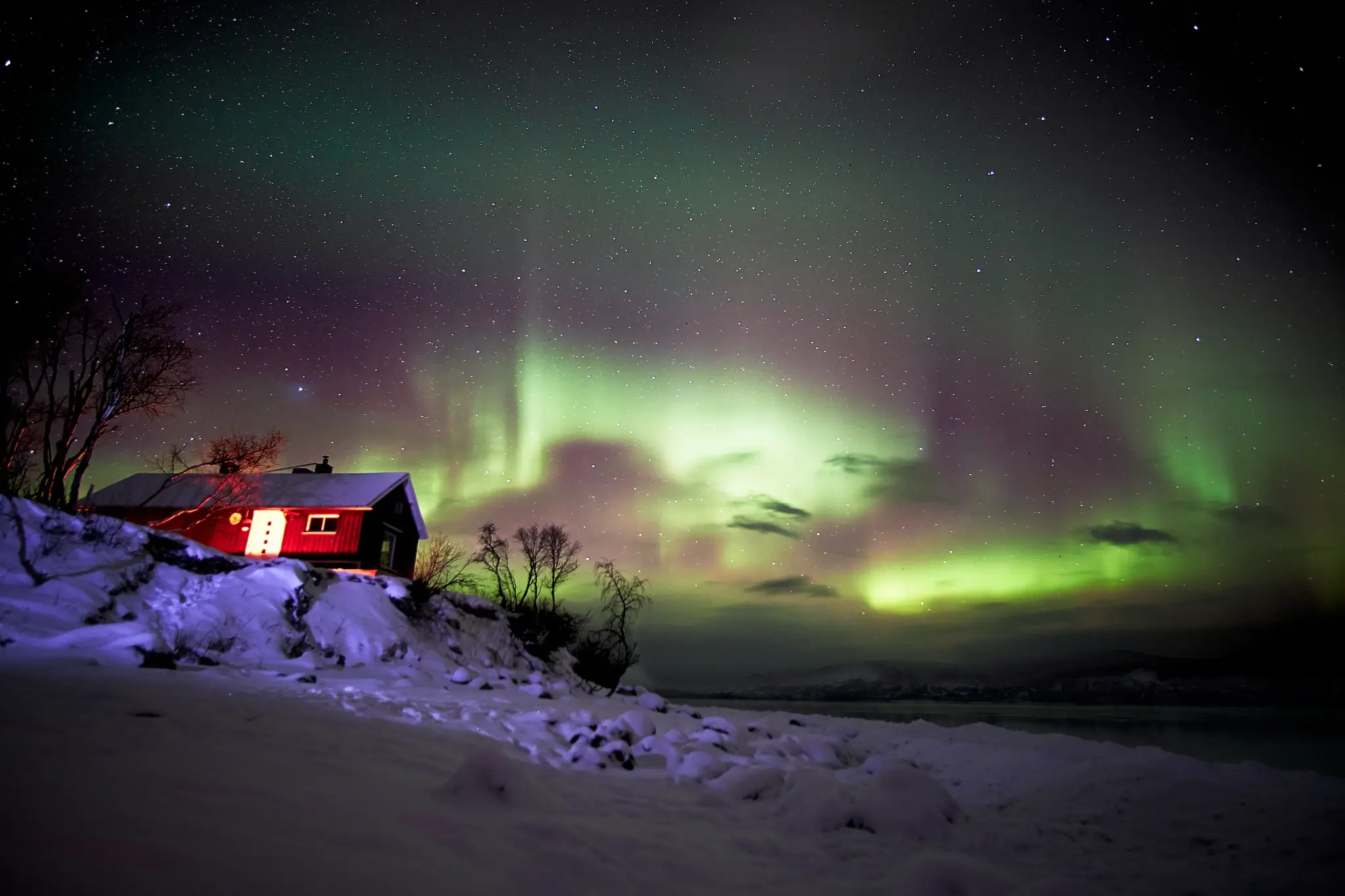
A vision as splendid as it is fleeting, drawing you like a chimera.
Poetry from a time without language, seeping into the mind and imprinting itself on the soul.
And a pulse of life longs to perpetuate itself night after night in the frantic desire to chase it again.
With that craving for wonder, brushing the unreal, I pack my backpack and continue to Kiruna, a mining town and gateway to the extreme North.
Beneath a sky burning with violet and sapphires fused into tongues of gold, the great wooden church rises like a ruby fragment set in the lilac of the snow. The pastel façades of the old town catch the light in trembling flashes on the windows. It is as if they could absorb the transformation reshaping the entire place.
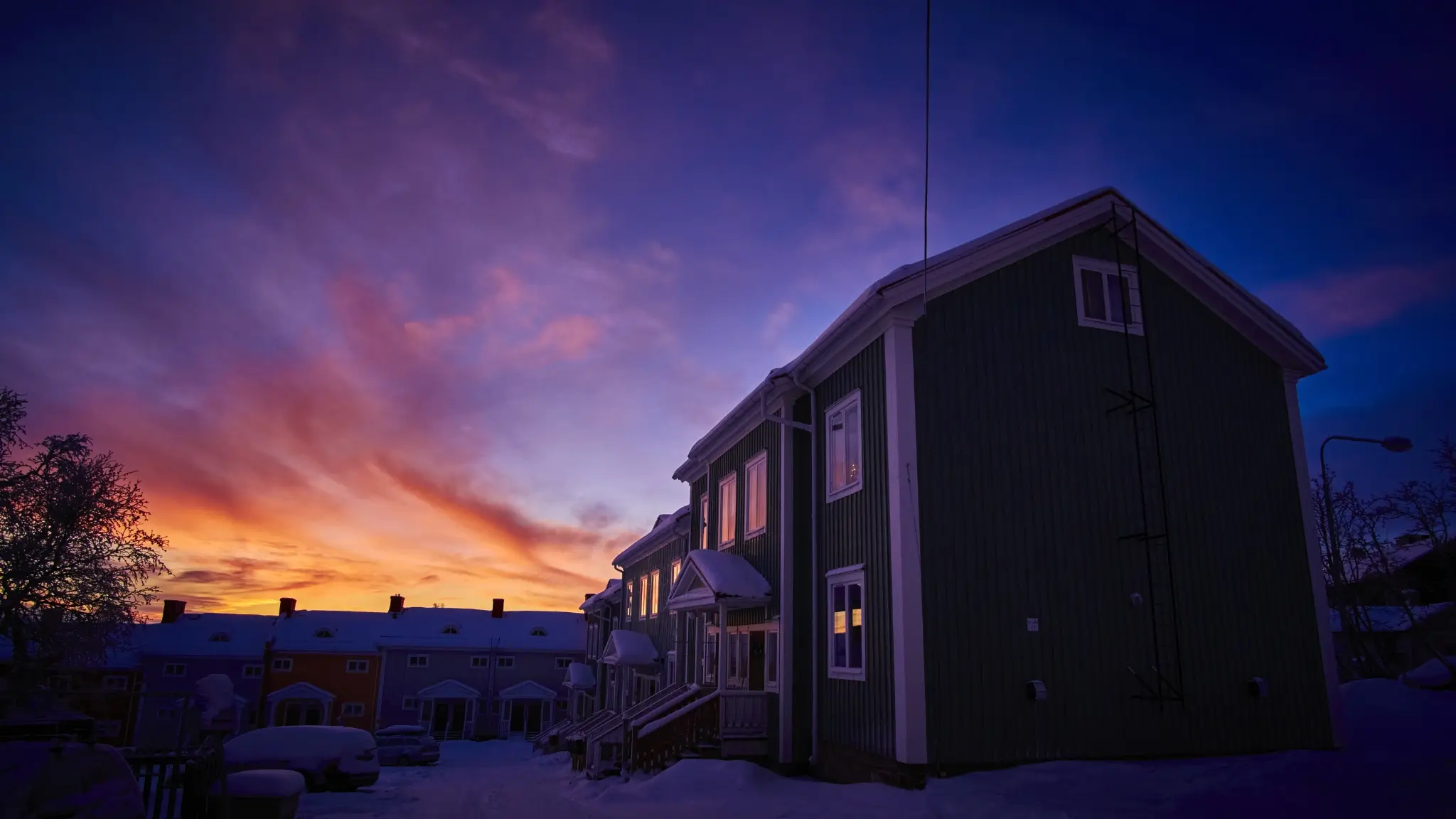
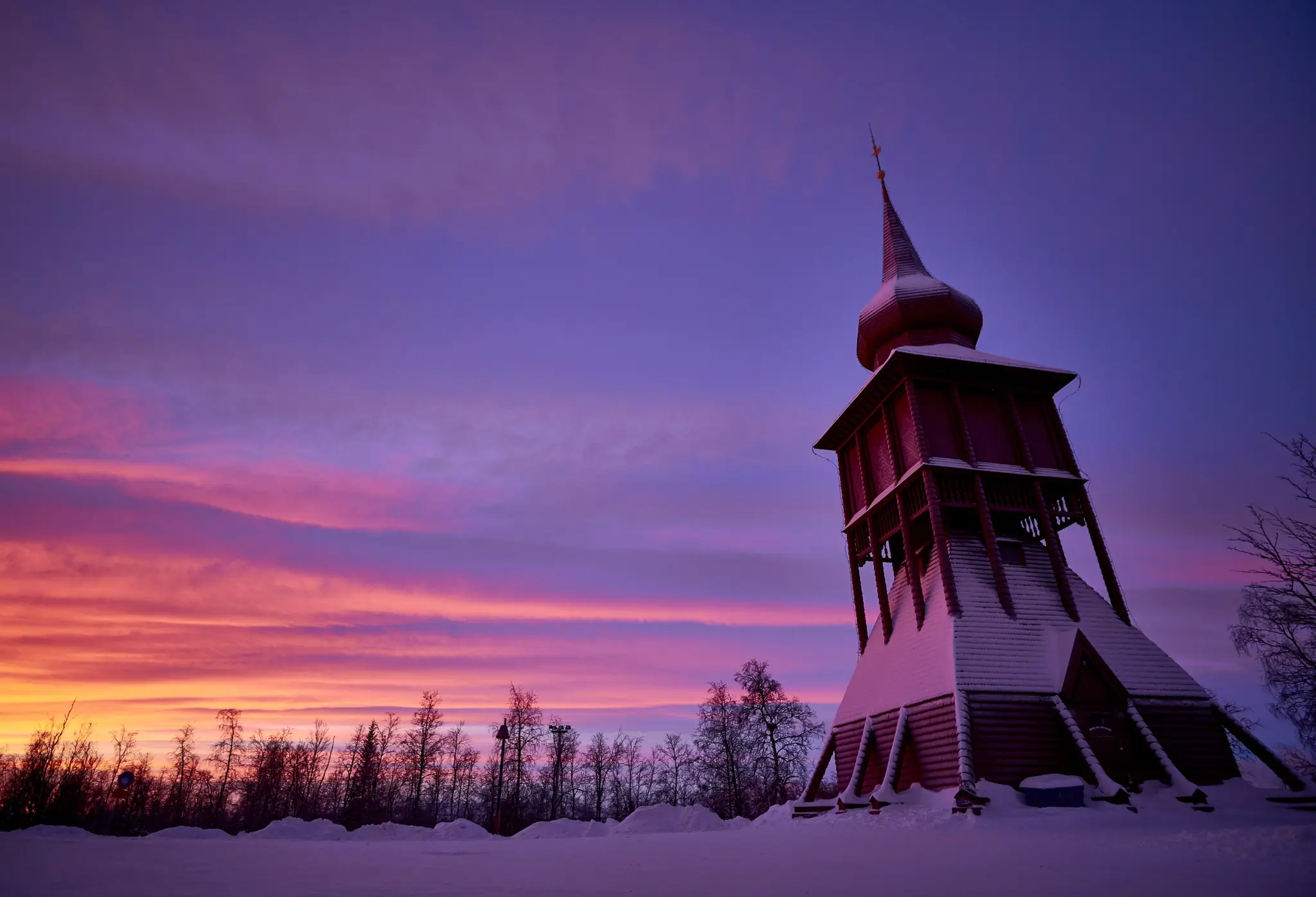
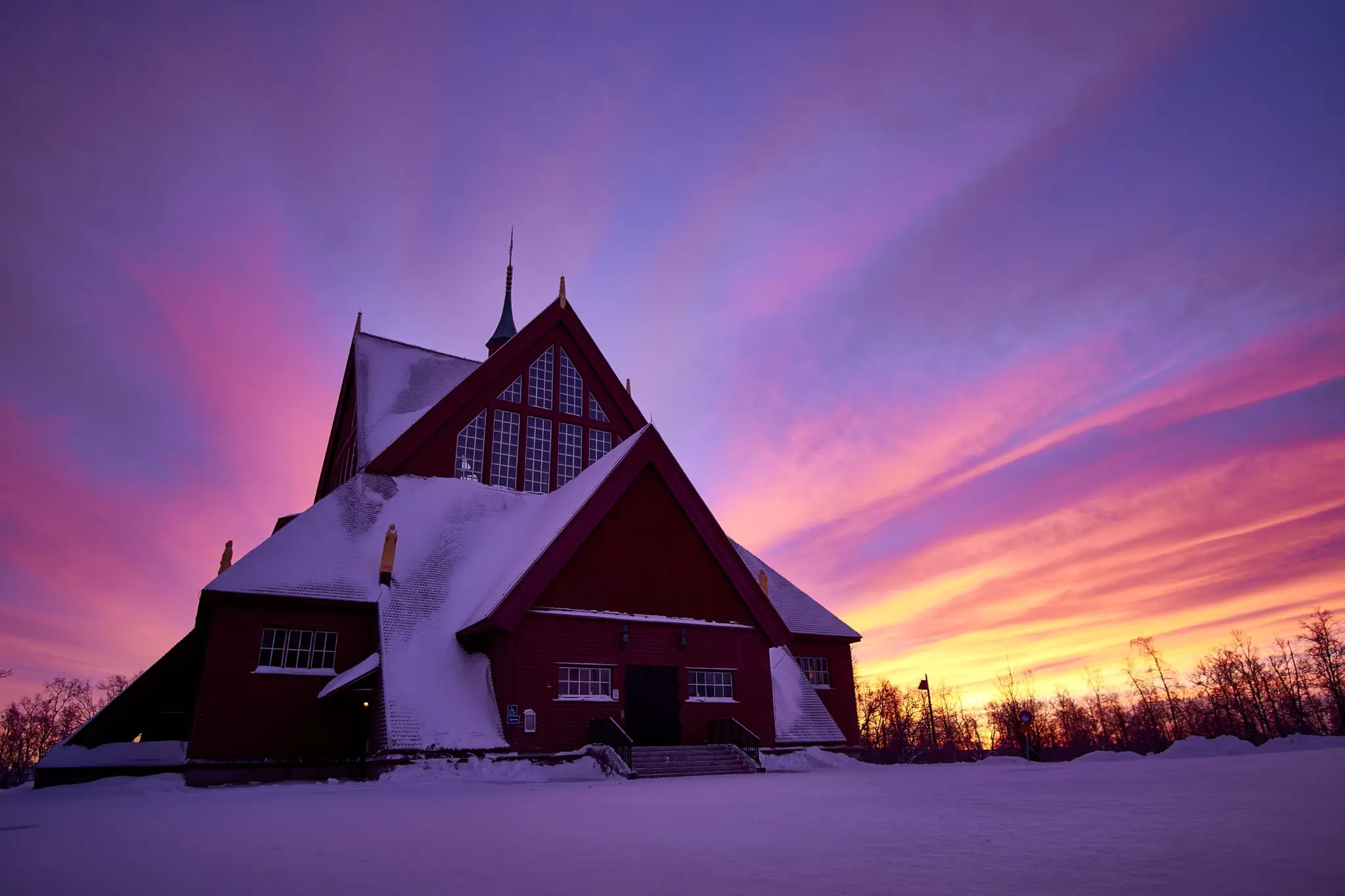
Kiruna, in fact, is moving three kilometers east to escape the subsidence caused by the mines: houses, streets, even the church are being relocated.
They hold memory and future together.
Next, I reach Nikkaluokta.
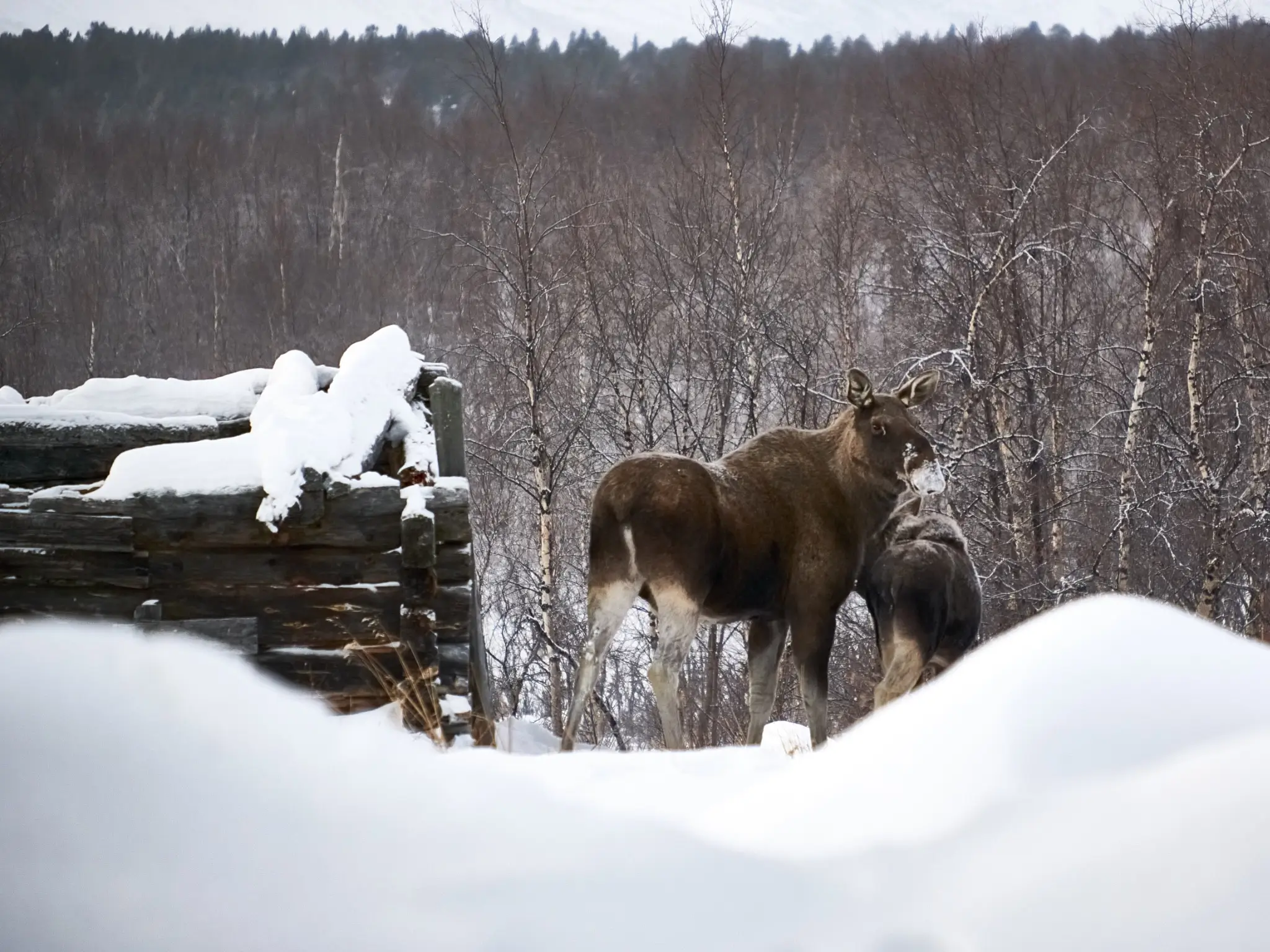
No journey to the far North felt complete without seeing moose, the largest cervids on the planet. I had searched for them in vain in Canada and Norway. Now here they are: caught in the act while stealing food from horses, enormous and placid like ancient spirits that rule the forest.
The next morning I arrive at the Ice Hotel in Jukkasjärvi, an ephemeral masterpiece carved from the ice of the Torne River.
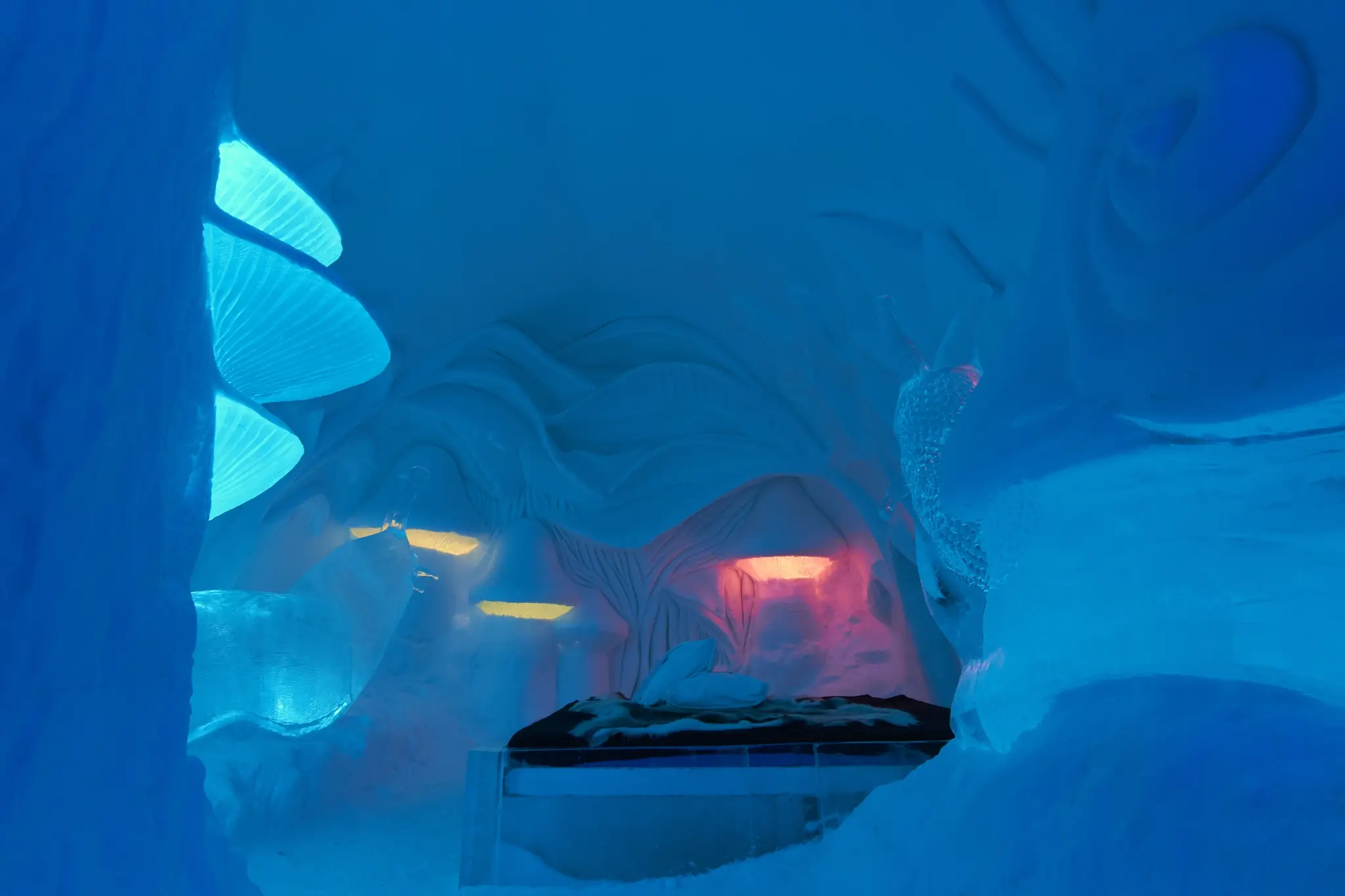
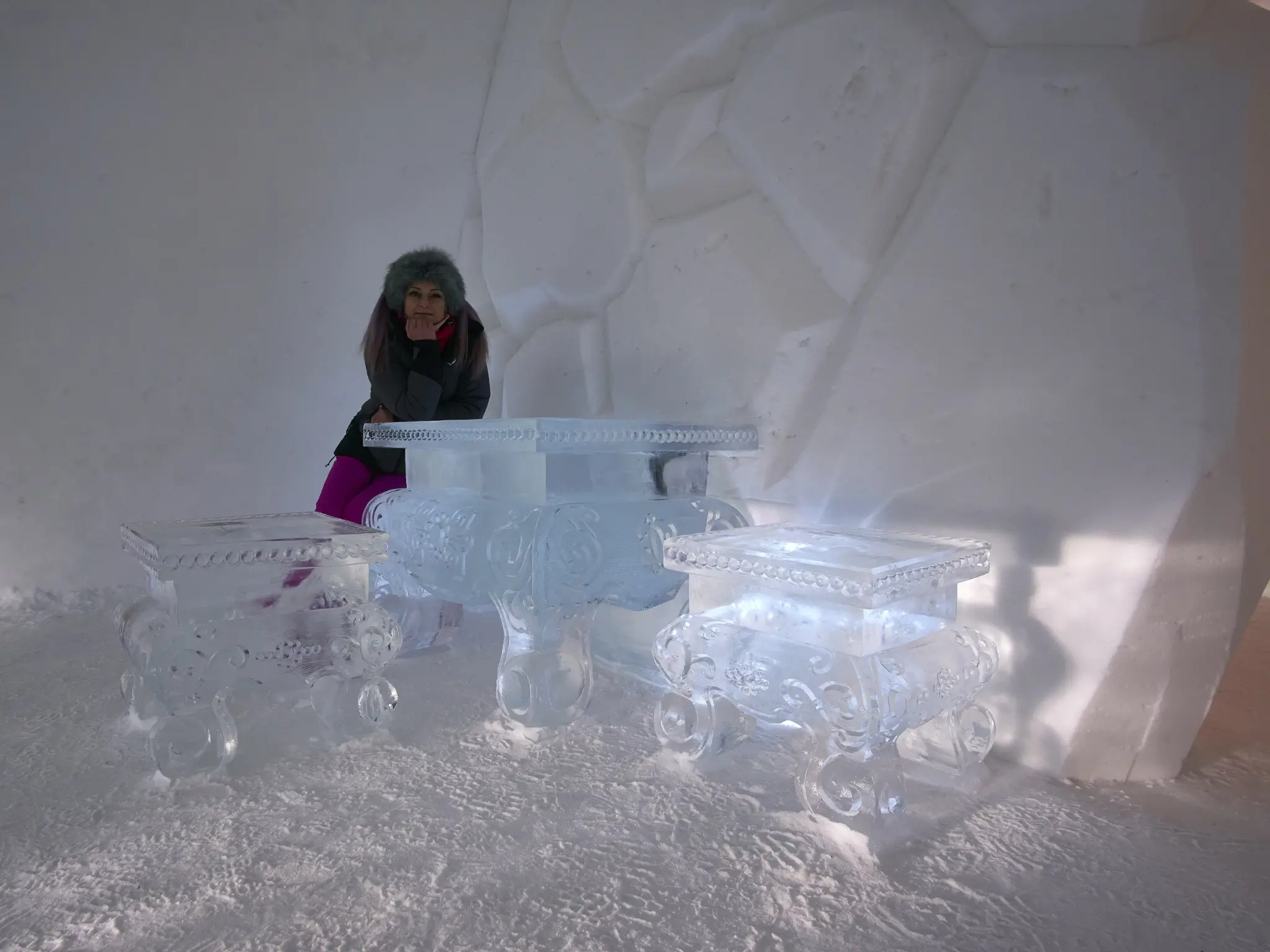
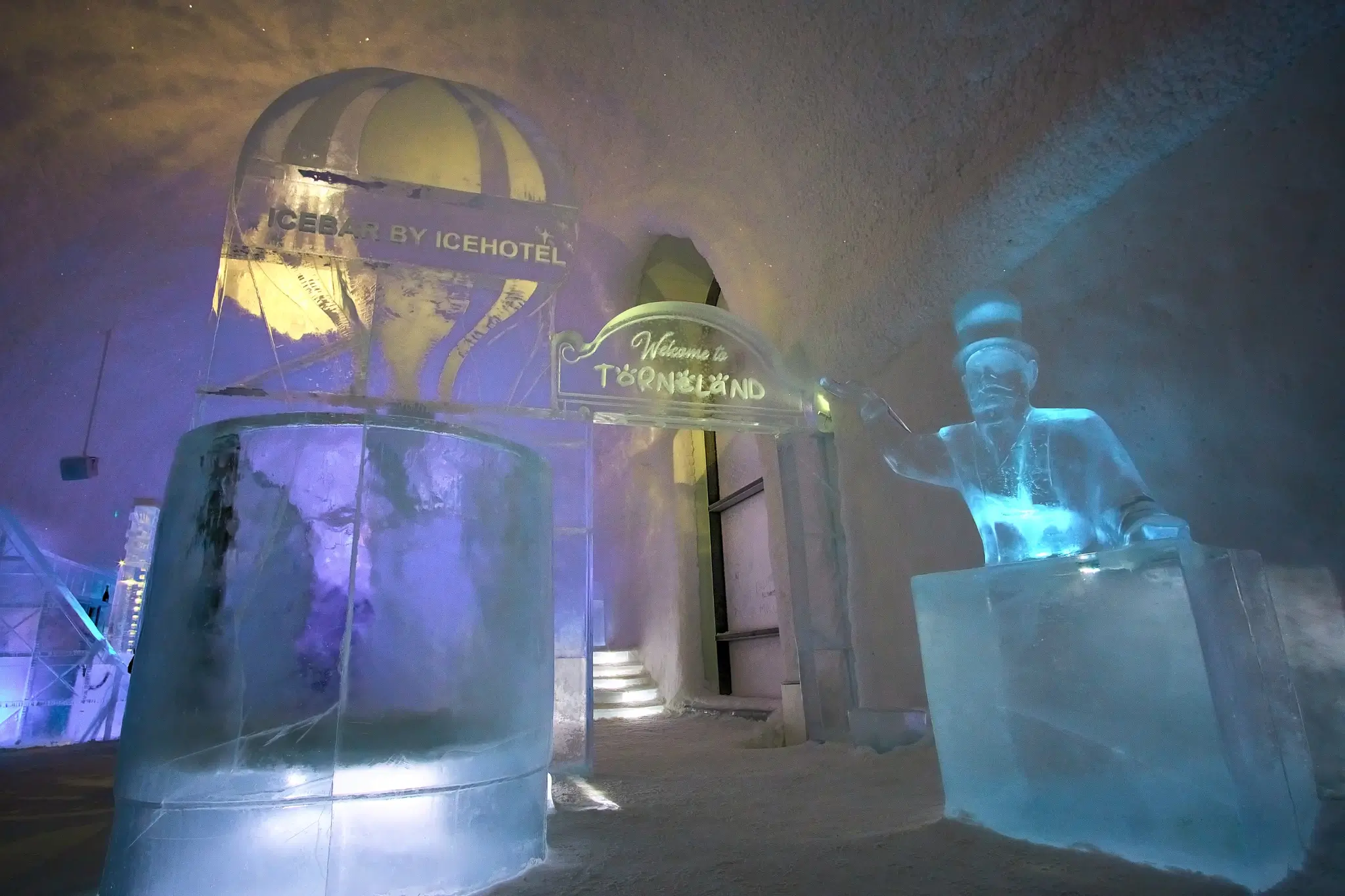
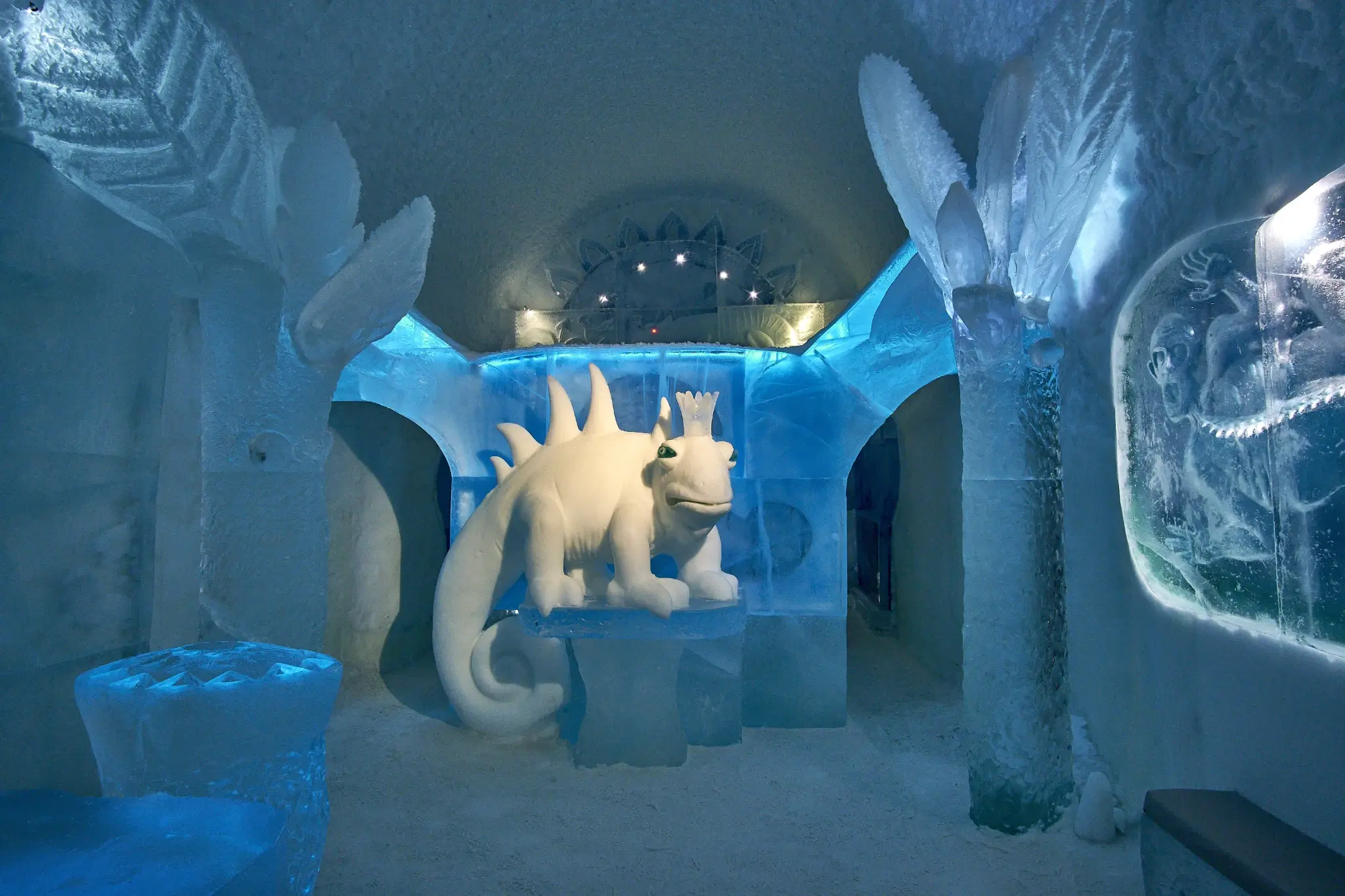
Each room is a world unto itself: sculptures, light effects, ice beds covered with reindeer hides. The hotel is reborn each winter with blocks harvested from the watercourse, a quarry that reemerges with the frost. From December to April, it is possible to sleep there, although, at around -5 °C, for many the dream soon becomes a nightmare: at the reception I meet chilled guests. They ended up sleeping on the lounge sofas.
The hotel’s story began by chance: in 1989, the artist Jannot Derid set up a sculpture exhibition in a large igloo. Visitors came from all over the world; some, finding no accommodation, asked to sleep there in sleeping bags.
From that improvised idea arose the first ice hotel in the world. It is still the largest.
My final stop is Luleå, on the shores of the Gulf of Bothnia.
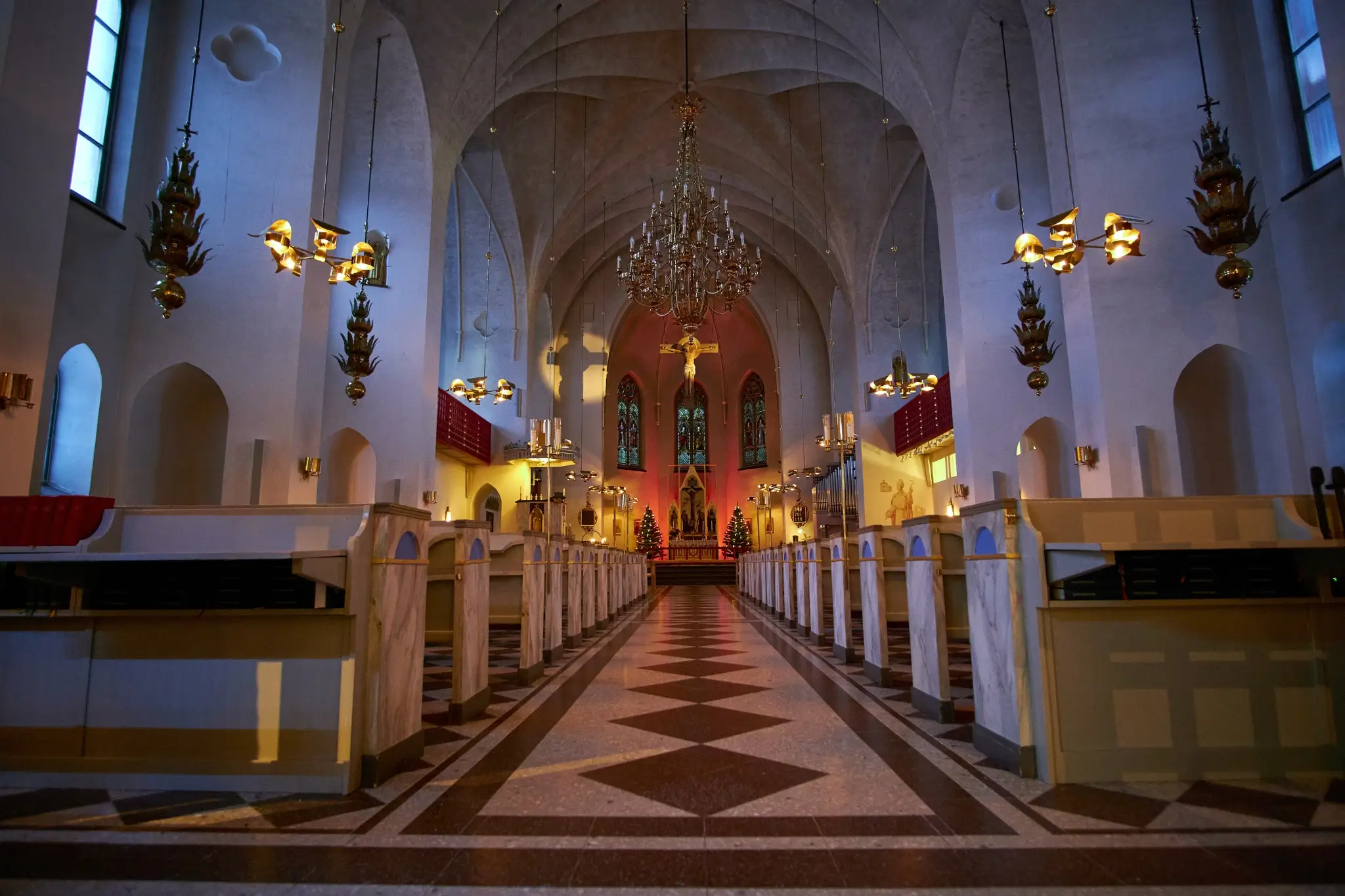
The city welcomes me with a suspended silence that seems to come from the edges of the world. In the village of Gammelstad, I reach the Nederluleå chapel, surrounded by red houses forming one of Scandinavia’s best-preserved church villages.
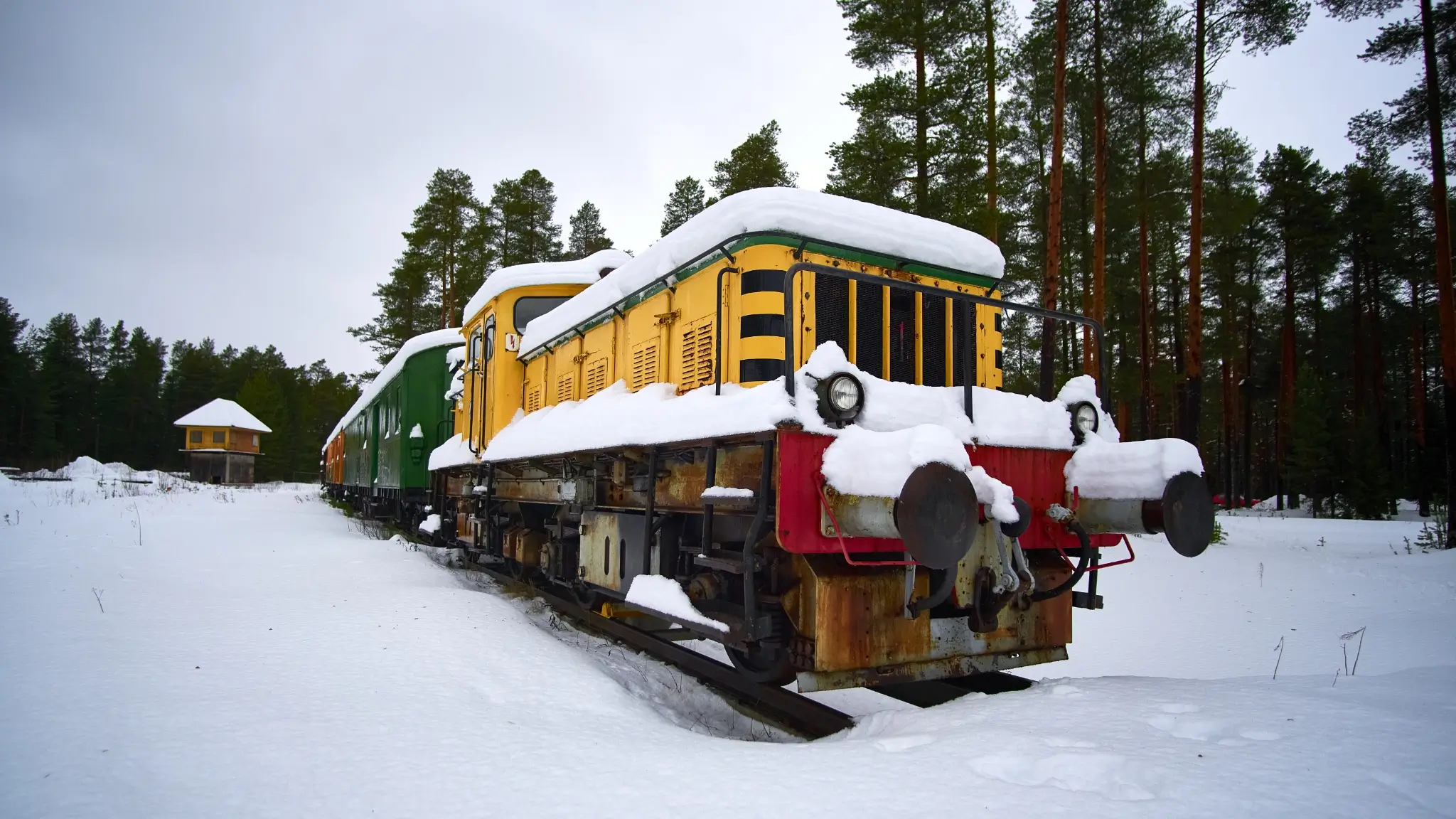
Wrapped in a snowfall that blurs every outline, I arrive at the Train Museum. The tracks are swallowed by ice, and the locomotives emerge like steel giants among heavy, slanted flakes. The carriages tell of humanity’s enduring bond with this extreme land.
In the evening, I walk on the frozen sea.
The wind carries an ancient silence, and the lights of the coast reflect on the ice like a fragile firmament. A sharp, clear emotion, like the air of the North: that of having walked in a world where time seems to slow. Every breath tastes of infinity. Where nature dictates the rhythm, and the polar night remains its absolute protagonist.
I can no longer look at the black vault without wondering whether, beyond the 60th parallel, the Northern Lights are shining.
Take care and talk soon!
- Mälaren: The large freshwater lake around which the city of Stockholm is partly built. ↩︎