
Questo articolo è disponibile anche in Italiano
Happy Tuesday my friend! Welcome back to another appointment with My Travel Diary Chronicles.
Thank you so much for being here, I’ll never get tired of saying this. Your support through the years has been amazing, and I feel blessed to have you all spending your time on my publication.
This episode is about a beautiful lagoon, amid the constant, imposing presence of the Andes, with its peaks and glaciers. It’s about people, traditions and history.
Everything told through the engaging words written by Tamara.
Make yourself comfortable, and enjoy!
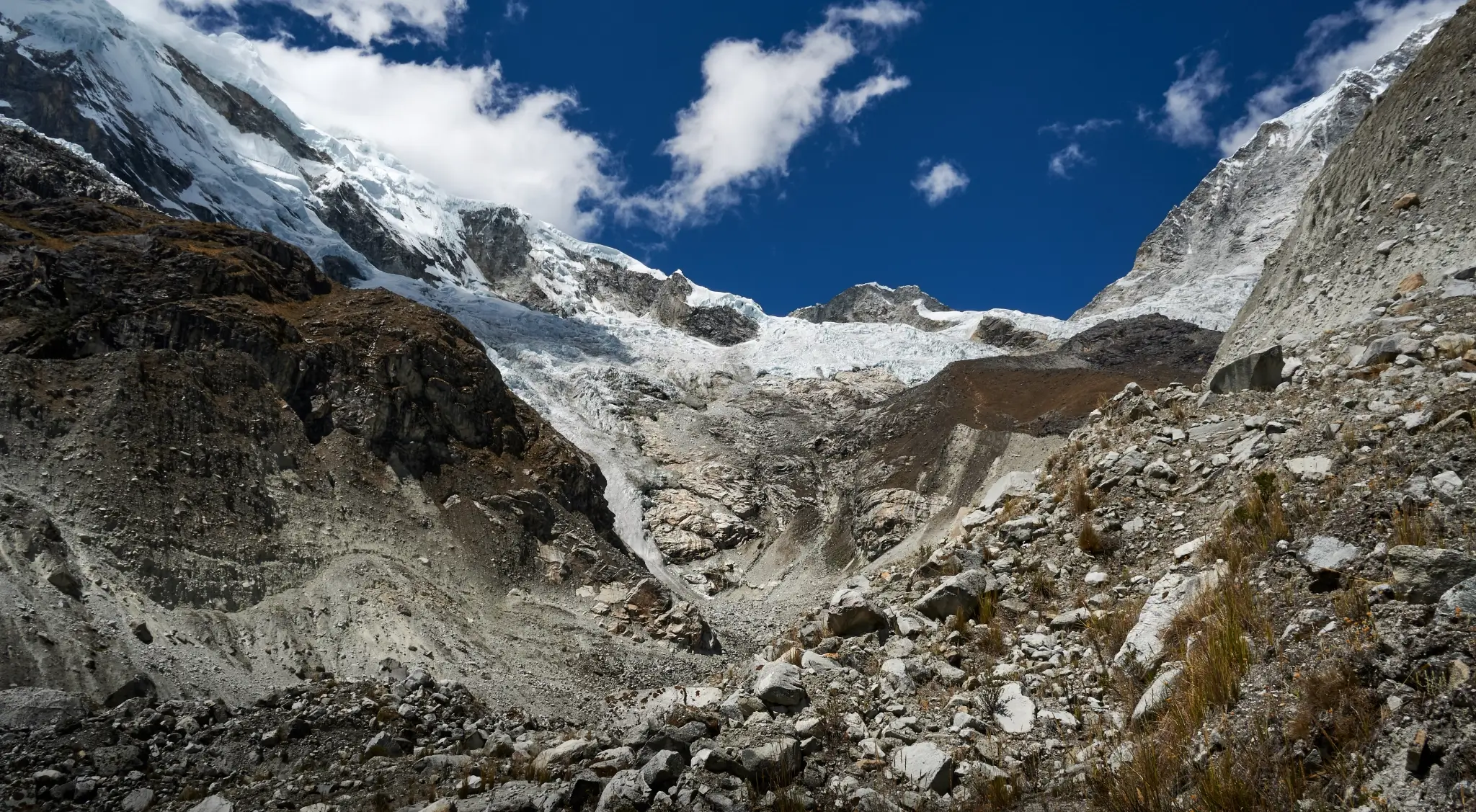
The colectivo jolts its way up the Callejón de Huaylas1. The ice-clad giants of the Cordillera Blanca loom over the valley like silent deities; the driver overtakes old lorries laden with potatoes with a confidence bordering on recklessness.
On the crowded seats, the folds of pollera skirts2, brightly coloured shawls and goods balanced on passengers’ knees mingle in a jumble of colour and movement. People chew coca leaves3 and bite into choclo con queso4, bought from a roadside vendor. Passengers climb aboard, get off, shuffle closer to make room, all carried along by the rhythm of a chuscada5.
The wheels come to a halt at Yungay, above the memory of a buried town. On 31 May 1970, an avalanche of ice, rock and debris swept down the slopes of Huascarán, wiping out the town centre in a matter of moments.
At the Campo Santo, rose bushes bloom where houses once stood. A single palm tree reaches towards the sky.
I take a taxi up the rough road as it winds through increasingly tight hairpin bends and deeper into the mountains.
With every turn, the mountain claims more space.
The car pulls up outside Cordillera Blanca Lodge. Two dogs come bounding towards me. A man follows at a brisk pace. ‘Welcome!’ he calls, smiling. This is Charlie, the owner. He strides ahead, escorting me to my room without breaking pace. His words come in a rapid stream as he explains the breakfast and dinner arrangements and offers practical advice on planning the days ahead.
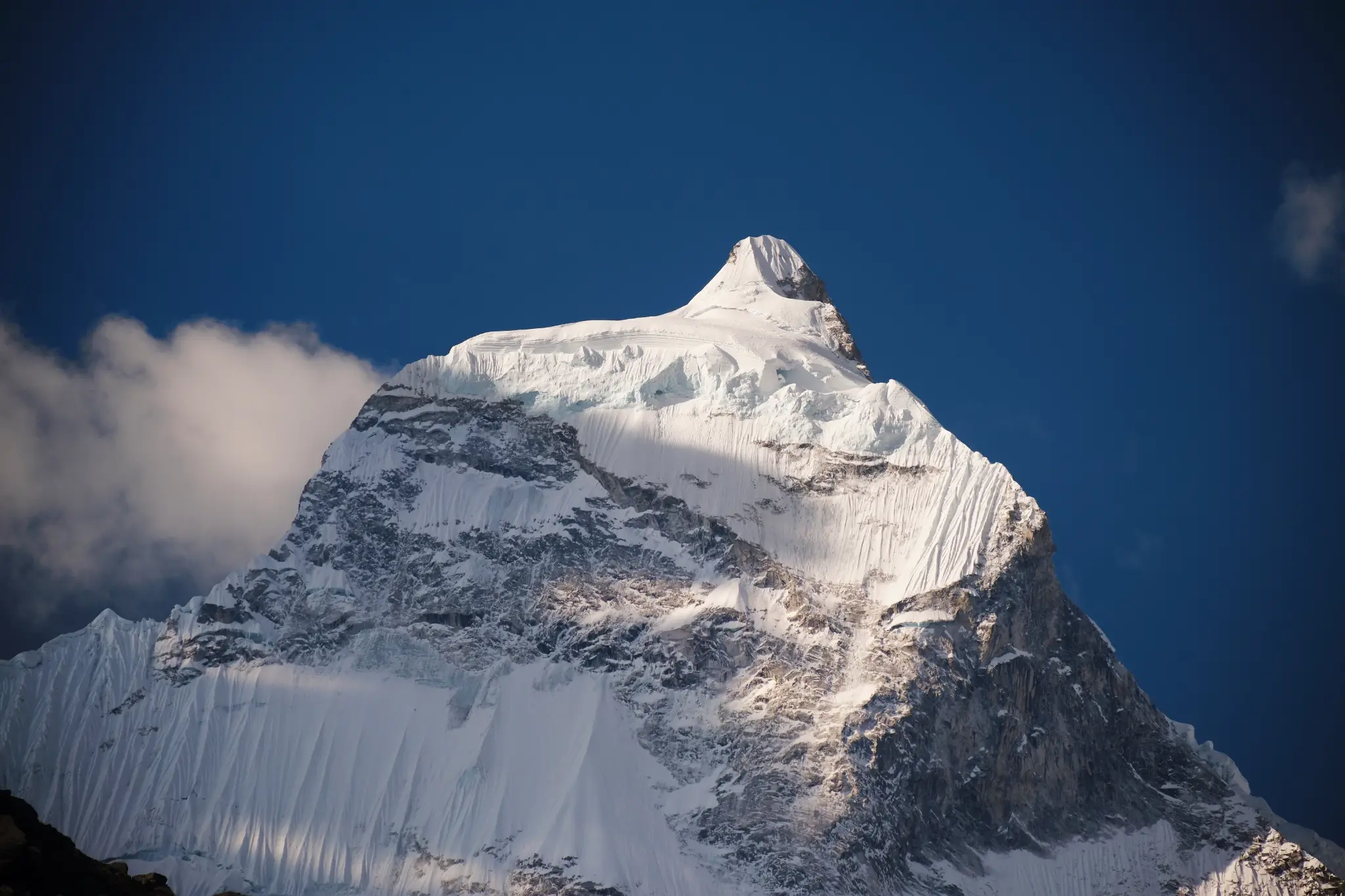
Originally from England, he left London and his job as an accountant to explore the Andes. For seven months he travelled the trails of the Cordillera Blanca, often with nothing but a tent for shelter. Eventually, he settled in the rural community of Unidos Venceremos, where he built the lodge beneath the towering faces of Huascarán and Huandoy. The building seems to rest against the landscape, almost as if asking permission to stay.
I leave my rucksacks in the room and set off towards nearby Laguna Queushu.
Beneath my hiking boots, the earth is hard and dry. The high-altitude grass grows sparse and wiry, bent by the wind.
Among the vegetation, a hummingbird hangs suspended in mid-air. Its wings beat so rapidly that the bird appears motionless. For an instant, it holds a flash of colour, then darts away and disappears.
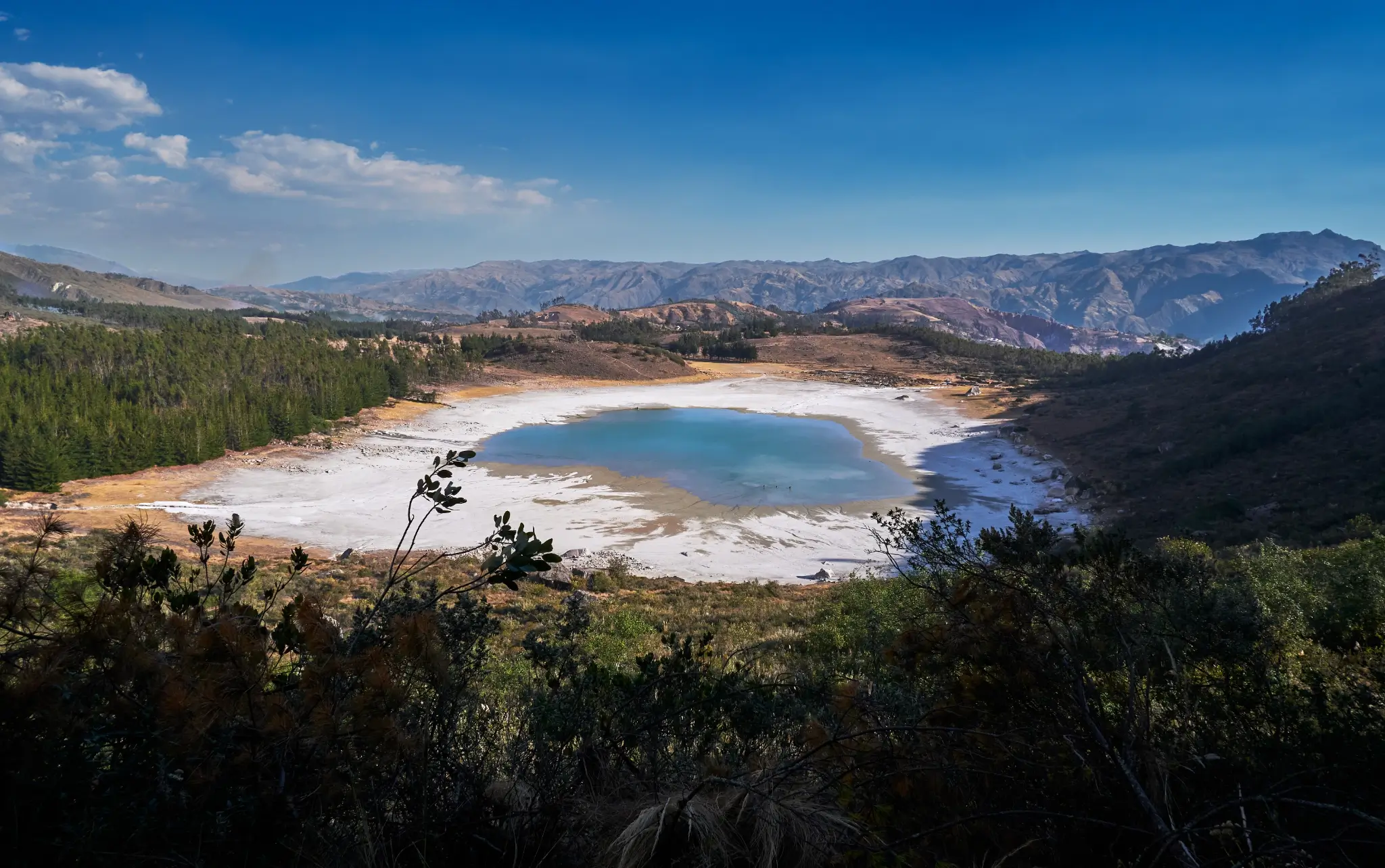
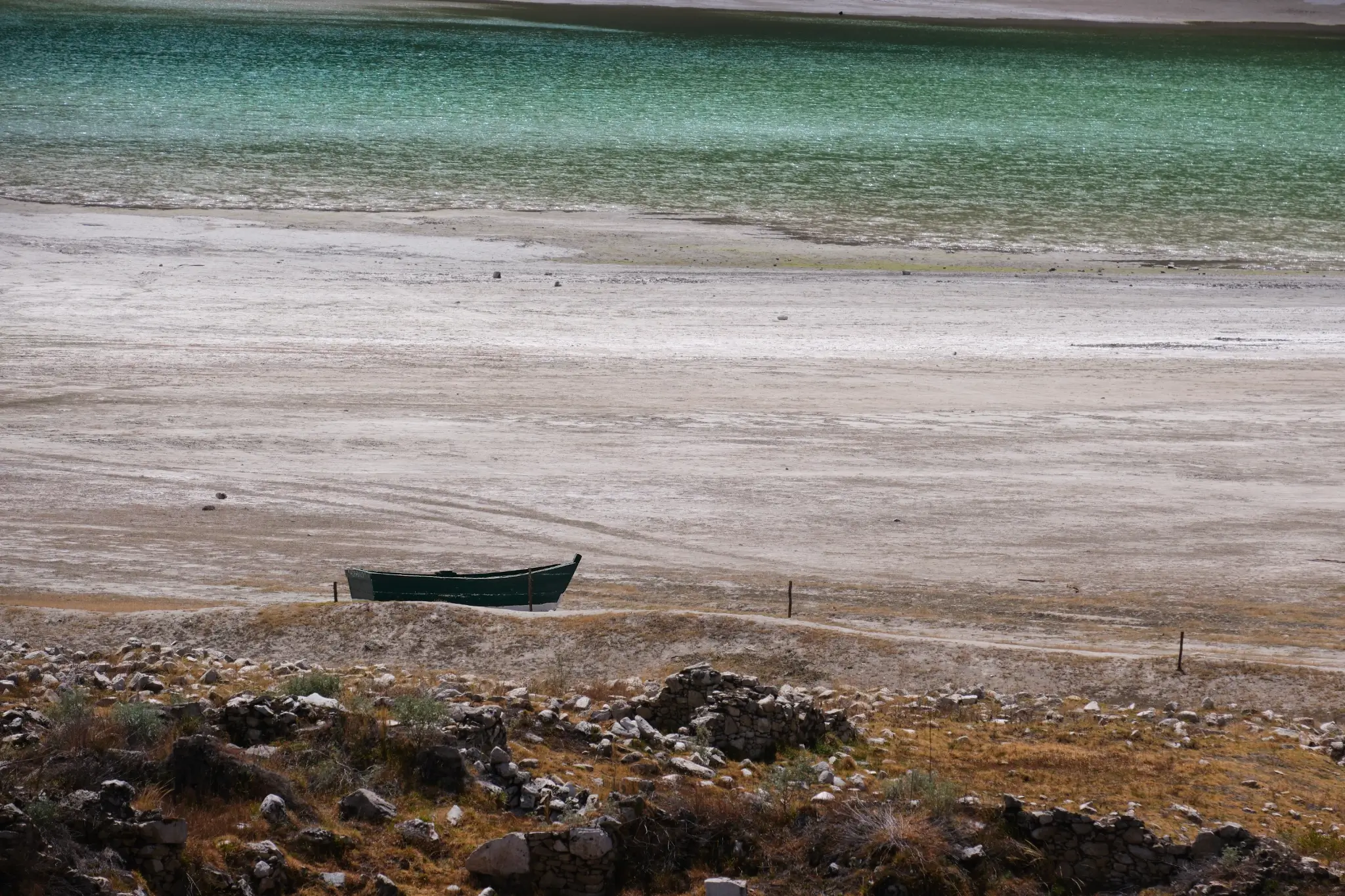
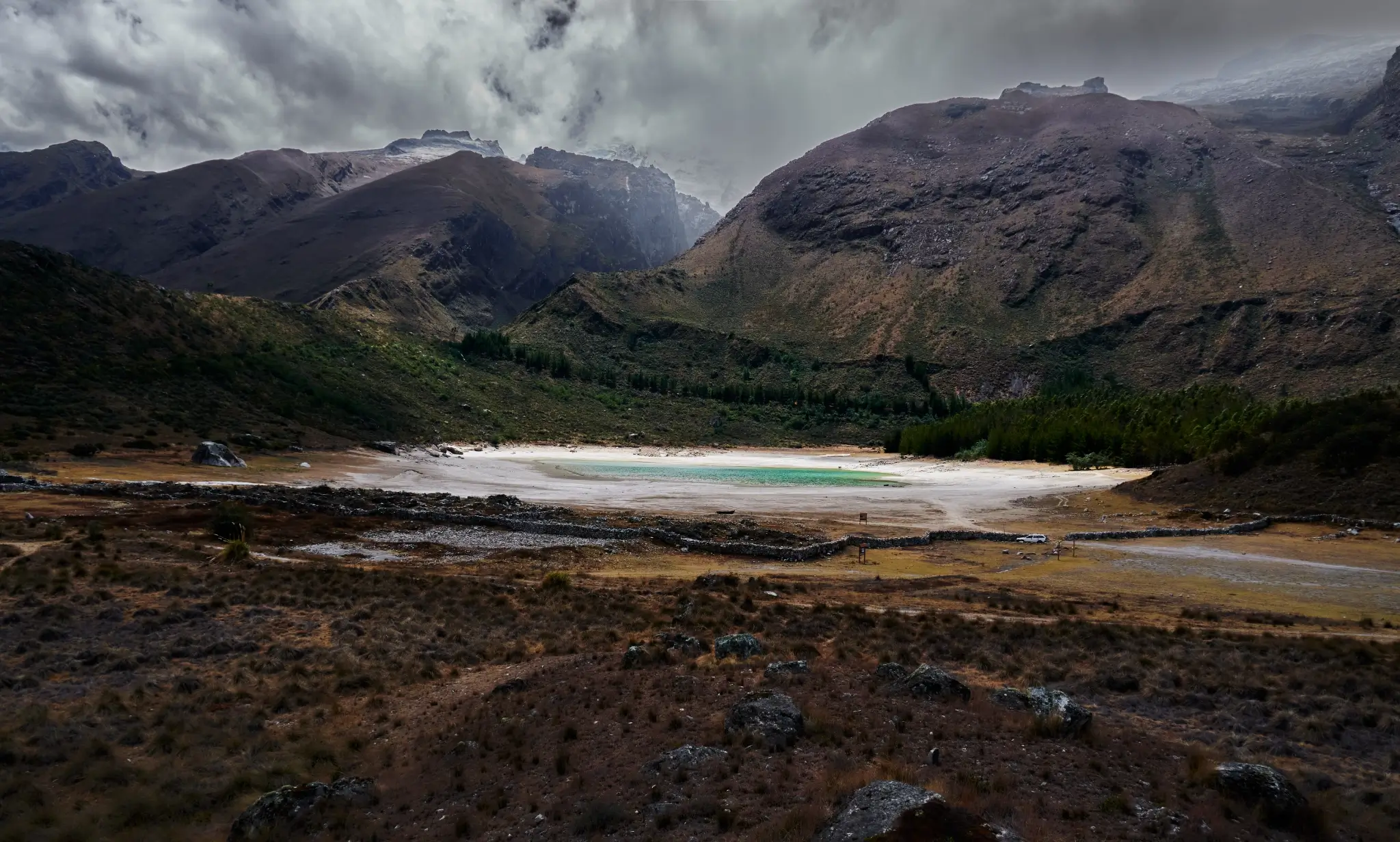
Beyond a gentle dip in the ground, the lagoon comes into view.
A ring of white sand, pierced by still water in which the sky seems to pour itself. Along the shore, the mountains’ shadows gather in dark patches.
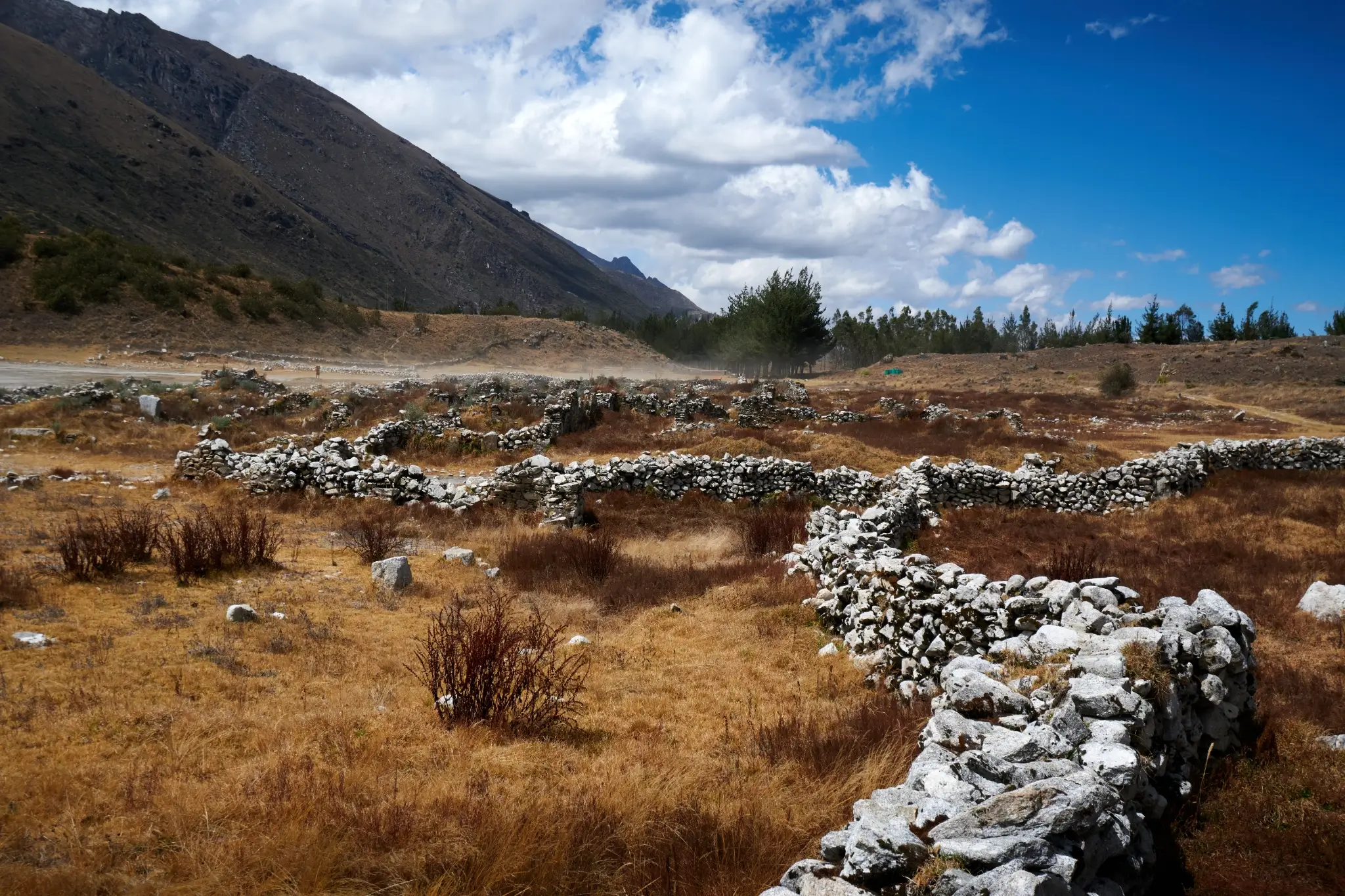
Ancient structures blend into the earth, while the chullpas6, pre-Hispanic funerary buildings, rise from the low mounds. I imagine the hands that laid those stones, the comings and goings of those who once travelled these same paths. My thoughts reach beyond the outline of the snow-capped peaks, as I try to approach the world as it might have appeared to those who gazed upon them. Not simply majestic summits, but Apus7: ancient spirits watching over humankind and the land.
From their heights flowed the waters that fed the lagoon and nourished the fields below. Perhaps, in this hollow, those who lived here long ago recognised a place where life began, and to which their ancestors might return after death.
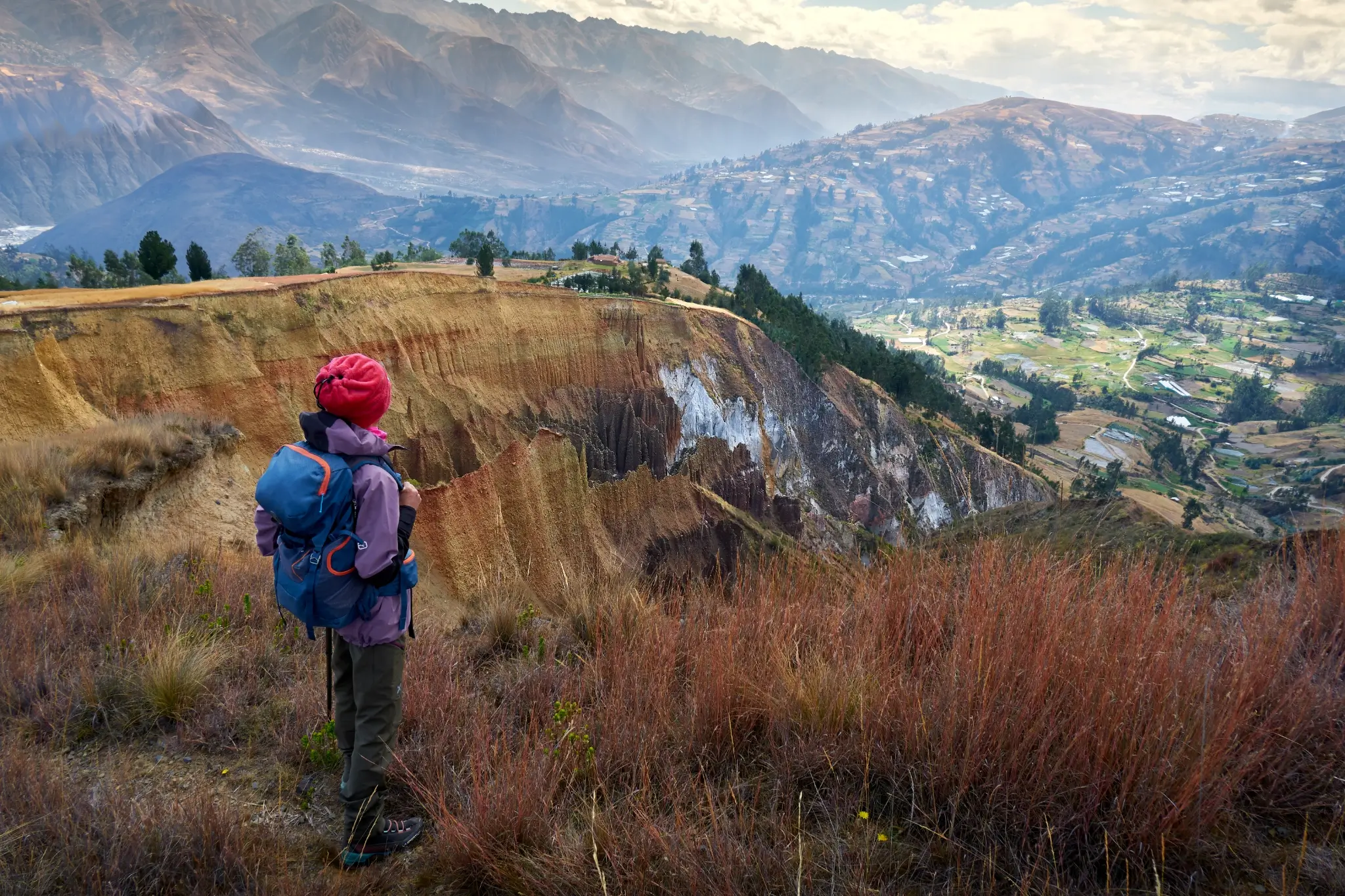
The following day, I set off along a path winding through cultivated fields.
The clear air smells astonishingly of jam. Neat rows of strawberry plants stretch across the slope, scattering small red accents along its undulating contours.
A little further on, a couple are hoeing the soil. Beside them, their two children are playing: the boy digs a hole while his little sister buries some grass. I stop. They ask where I come from; I want to know what they are growing.
‘Oca,’ they reply.
The name is unfamiliar to me. The man bends down, gathers a few tubers freshly pulled from the earth and hands them to me. I ask his wife what else they grow in the area. She begins listing the varieties in her language, one after another. It is a map of the land, drawn through the names of its plants.
‘Fresa. Papa. Oca. Olluco. Mashua. Quinoa. Habas. Cebada. Trigo8.’
Part of this world has already passed before my eyes; the rest takes shape through her voice. They point towards a hill, beyond which their home lies. A little later, an invitation to lunch the following day comes spontaneously, as though our encounter has already found a place at their table.
When I return to my room, Victor comes in to light the stove.
He kneels down, carefully arranges the logs, then gathers the ash that has accumulated around his feet and sweeps the floor clean. His movements are precise and unhurried. It is winter outside, and up here temperatures range from two to twelve degrees Celsius, milder than I had expected.
Even so, I welcome the warmth beginning to spread through the room, a comfort unfamiliar in the homes of local families. Victor explains that, even during the coldest months, the only source of heat in their homes is the fire they use for cooking.
During our conversation, I discover that he spent five years studying at the Don Bosco school in Chacas, founded in 1979 by Father Ugo De Censi as part of the Operazione Mato Grosso9.
Sculptors, painters and master craftsmen came from Italy, bringing with them ancient skills and disciplines that would find new practitioners in Chacas. From that encounter, a tradition of international renown was born. Victor brings it to life as he talks about woodworking: his fingers still reproduce the movements he learned at the school. He takes me through the different stages of the craft: the plane smoothing rough timber, the joints, the measurements, the pieces that must fit together.
I look at the furniture in the room. It was made by the artisans of the Familia de Artesanos Don Bosco10.
That evening, I take a seat by the window in the dining room.
Beyond the glass, Huascarán still dominates the horizon.
A group of Andean guides arrives, stopping for the night midway through a long traverse of the range. Heavy rucksacks slide onto the floor, their boots carry in the dark dust of the trails, and their voices mingle with the sound of weary footsteps.
Charlie moves from one table to another. He talks quickly, smiles, jokes with the guests and wants to know how their day has gone.
One of them asks about the following day’s route. His manner changes. He unfolds the maps, checks the elevation gains, calculates distances and consults the weather forecast. He traces the route with his finger, points out a passage and pauses over an altitude figure. The easy-going manner of a moment earlier gives way to meticulous attention.
Meanwhile, beyond the window, daylight begins to retreat. The dazzling white of the summits gradually loses its brilliance. Shadows lengthen across the rock faces, the outlines soften, and the blade of light grows thinner.
The mountain fades.
Night envelops the ploughed fields, the houses of sun-dried brick and the life that gathers indoors as the doors close.
I walk over to Charlie and ask whether he can leave me some breakfast for the morning. In just a few hours, my alarm will ring. Departure is scheduled for half past five.
An Australian traveller sitting nearby overhears my request and asks, astonished, why on earth I would want to get up so early. I tell him that I want to savour the walk without hurrying.
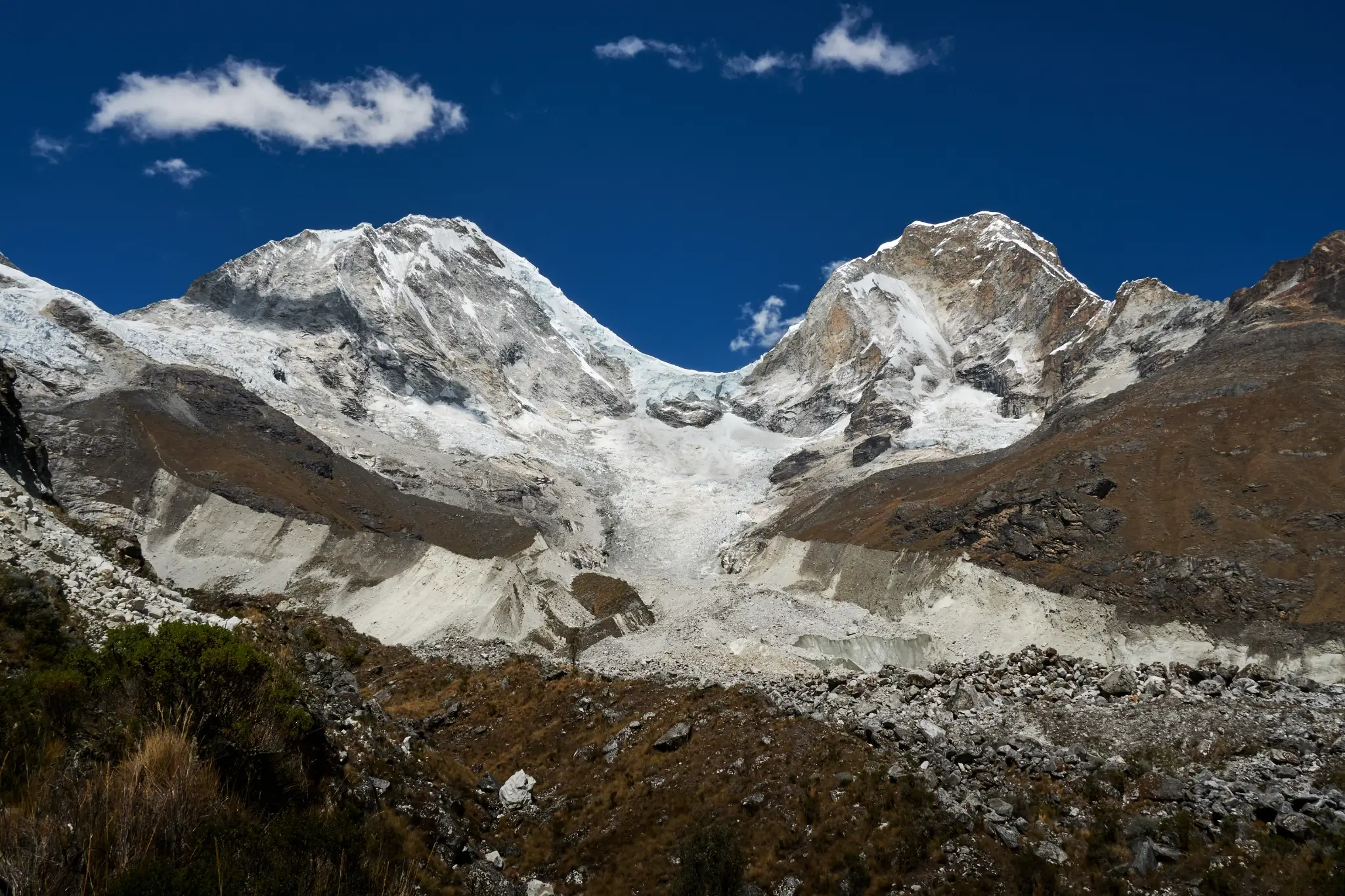
I want to be there at the precise moment when the first light reaches Huandoy: to watch pink seep across its vertical walls, orange sweep over them and transform them, and the frozen surface reflect a pearly, lustrous glow, almost alive. I want to witness the mountain emerging from the shadows until it stands revealed in all its grandeur.
Take care and talk soon!
Versione italiana
Un pezzetto di cielo nel Parco Nazionale Huascarán
Il colectivo si arrampica sobbalzando lungo il Callejón de Huaylas. I giganti ammantati di ghiaccio della Cordillera Blanca incombono sulla valle come divinità silenziose. L’autista sorpassa vecchi camion carichi di patate con una sicurezza che rasenta l’incoscienza.
Sui sedili stipati si accavallano lembi di polleras, scialli variopinti e mercanzie appoggiate sulle ginocchia. Si mastica coca, si addenta uno choclo con queso comprato al volo. Si sale, si scende, ci si stringe per fare posto, avvolti nel ritmo di una chuscada.
Le ruote si fermano a Yungay, sopra la memoria di una città sepolta. Il 31 maggio 1970, una valanga di ghiaccio, roccia e detriti precipitò dal versante dell’Huascarán, cancellando in pochi istanti il centro abitato.
Al Campo Santo, i roseti fioriscono là dove un tempo sorgevano le case. Una palma si leva verso il cielo.
Prendo un taxi per risalire la strada dissestata, che si avvita in tornanti sempre più stretti e si addentra tra i rilievi.
A ogni curva, la montagna guadagna spazio.
L’auto si ferma davanti al Cordillera Blanca Lodge. Due cani mi corrono incontro. Un uomo li segue con passo svelto. «Welcome!», esclama con un sorriso. È Charlie, il proprietario. Mi accompagna alla camera senza rallentare; le parole gli escono rapide, una dietro l’altra, mentre mi illustra gli orari della colazione e della cena e mi dà le indicazioni per organizzare i giorni che trascorrerò quassù.
Originario dell’Inghilterra, ha lasciato Londra e il lavoro da commercialista per esplorare le Ande. Per sette mesi ha percorso i sentieri della Cordillera Blanca, spesso senza altro riparo che una tenda. Poi ha scelto di fermarsi nella comunità rurale di Unidos Venceremos, dove ha costruito il lodge, sotto le grandi pareti dell’Huascarán e dell’Huandoy. Il rifugio si appoggia al paesaggio, quasi chiedendo il permesso di restare.
Lascio gli zaini nella stanza e mi incammino verso la vicina laguna Queushu.
Sotto le suole degli scarponi, la terra è dura, asciutta. L’erba d’alta quota cresce rada, ispida, piegata al vento.
Tra la vegetazione, un colibrì resta sospeso. Le ali vibrano così velocemente da renderlo immobile. Trattiene un lampo di colore, poi scatta via e scompare.
Oltre un lieve avvallamento, appare la laguna.
Un cerchio di sabbia bianca, bucato dall’acqua immobile, dove il cielo sembra riversarsi. Sulla sponda, le ombre delle montagne si addensano in macchie scure.
Antiche strutture si confondono con il terreno, mentre le chullpas, gli edifici funerari preispanici, emergono dai piccoli rilievi. Immagino le mani che hanno posato quelle pietre, il viavai di chi percorreva questi stessi sentieri. Spingo il pensiero oltre il profilo delle cime innevate, nel tentativo di avvicinarmi a ciò che abitava gli occhi di chi le contemplava. Non soltanto vette maestose, bensì gli Apus, spiriti antichi che vegliavano sugli uomini e sulla terra. Dalle loro altezze scendevano le acque che alimentavano la laguna e raggiungevano i campi. Forse, in questa conca, gli antichi riconoscevano un luogo in cui la vita aveva origine e a cui gli antenati, dopo la morte, potevano fare ritorno.
Il giorno seguente mi avvio lungo un sentiero che attraversa le coltivazioni.
L’aria tersa profuma incredibilmente di marmellata. File ordinate di fragole si distendono sul pendio, disseminando piccoli accenti rossi lungo le sue ondulazioni.
Poco più avanti, una coppia zappa il terreno. Accanto a loro, i due bambini giocano: il maschietto scava una buca, mentre la sorellina interra dell’erba. Mi fermo. Mi chiedono da dove vengo; io voglio sapere che cosa stanno coltivando.
«Oca», rispondono.
Il nome mi è sconosciuto. L’uomo si china, raccoglie alcuni tuberi appena estratti dalla terra e me li porge. Chiedo alla moglie quali altre varietà si coltivino nella zona. Comincia a elencarle nella sua lingua, una dopo l’altra. È una mappa del territorio, tracciata attraverso i nomi delle piante.
«Fresa. Papa. Oca. Olluco. Mashua. Quinoa. Habas. Cebada. Trigo.»
Una parte di quel mondo mi è già passata sotto gli occhi; il resto prende forma attraverso la sua voce. Mi indicano una collina, dietro la quale si trova la loro casa. Poco dopo, l’invito a pranzo per il giorno seguente arriva spontaneo, come se il nostro incontro avesse già trovato un posto alla loro tavola.
Quando ritorno in camera, Victor entra per accendere la stufa.
Si inginocchia, sistema la legna con cura, poi raccoglie la cenere accumulata ai suoi piedi e pulisce il pavimento. Si muove con precisione, senza fretta. Fuori è inverno e quassù le temperature oscillano tra i due e i dodici gradi, valori più miti di quanto mi aspettassi. Eppure apprezzo il tepore che comincia a diffondersi nella stanza, un comfort sconosciuto nelle abitazioni delle famiglie locali. Victor mi spiega che, anche nei mesi più freddi, l’unica fonte di calore domestico è il fuoco acceso per cucinare.
Durante la conversazione scopro che ha studiato per cinque anni alla scuola Don Bosco di Chacas, fondata nel 1979 da padre Ugo De Censi nell’ambito dell’Operazione Mato Grosso.
Dall’Italia giunsero scultori, pittori e maestri artigiani, portatori di antiche discipline che avrebbero trovato a Chacas nuovi interpreti. Da quell’incontro è nata una tradizione di fama internazionale. Victor la rievoca quando parla del legno: le sue dita riproducono ancora ciò che ha imparato in collegio. Si sofferma sulle diverse fasi della lavorazione: la pialla che leviga il legno grezzo, gli incastri, le misure, gli elementi da far combaciare.
Guardo i mobili della stanza. Sono opera degli artigiani della Familia de Artesanos Don Bosco.
Quella sera, nel locale per la cena, mi siedo davanti alla finestra.
Oltre il vetro, l’Huascarán domina ancora l’orizzonte.
Arrivano alcune guide andine, di passaggio per una notte durante una lunga traversata della cordigliera. Gli zaini pesanti scivolano sul pavimento, gli scarponi portano dentro la polvere scura dei sentieri, le voci si intrecciano al rumore dei passi stanchi.
Charlie attraversa la sala passando da un tavolo all’altro. Parla in fretta, sorride, scherza con gli ospiti, vuole sapere com’è andata la giornata.
Qualcuno gli chiede informazioni sul percorso del giorno dopo. Allora il tono cambia. Apre le mappe, controlla i dislivelli, calcola le distanze, consulta le previsioni meteorologiche. Segue con il dito il tracciato, indica un passaggio, si sofferma su una quota. La leggerezza di un momento prima lascia spazio a un’attenzione scrupolosa.
Intanto, oltre il vetro, il giorno si ritira. Il bianco abbagliante delle cime perde progressivamente luminosità. Le ombre si allungano sulle pareti di roccia, i contorni si fanno più morbidi, la lama di luce si assottiglia.
La montagna si spegne.
La notte avvolge i campi arati, le case di mattoni crudi e la vita che si raccoglie quando le porte si chiudono.
Mi avvicino a Charlie e gli chiedo se può lasciarmi pronta la colazione per il mattino: poche ore più tardi la sveglia suonerà. La partenza è fissata alle cinque e trenta.
Un viaggiatore australiano, seduto poco distante, ascolta la mia richiesta e mi domanda, stupito, perché mai voglia alzarmi tanto presto. Gli rispondo che desidero assaporare il cammino senza fretta.
Voglio esserci nell’istante esatto in cui la prima luce raggiunge l’Huandoy: vedere il rosa insinuarsi sulle pareti verticali, l’arancio attraversarle e trasformarle, la superficie gelata restituire una luminosità madreperlacea, lucida, quasi viva. Voglio assistere alla montagna che emerge dall’ombra, fino a mostrarsi in tutta la sua imponenza.
- Callejón de Huaylas and Cordillera Blanca — The Callejón de Huaylas is an Andean valley in Peru’s Áncash region, running between the Cordillera Blanca to the east and the Cordillera Negra to the west. The Cordillera Blanca is one of the country’s principal mountain ranges and home to its highest peaks. ↩︎
- Pollera — A traditional skirt worn by women in many Andean communities, often made from brightly coloured fabric and sometimes decorated with embroidery. ↩︎
- Coca leaves — The leaves of the coca plant have been used in the Andes for centuries. They are traditionally chewed, often as part of everyday life in high-altitude communities. ↩︎
- Choclo con queso — A popular Andean snack consisting of choclo, a variety of large-kernel corn, served with fresh cheese. ↩︎
- Chuscada — A traditional musical and dance form from the Áncash region, closely related to the Andean huayno. It is known for its lively rhythm and is often accompanied by violin and roncadora, a traditional wind instrument. ↩︎
- Chullpas — Pre-Hispanic funerary structures found in several parts of the Andes. They were built to house or preserve the remains of the dead and are often described as stone mausoleums. ↩︎
- Apus — In Andean belief, apus are mountain spirits or powerful mountain beings, regarded in many communities as guardians who watch over people and the surrounding land. ↩︎
- Oca, olluco and mashua — Three traditional Andean tubers cultivated for centuries in the highlands. Oca (Oxalis tuberosa), olluco (Ullucus tuberosus) and mashua (Tropaeolum tuberosum) are valued for their distinctive flavours and their adaptation to mountain environments. ↩︎
- Operazione Mato Grosso and the Don Bosco school in Chacas — Operazione Mato Grosso is a volunteer movement founded in Italy in 1967 by Salesian priests, including Father Ugo De Censi. After moving to Peru in 1976, De Censi established a woodcarving school in Chacas in 1979, offering young people free education and vocational training. The school became the foundation of a wider network of workshops and artisan activities. ↩︎
- Familia de Artesanos Don Bosco — An association of Peruvian artisans founded in Chacas in 1985 by Father Ugo De Censi. It brings together craftspeople trained in the Don Bosco workshops, including woodcarvers, sculptors, painters and furniture makers. Its work is rooted in the aim of creating opportunities for young people while allowing them to remain in their Andean communities. ↩︎