
Happy Tuesday, my friend! Are you ready to dive into the second part of Tamara’s Seoul travel story? If you missed the first article, you can find it here.
I won’t add much more. What I feel from Tamara’s words is a sense of calmness, tradition, a glorious past, and a bright future.
Take a deep breath — and let’s go!
Dinner is a sensory celebration. At a renowned restaurant, I try Korean barbecue: wagyu beef sliced to order, laid on a scorching grill embedded in the center of the table. The heat enhances the marbling, the aroma fills the room. Around me, colorful small plates of banchan1, ssamjang2, lettuce leaves, garlic, and spicy kimchi3. At a nearby table, a mother teaches her son how to use chopsticks. Her movements are slow, measured, almost choreographed. In that everyday scene, an aesthetic transcending utility is reflected — an education in beauty through habit.
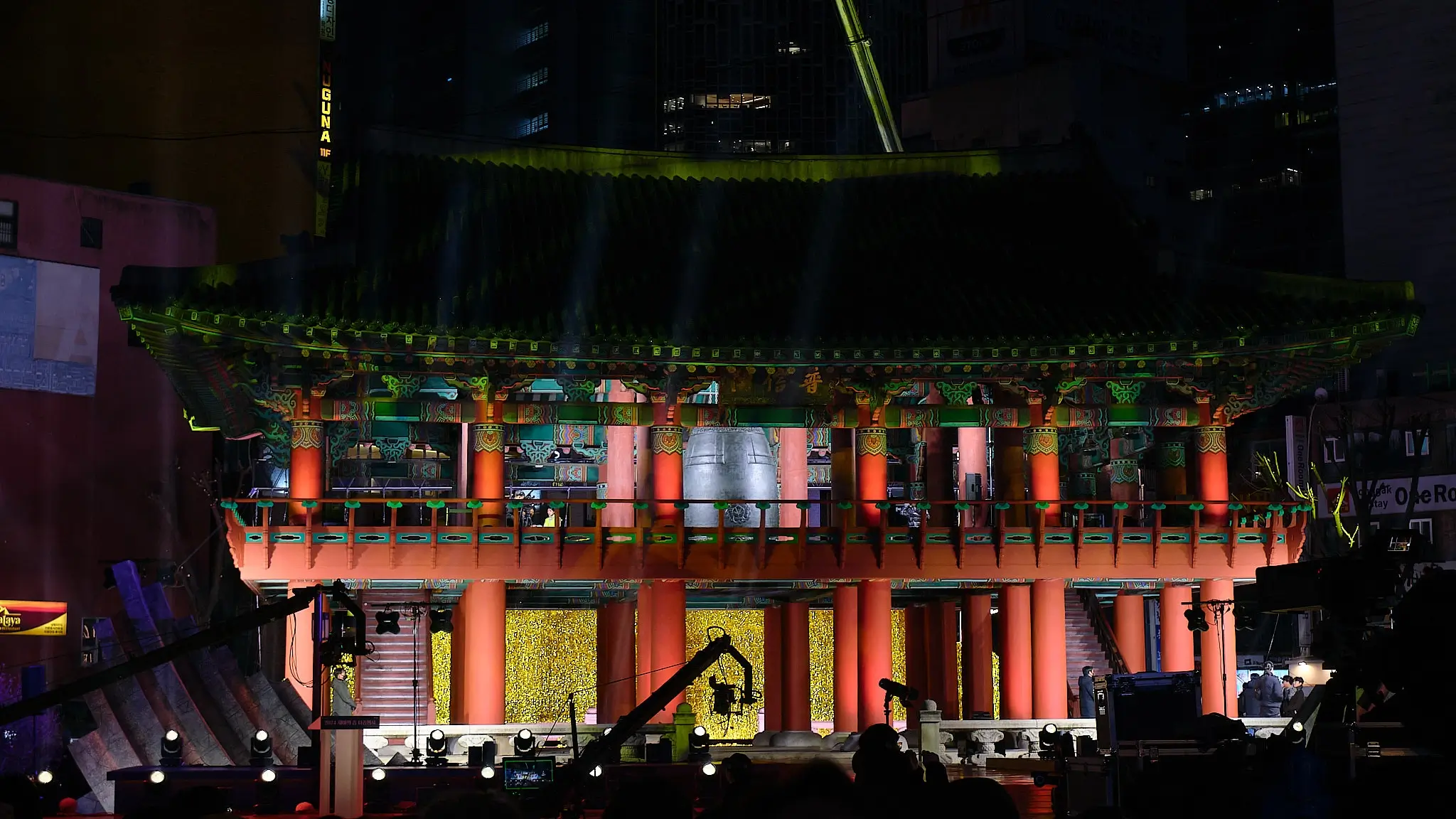
At midnight, I join the crowd gathered in front of the Bosingak bell. The twelve chimes mark the entrance into 2025. People bow, hug, while an artificial sun rises behind the stage: a symbol of rebirth. In Korea, the dawn of the first day of the year is observed with devotion, often by climbing to the top of a mountain.
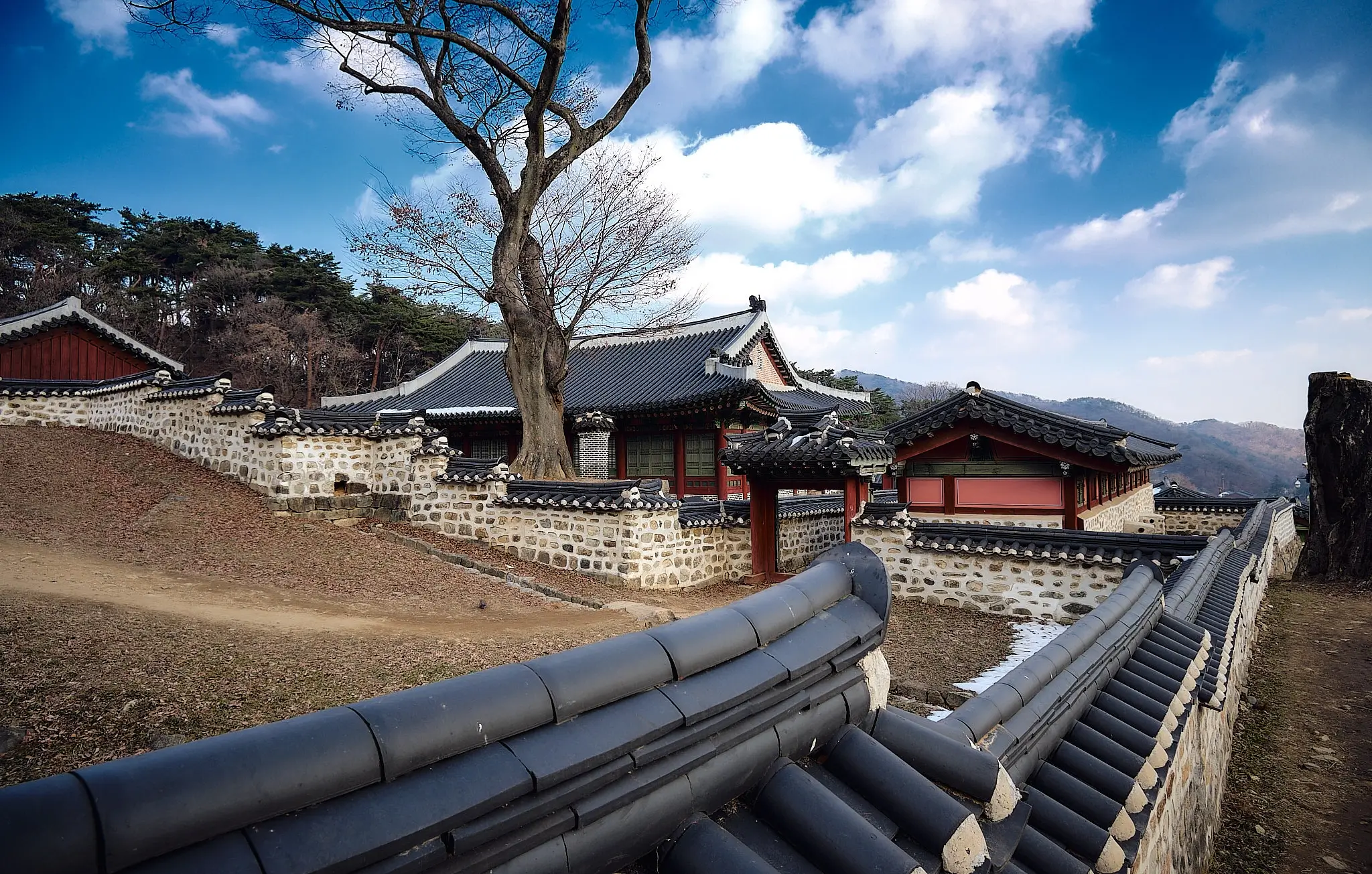
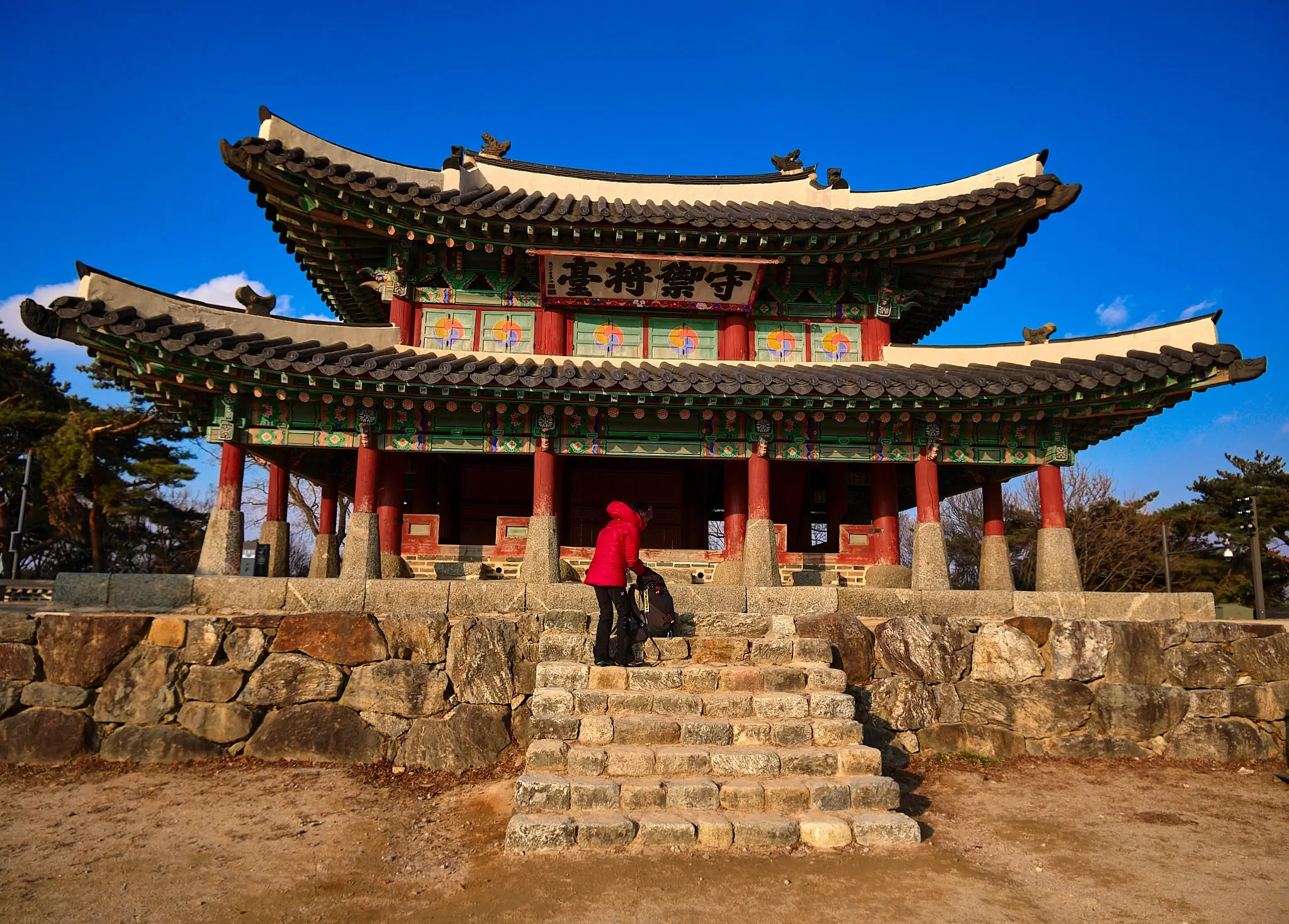
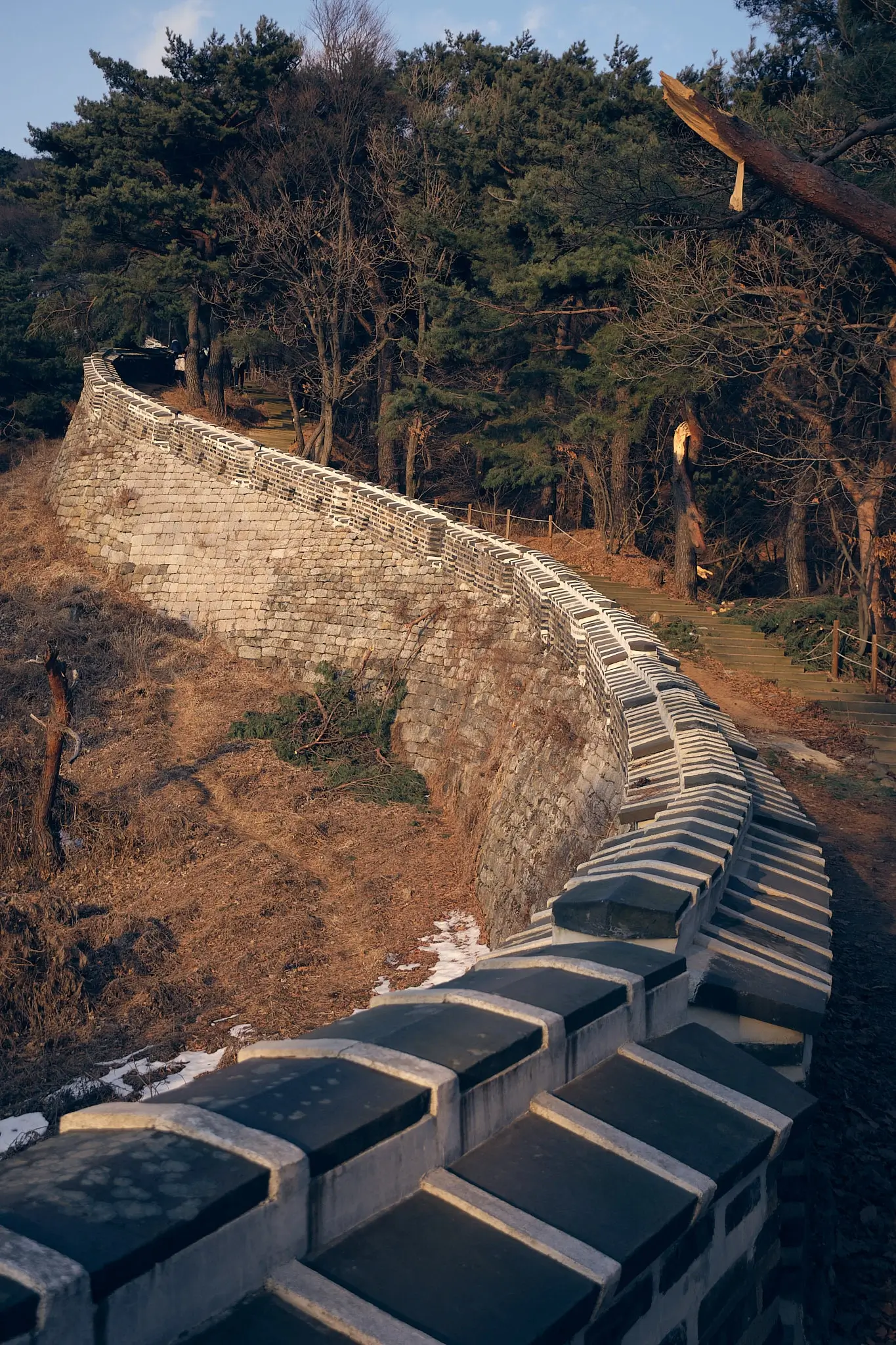
So I do the same. On January 1st, I hike toward Namhansanseong Fortress, an ancient defensive outpost from the Joseon period. The path winds through snow-covered pines, mossy ramparts, and stone steps. At the top of Cheongnyangsan Mountain, I reach Sueojangdae, the majestic military pavilion that was the king’s refuge during sieges. From here, generals and strategists watched the valleys, communicating with smoke and flag signals, drawing plans amid frost and anxiety.
Now the city spreads out on the horizon, calm and luminous, far from the past that once protected it. The panorama is solemn: thin air, silence heavy with memory.
On the pavilion’s steps, a couple takes mandarins out of their backpack and offers me one. Here it’s tradition to share food during treks: a simple gesture, but warmer than any tea.
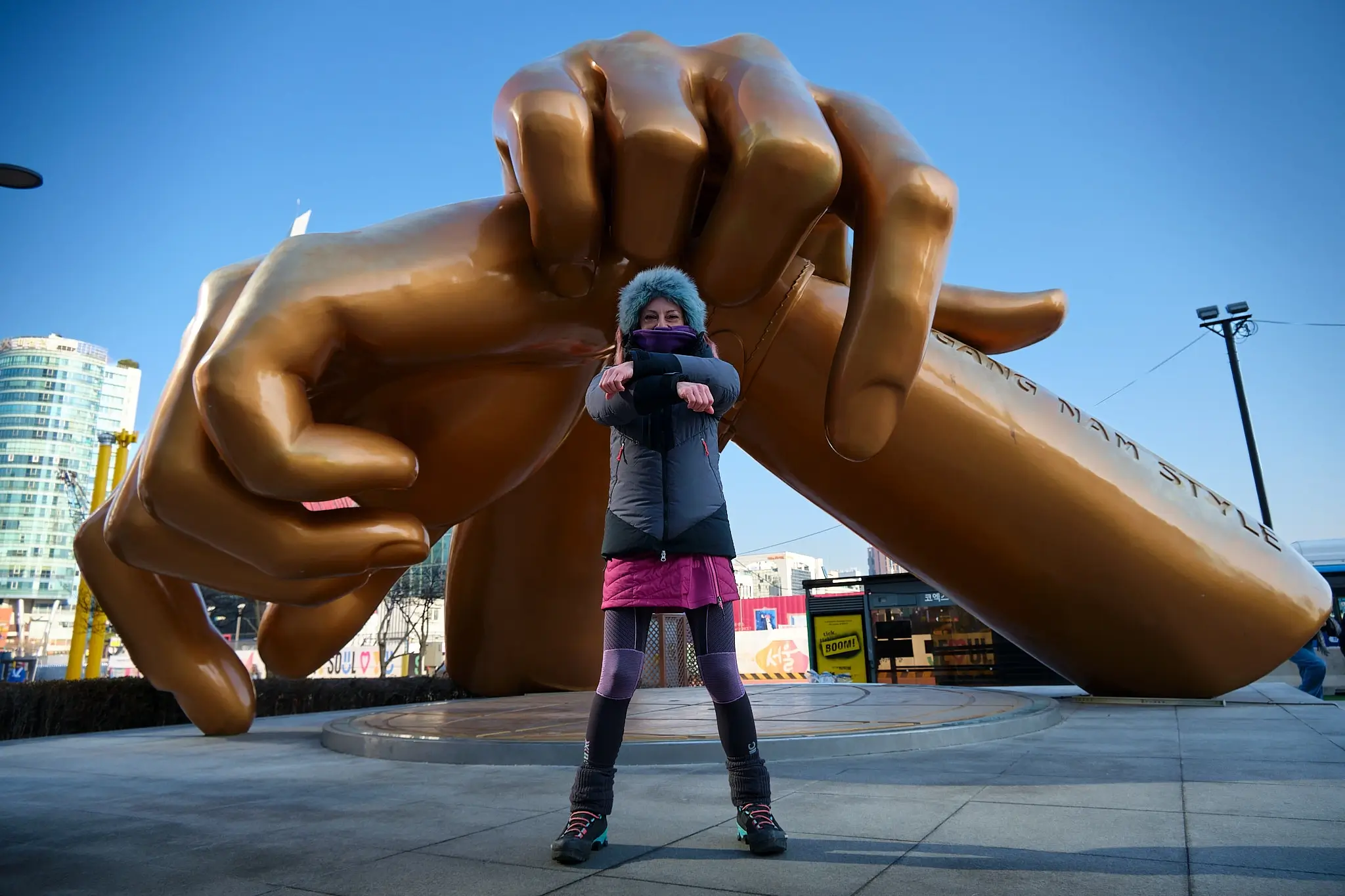
The next day, I dive into the polished elegance of Gangnam, among glittering boutiques and mirrored facades. The shop windows shine, people look impeccable, and the Figure Museum W gives me a happy nerd moment. Between the columns of the Starfield Library — one of the most spectacular in the world — I look up at walls covered with books. High above: volumes upon volumes, like paper temples. I snap the usual photo under the statue of the “Gangnam Style” hands. Yes, it’s kitsch. But how to resist? PSY’s 2012 song made Gangnam the world’s most famous district, thanks to a satirical dance that went viral. I join the tourists and mimic the dance steps: clumsy, but laughing at myself.
Yet, just a bit further, Bongeunsa Temple stands firm like an ancient root. Spirituality hasn’t retreated but adapted, offering a place of reflection amid glass and steel skyscrapers. I pass through the wooden gate and enter the white gravel courtyard. Monks walk slowly, bells resonate like echoes of a suspended time. Before the large seated Buddha, I watch people bow three times with devotion.
In the evening, I ascend the Lotte World Tower, the tallest skyscraper in Korea — and the fifth tallest in the world — at 555 meters. The elevator rushes up to the 104th floor in sixty seconds, through LED lights that look like something out of a sci-fi movie. From above, Seoul at sunset spreads out like a tapestry of copper and pink. The Han River glistens like silk laid out in the sun, neighborhoods reveal themselves like light weaves, resembling a hanbok I’ve long wished to wear.

The next morning, I pick one in pastel tones, refined like those of the noblewomen of the Joseon dynasty. I slip on the wide sleeves and tie the ribbons that dance with every movement.
The girl who does my hair braids the strands with ancient gestures and secures them with a jokduri, the ceremonial headpiece still worn today in traditional Korean weddings.
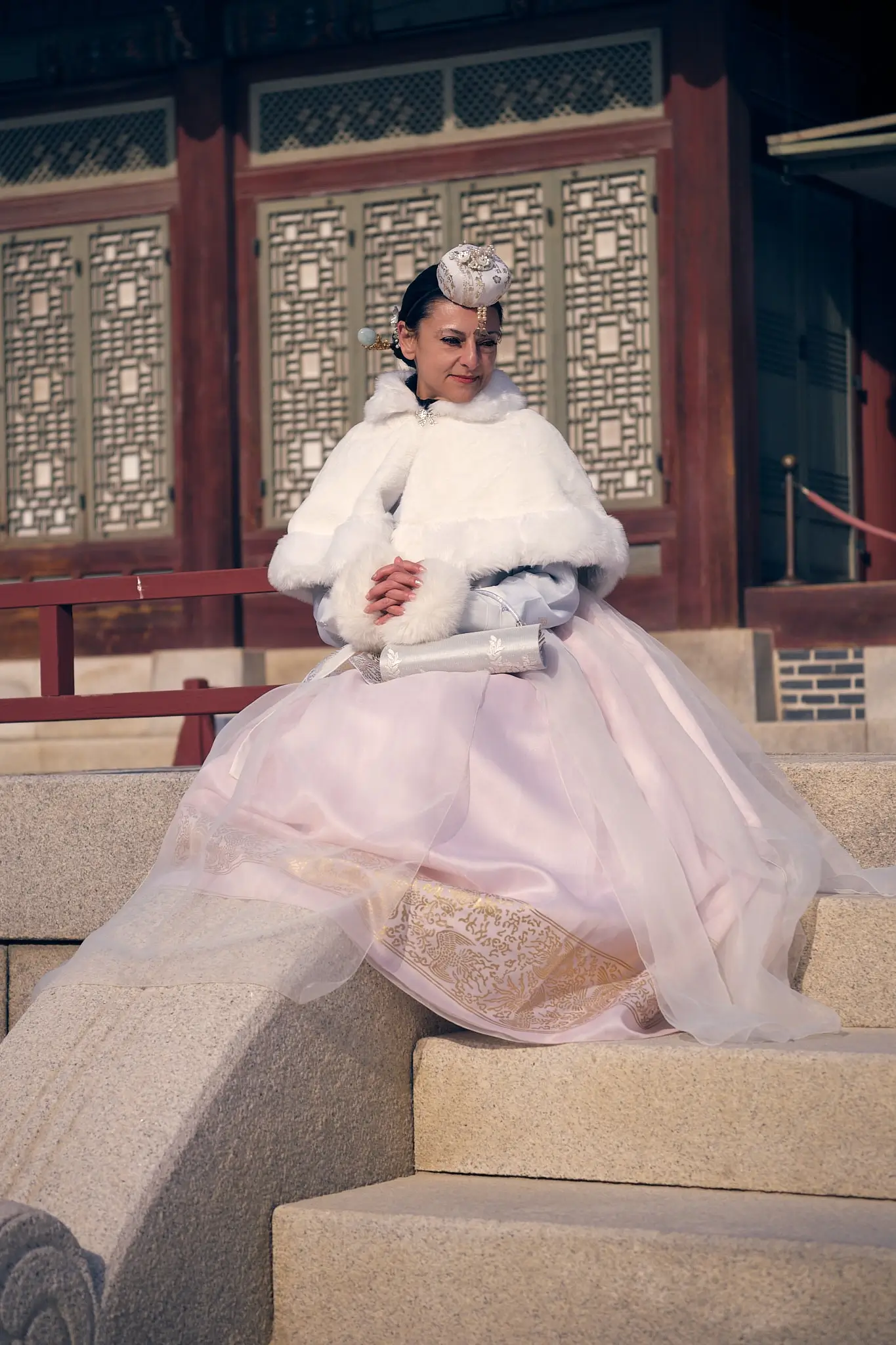
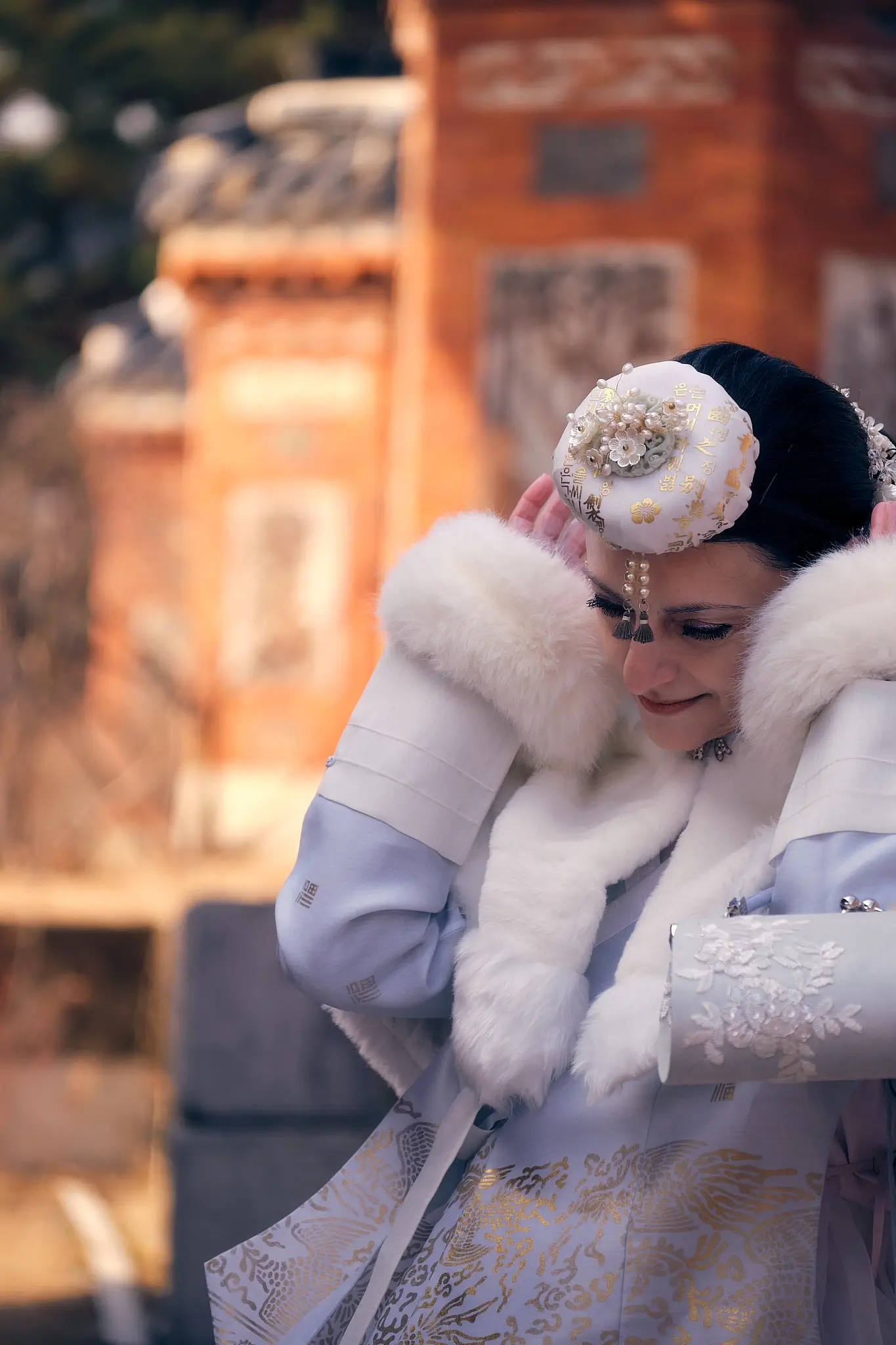
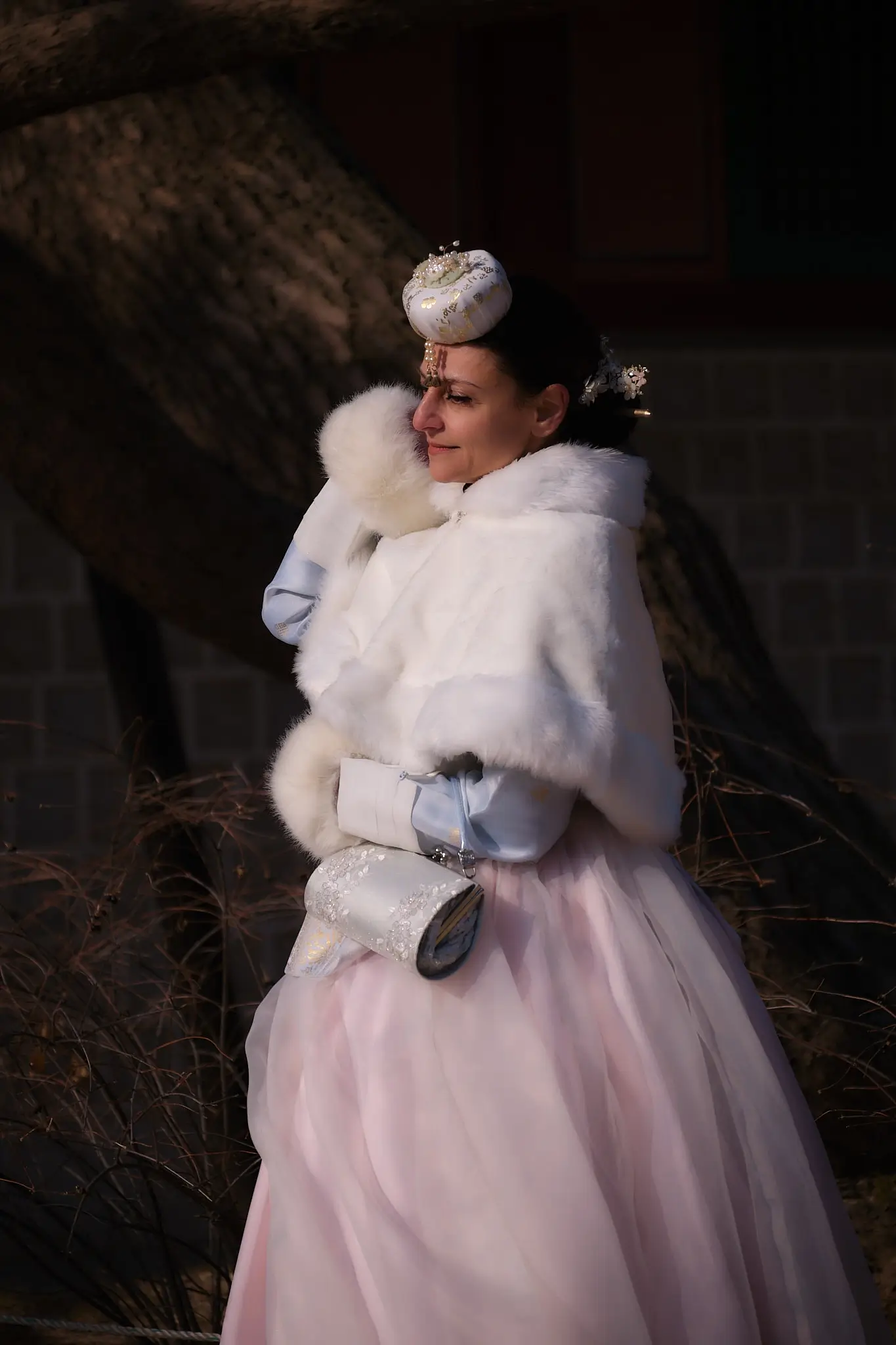
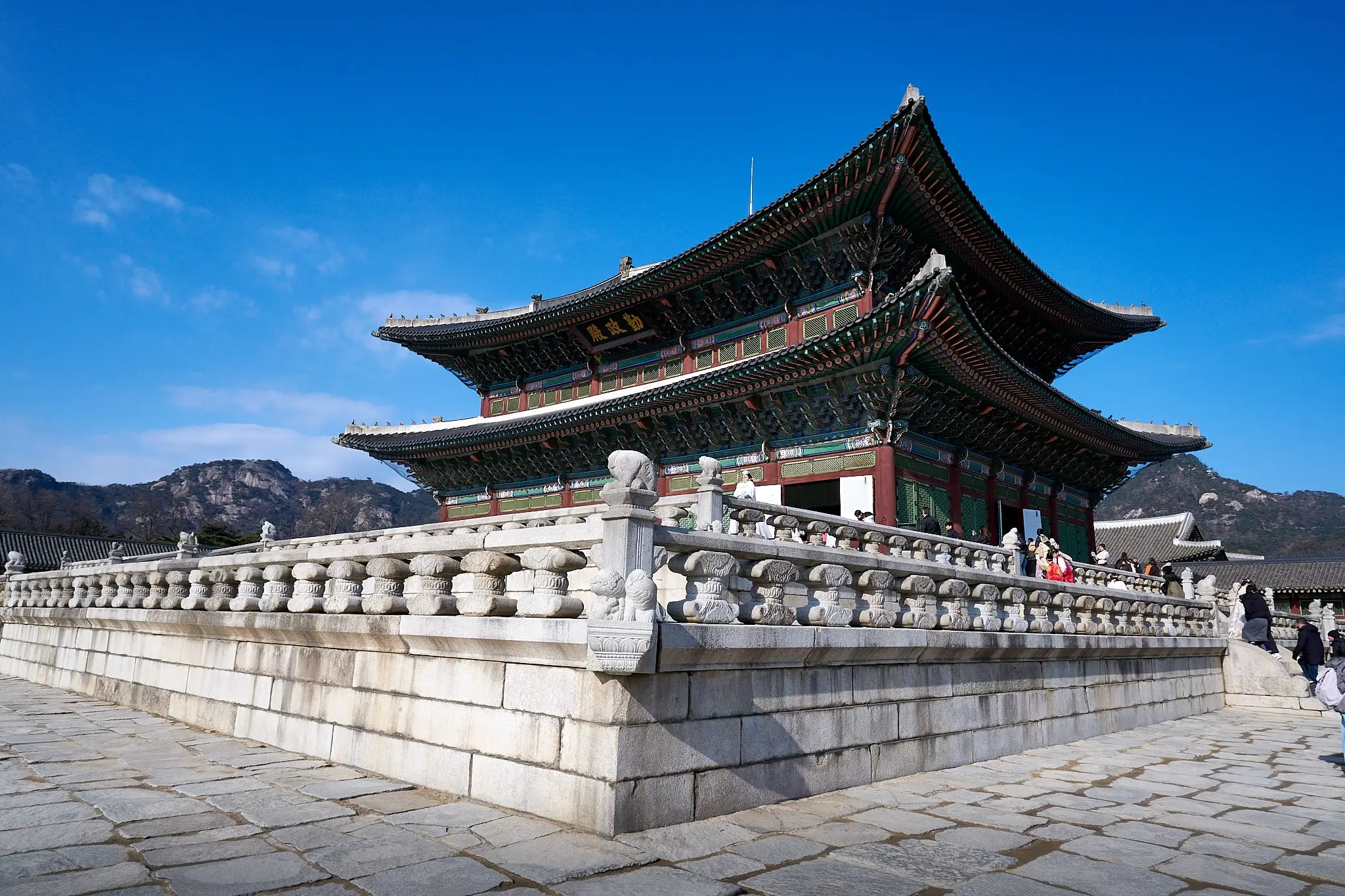
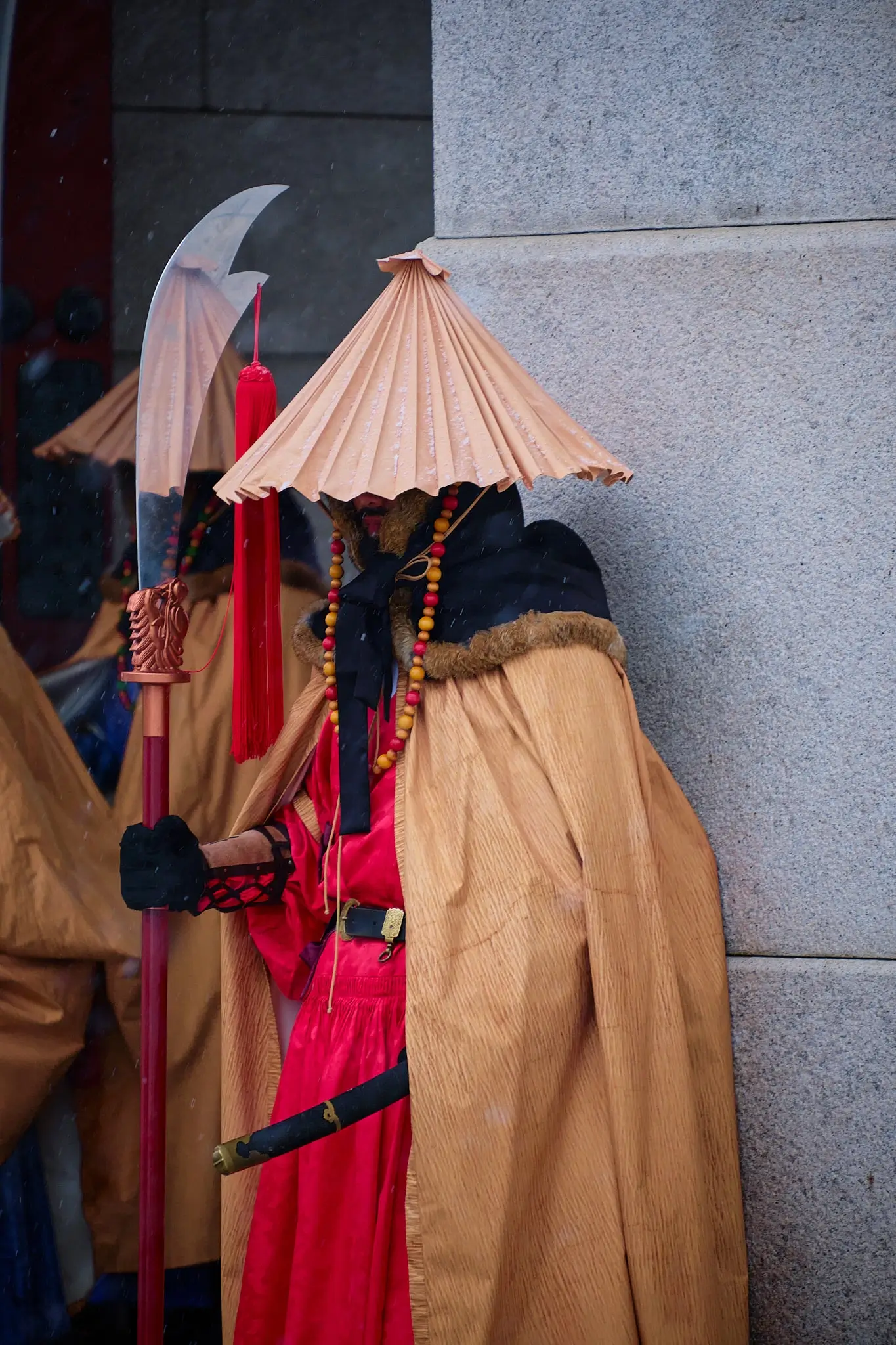
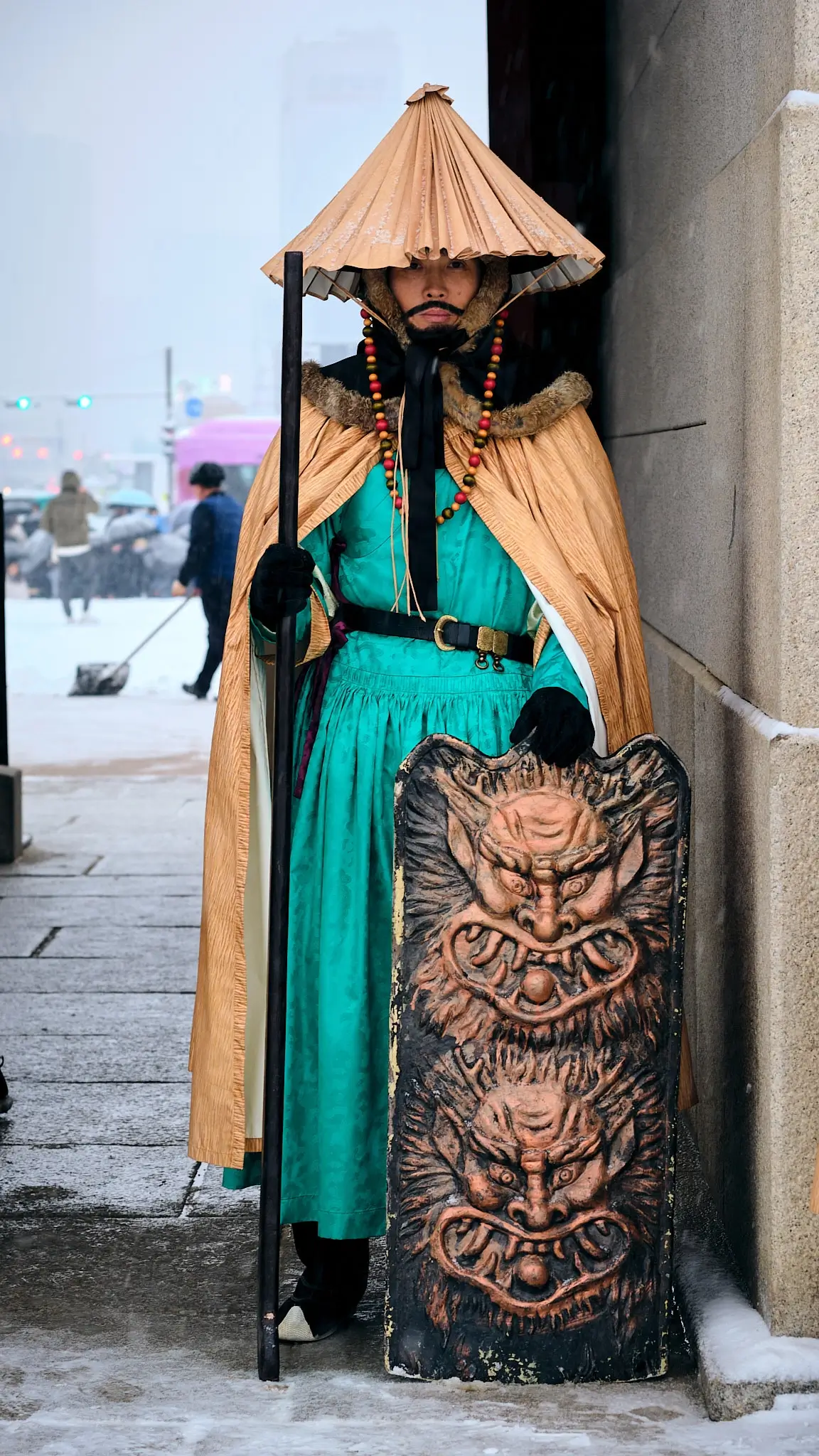
I walk dreamily to Gyeongbokgung, the main palace of the Joseon dynasty. Passing through the monumental Gwanghwamun gate, my imagination carries me into court life, between sober elegance and Confucian discipline. I am led by the solemn changing of the guard: codified gestures, the rhythmic sound of drums, the red and blue uniforms slicing through the austere gray walls like dreams too vivid to stay locked inside a palace. I visit the Folklore Museum, where the everyday life of the Korean people is told through objects, clothing, and traditions; then the more intimate Deoksugung, with its elegant mix of Korean and Western architecture. And I feel inside a story that isn’t mine, yet welcomes me anyway.
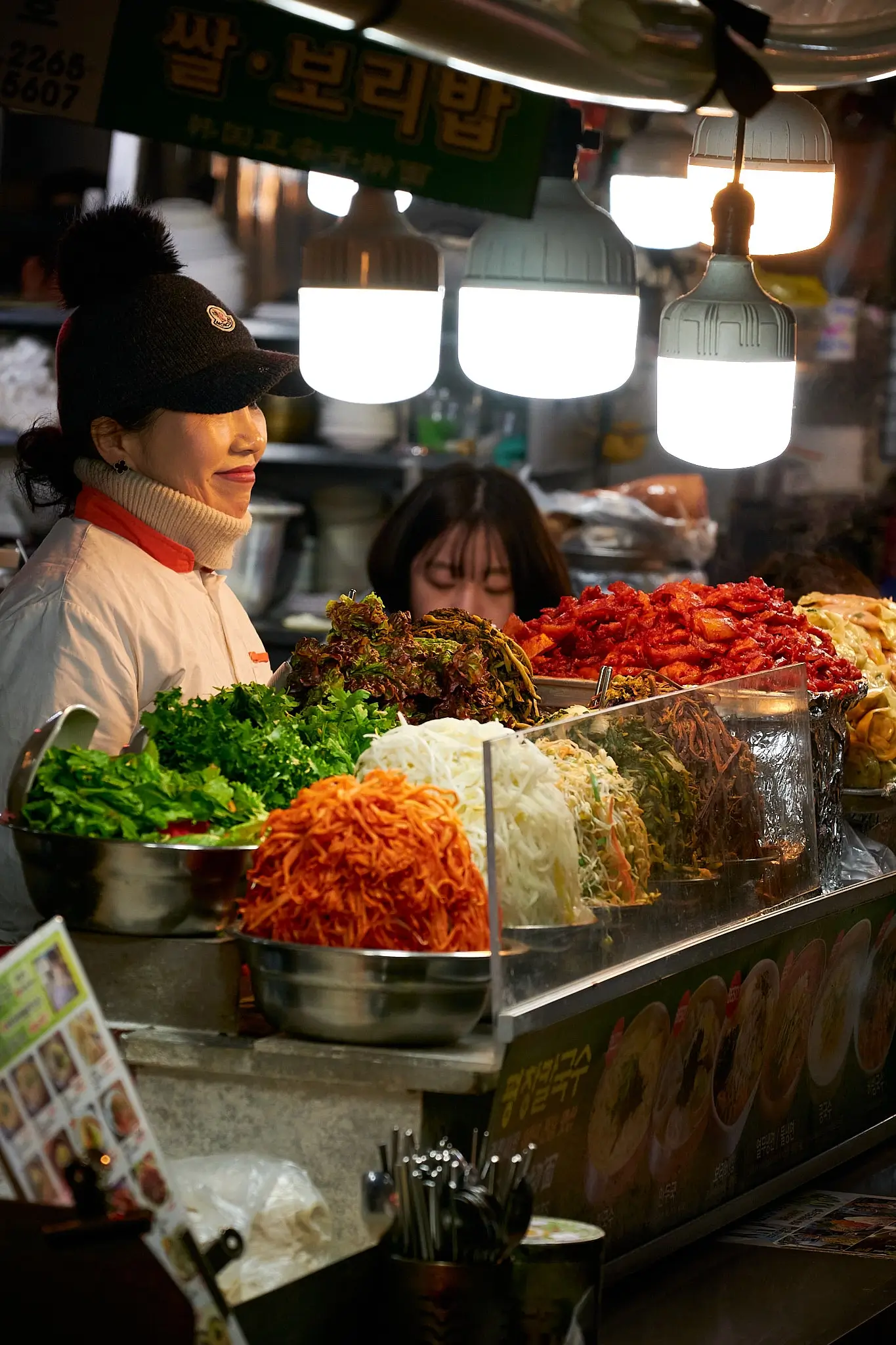
Gwangjang Market brings me back to the concreteness of flavors. Here everything is immediate: the crunch of mung bean pancakes (bindaetteok), the sweetness of honey yakgwa4, the surprising softness of soondae — blood sausage with vermicelli. Steam surrounds me, hands get greasy, faces light up. It’s street food, but also popular tradition.
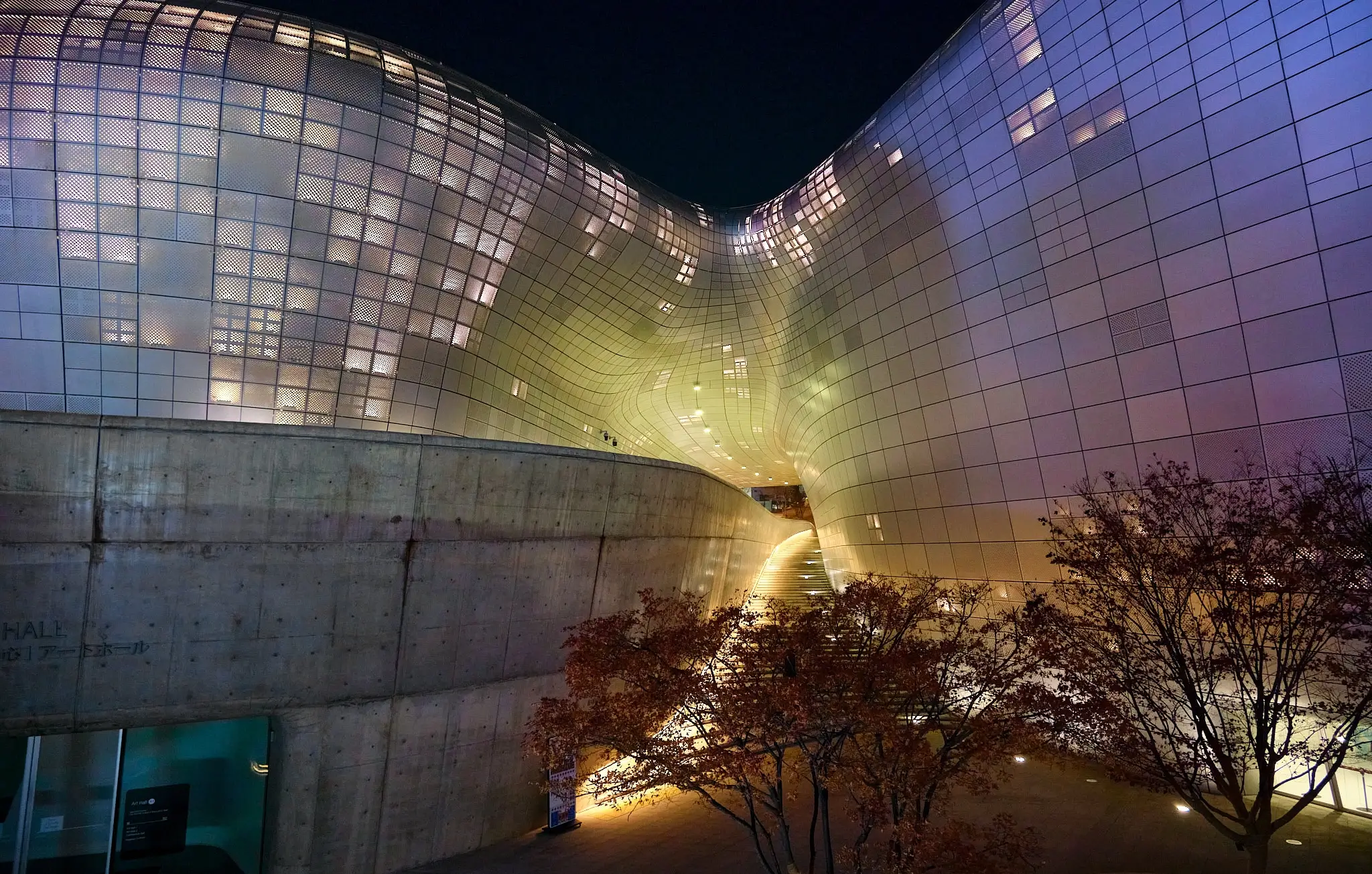
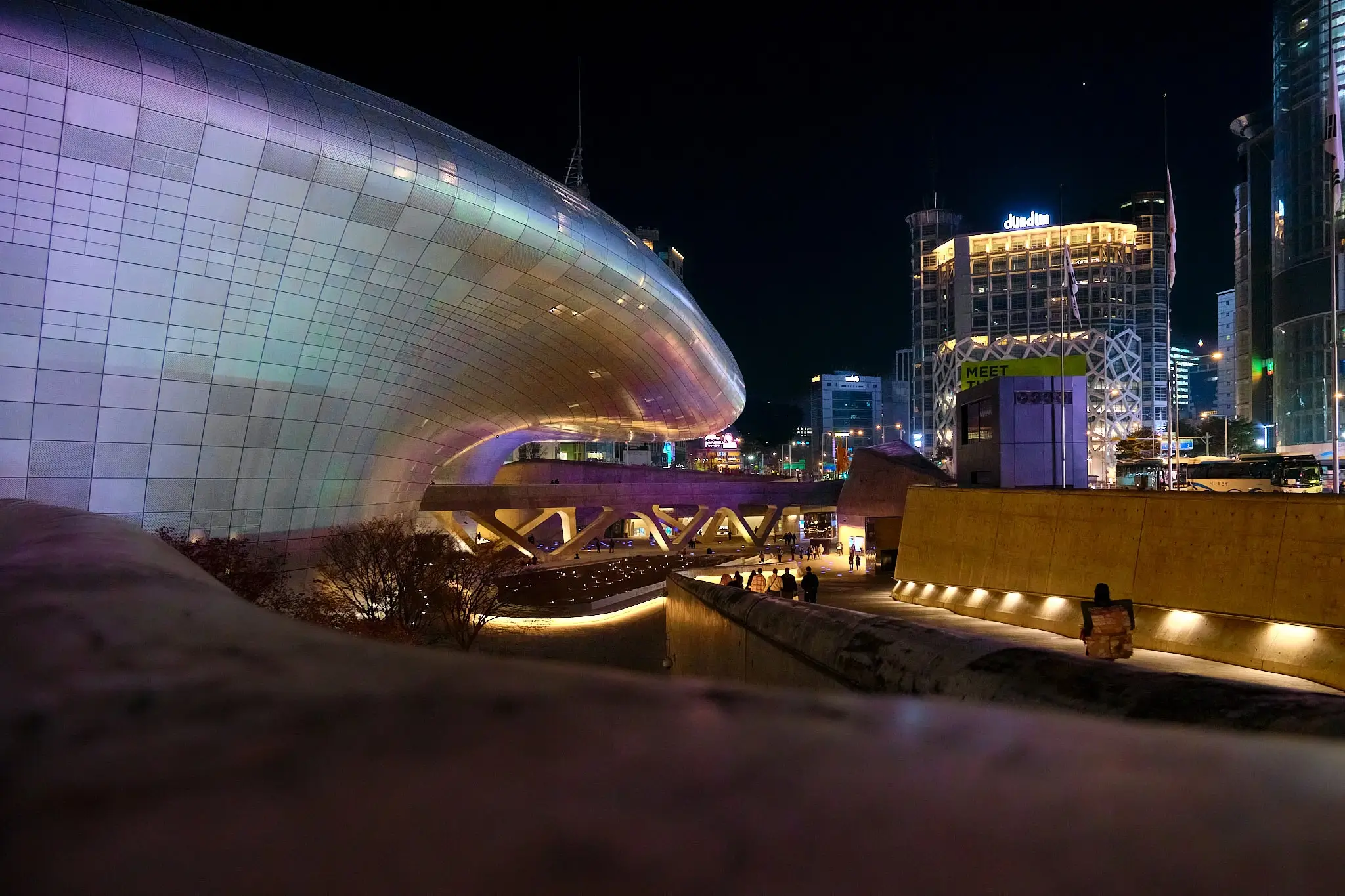
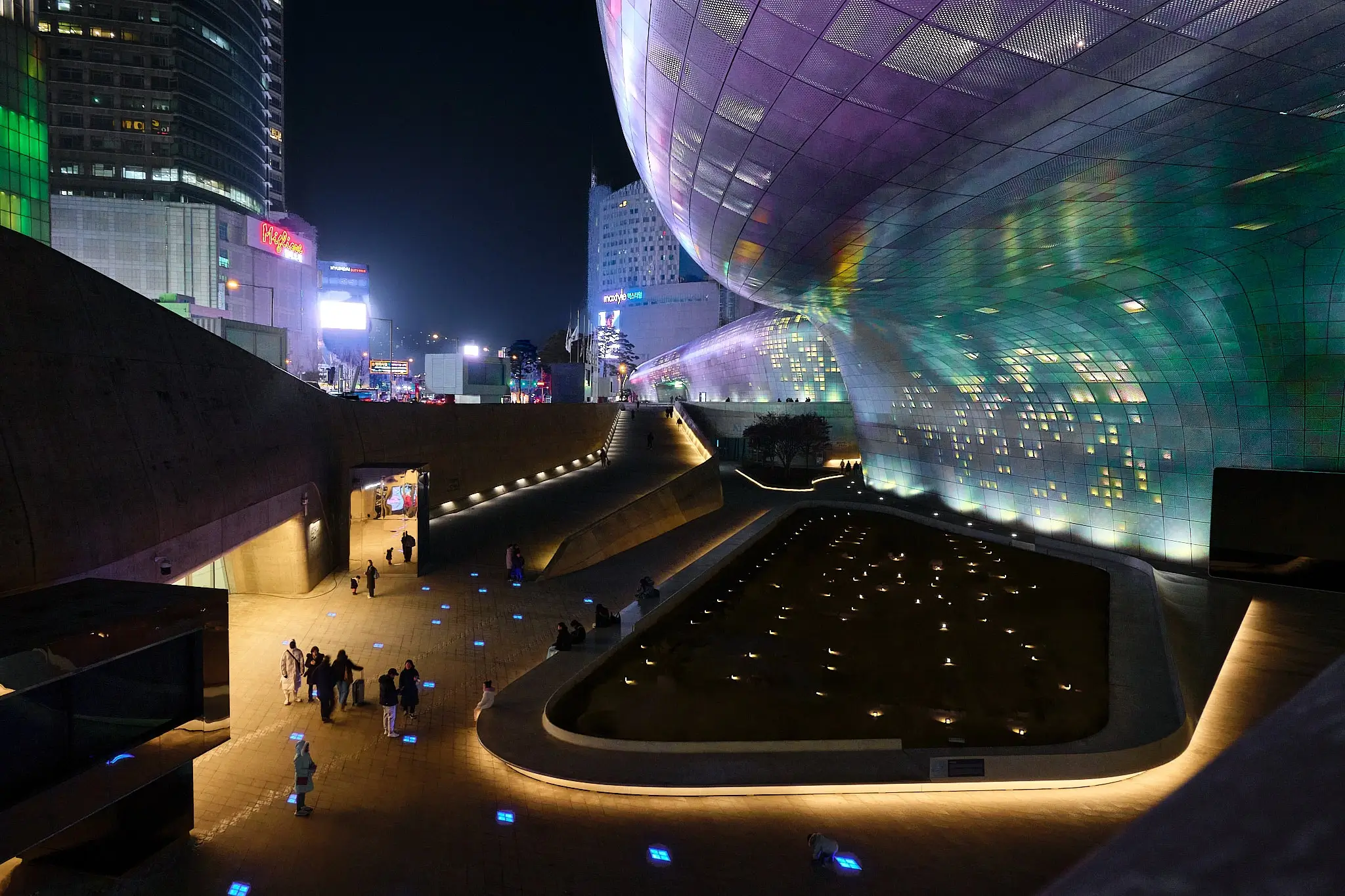
Not far away, the Dongdaemun Design Plaza, designed by star architect Zaha Hadid, undulates like an alien sculpture. A little further on, the ancient Dongdaemun Gate reminds that every future sinks its roots in the past.
I head up to Bukchon Hanok Village, where traditional Korean houses — hanok — overlook narrow alleys. A neighborhood reinterpreted with a contemporary tone where the past beats with a new, vibrant, welcoming daily life. Here, I choose to stay in an authentic hanok. Elegance lies in the details: the black-tiled roof, a red lantern in the window, intricately carved cypress pillars. The entrance is discreet, almost camouflaged among the low walls of the alley. I enter the courtyard, slide open the door, take off my shoes, and slip into slippers. The wood creaks underfoot, light filtered through hanji paper5 caresses the white walls. On the low table, I find green tea. I prepare it. The steam rises slowly and fragrantly.
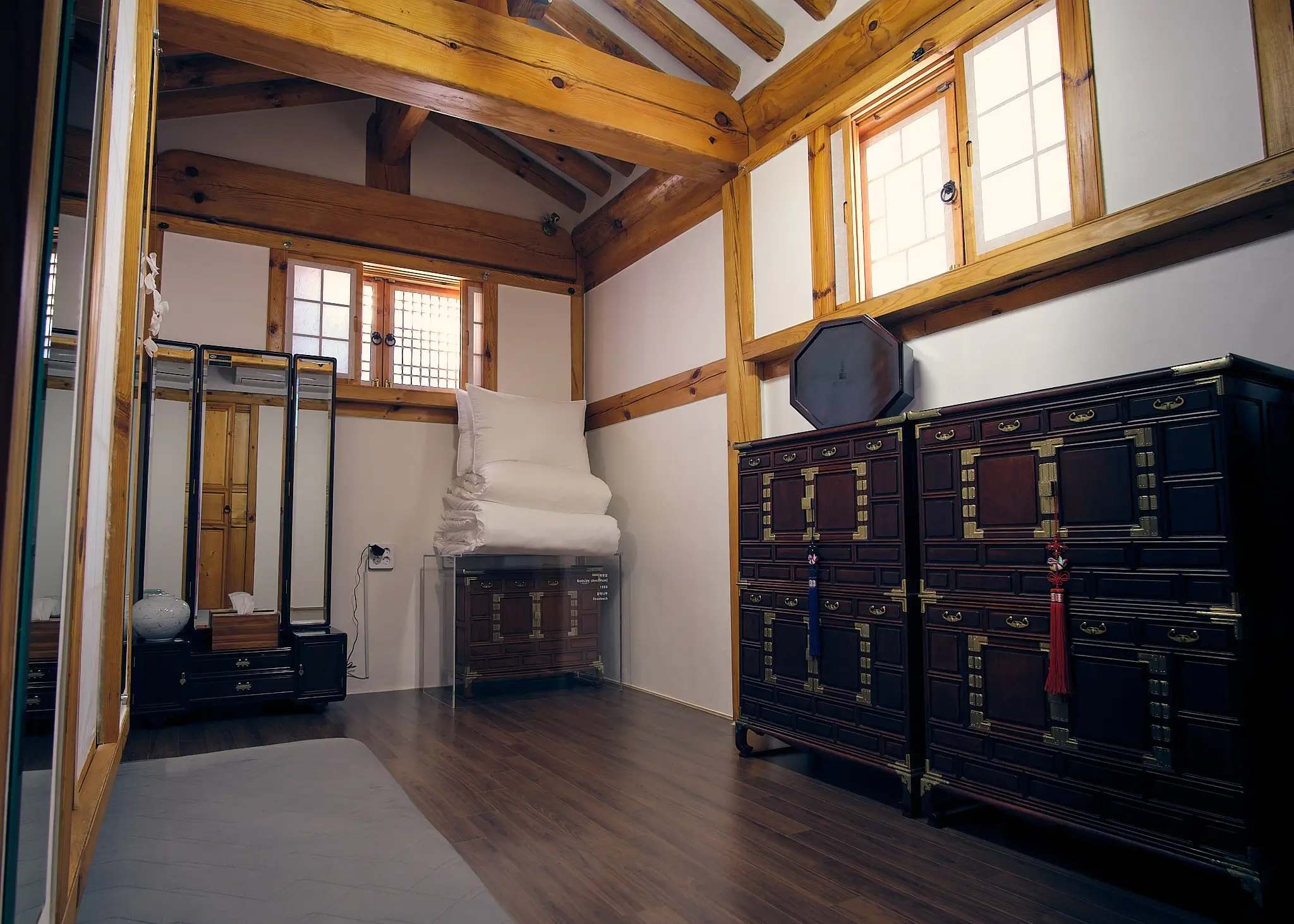
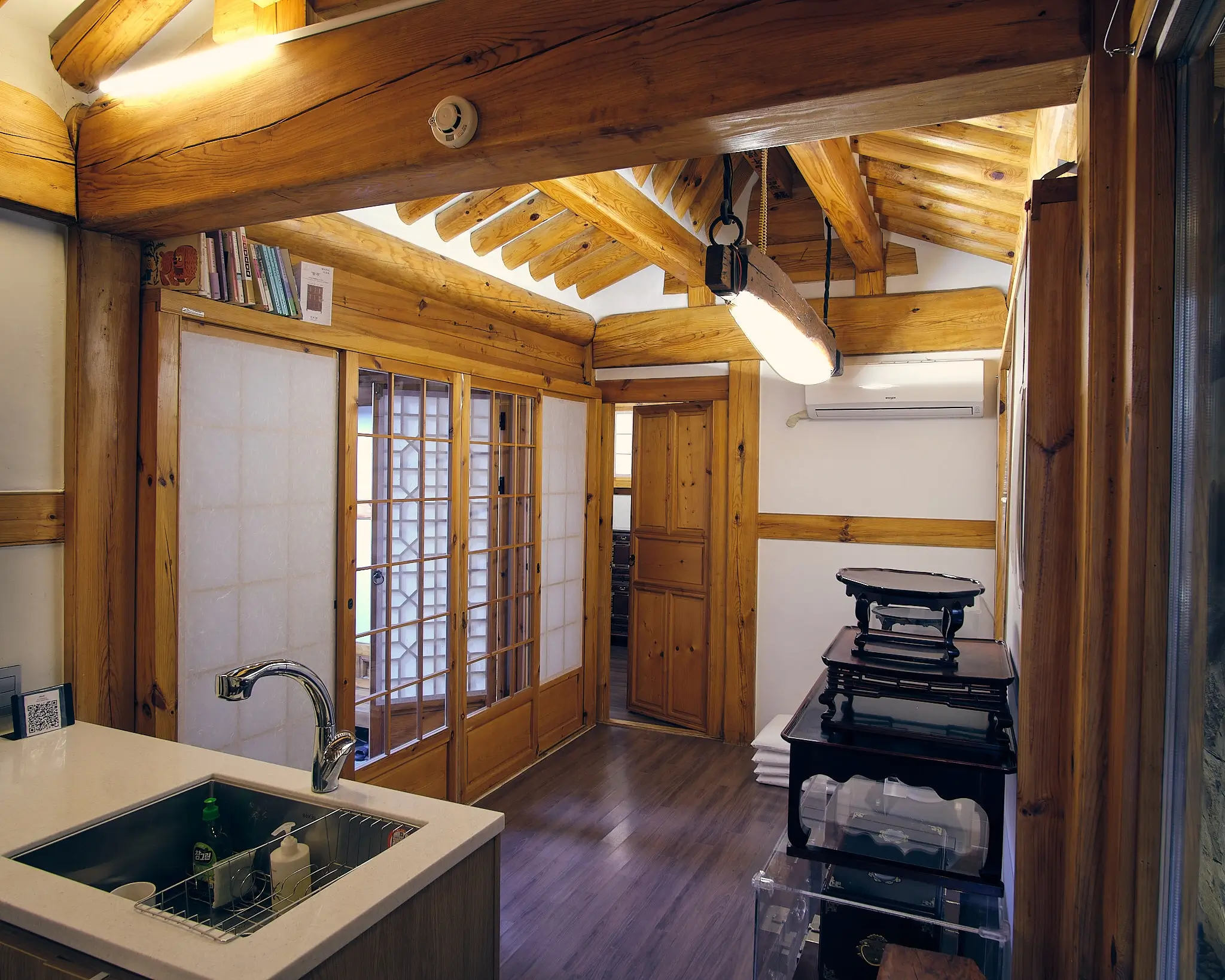
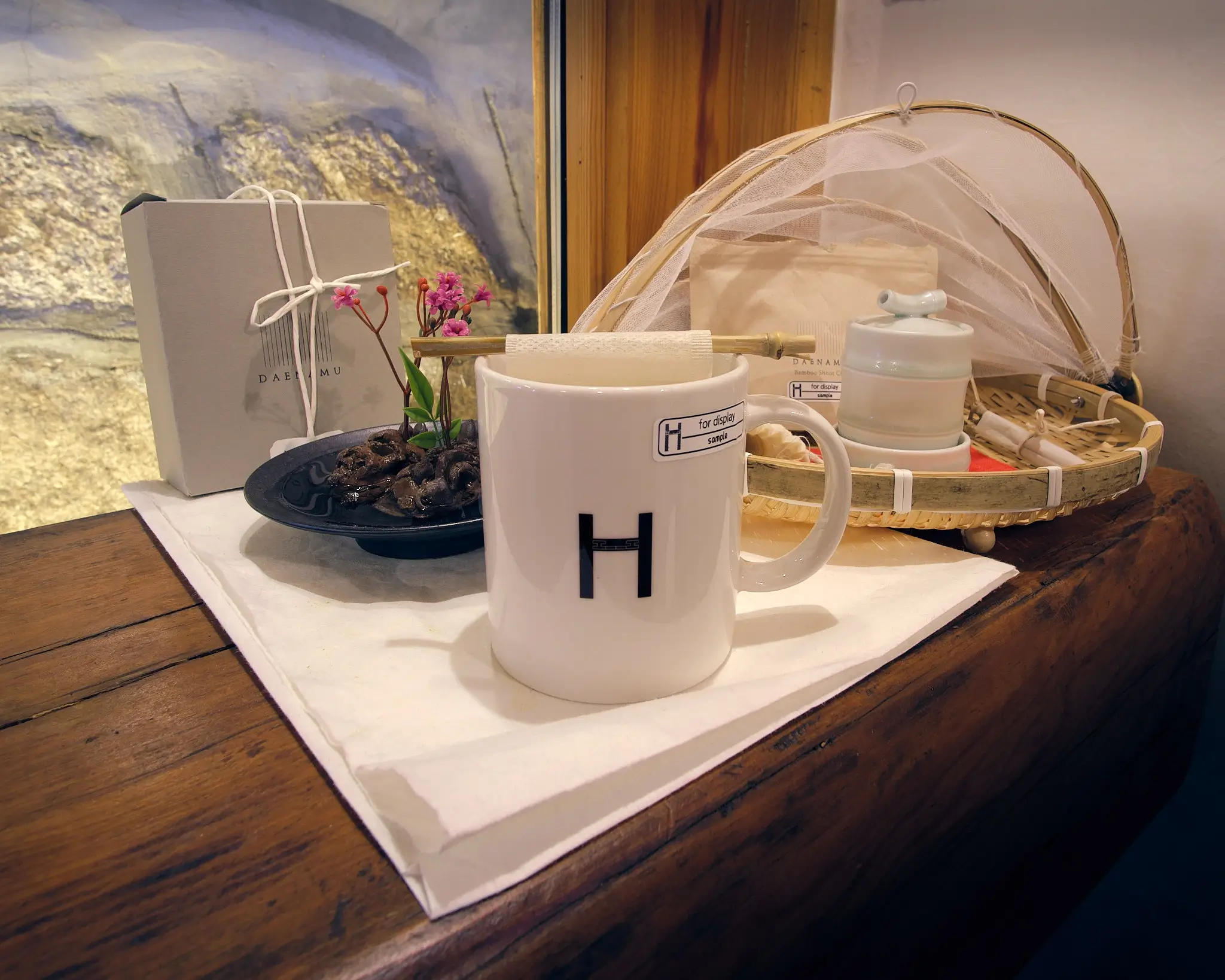
Sitting on the heated floor (ondol), I sip my tea while watching the wind gently shake the bamboo outside the window. In the room, the futon6 is rolled up in a corner. I lay it out carefully, trying to imitate the quiet order with which Koreans prepare it. I place my clothes on the essential furniture. Everything makes sense.
I realize that in Seoul, time doesn’t rush: it splits. On one side, it leaps toward the future with the swift pace of technology; on the other, it returns gracefully with a bow, among temples, hanbok, and secret gardens. And I, in the middle, have let myself be enchanted.
Take care and talk soon!
1 Banchan (반찬): an assortment of small Korean side dishes served at the center of the table and shared among diners.
2 Ssamjang (쌈장): a thick and flavorful sauce made from fermented soybean paste, chili paste, minced garlic, sesame oil, and sometimes green onions or sugar.
3 Kimchi (김치): a signature Korean dish of fermented vegetables, mainly napa cabbage or radishes, seasoned with chili pepper, garlic, ginger, green onions, and fish sauce.
4 Yakgwa (약과): a traditional Korean sweet made from wheat flour, honey, sesame oil, and rice syrup.
5 Hanji paper is traditional Korean handmade paper made from the bark fiber of the mulberry tree. It is known for its strength durability, and insulating properties, making it suitable for a variety of uses, including doors and windows in traditional Korean houses.
6 Korean futon, known as “yo” (요), is a traditional thin padded mattress used for sleeping directly on the floor. It is often made from cotton or other natural materials and can be rolled