
Questo articolo è disponibile anche in Italiano
Happy Tuesday my dear friend! Welcome back to another appointment with My Travel Diary Chronicles, where Tamara takes us to her beautiful travels around the world.
The destination, which is only a layover on the way back home, is the city of Hanoi.
Colors, traditions, smells of an ancient world mix up with lights and vitality of modern times.
Once again, hold on tight and get ready for the trip!
Four thirty in the morning is not an hour. It is a threshold.
It is the moment when cities do not yet know what mood they will be in.
When the plane touches down, Hanoi is sunk in a warm, humid darkness that smells of wet earth and gasoline. I have a long layover, a few hours stolen from a much larger journey.
As I wait for my luggage on the slowly turning carousel, I have the feeling that I have found a crack in time through which I can slip.
The taxi takes us to a café that is still empty.
Chairs are turned upside down on the tables, someone is sweeping the street outside the entrance.
We wait for Elena, the guide I have chosen for these few hours, while slowly sipping an intense coffee with a lingering chocolate aftertaste. When she arrives, she takes us straight to our first stop, as if the city itself had drawn up a schedule for us to follow.
Hoan Kiem Lake, the Lake of the Returned Sword, opens before us beneath a thin mist, almost suspended between water and legend.
Its name tells the story of Emperor Lê Lợi, who liberated Vietnam with the help of a magical sword received from the Dragon King of the Waters.
It was here that a giant turtle emerged to reclaim it. Lê Lợi returned the sword, and that gesture left a lasting lesson in the collective memory: a sword is not a trophy, but a temporary mandate to serve one’s country; power is not something to possess, but something to return once one’s task is complete.
A red lacquered bridge leads to Ngoc Son Temple, wrapped in incense like an image already composed.
In one corner, an ông đồ in a scarlet tunic and with a white beard dips his brush into the ink.
The stroke widens, narrows, turns back upon itself.
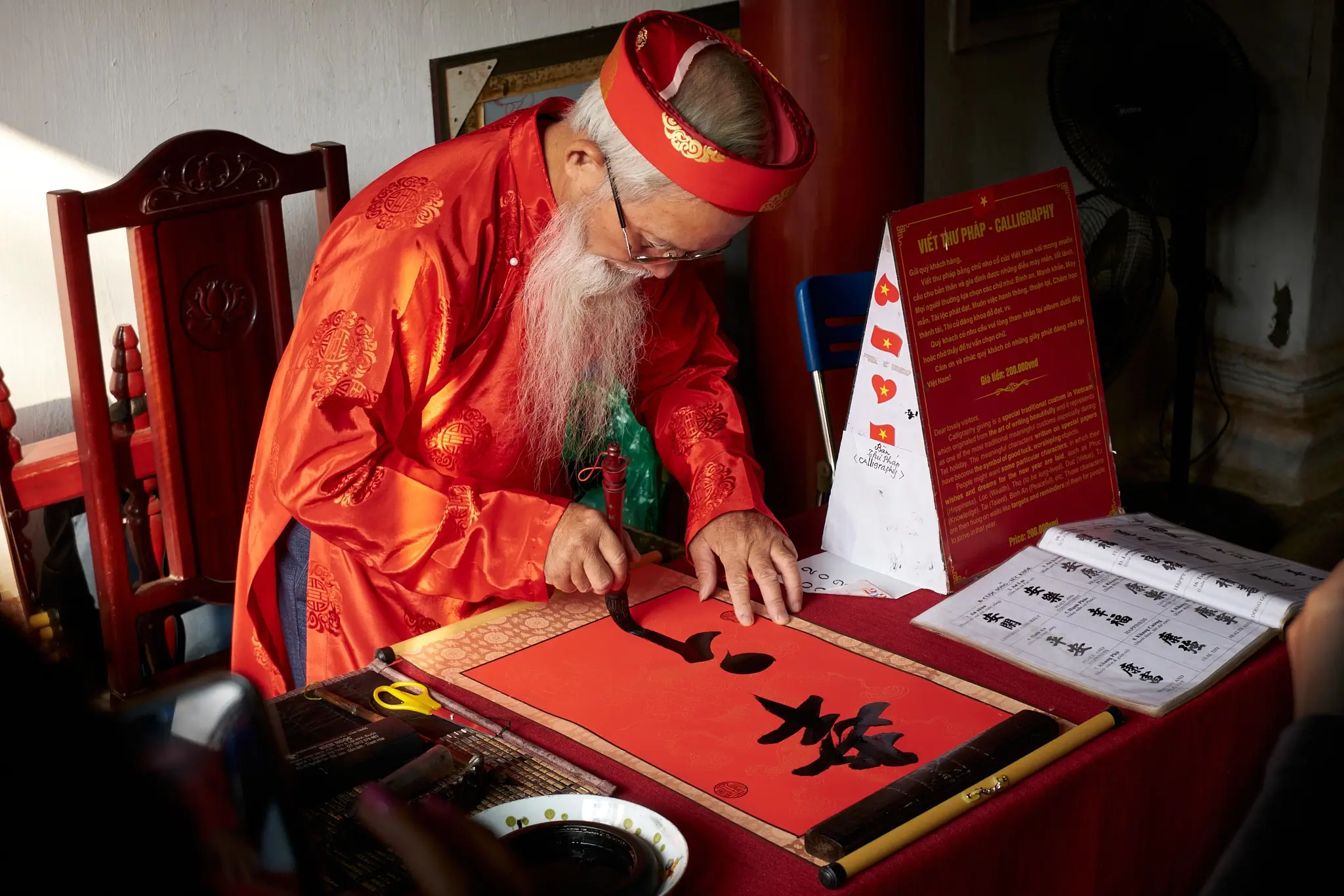
On the paper appears a Hán-Nôm character, part of the ancient Sino-Vietnamese written tradition, an ideogram capable of holding an entire blessing within a few lines, quietly entrusted to whoever stops to watch.
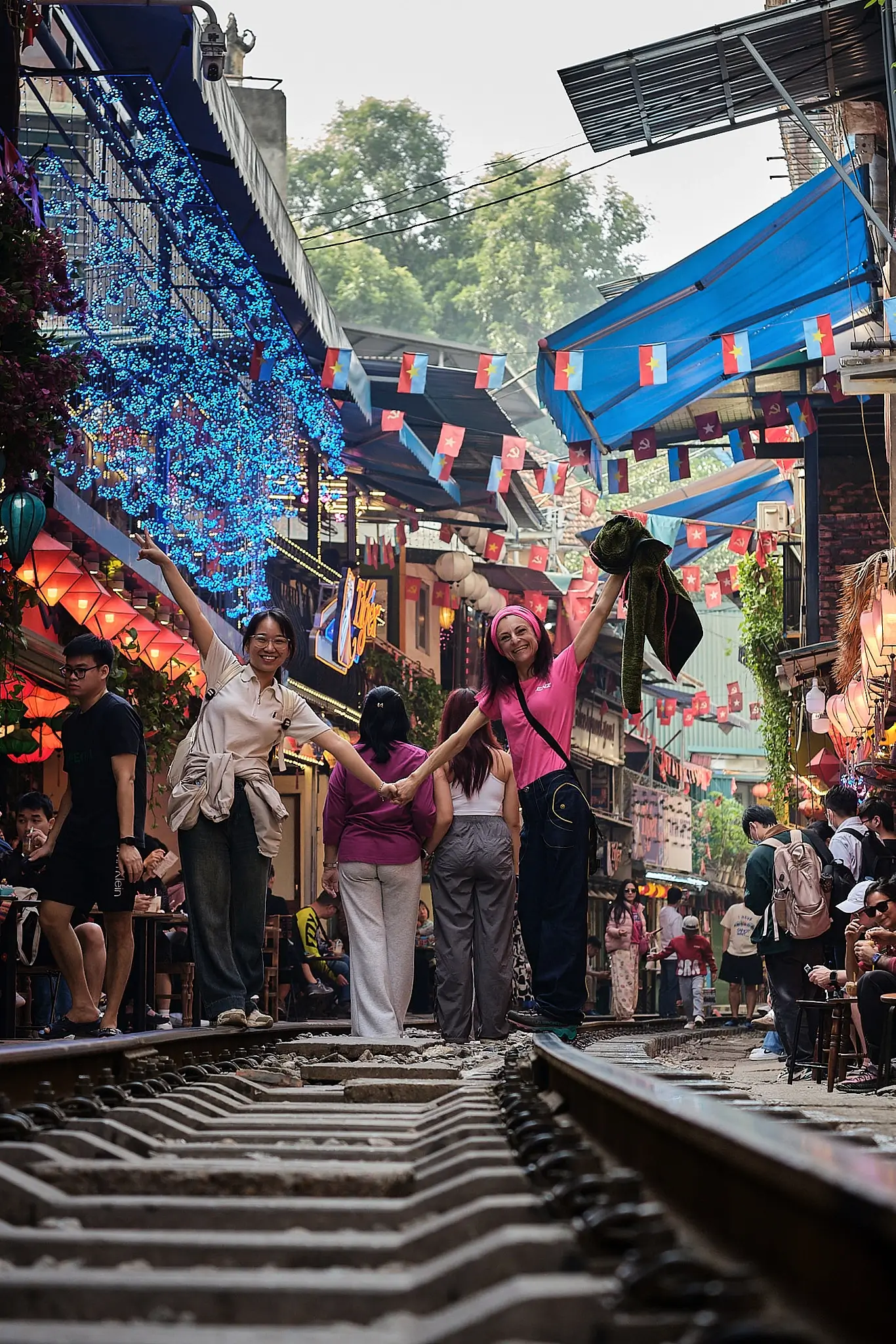
Soon afterwards, we reach Train Street.
The railway tracks weave between colourful flags and lanterns hanging from balconies, illuminated signs and strings of tiny lights chasing one another along the façades.
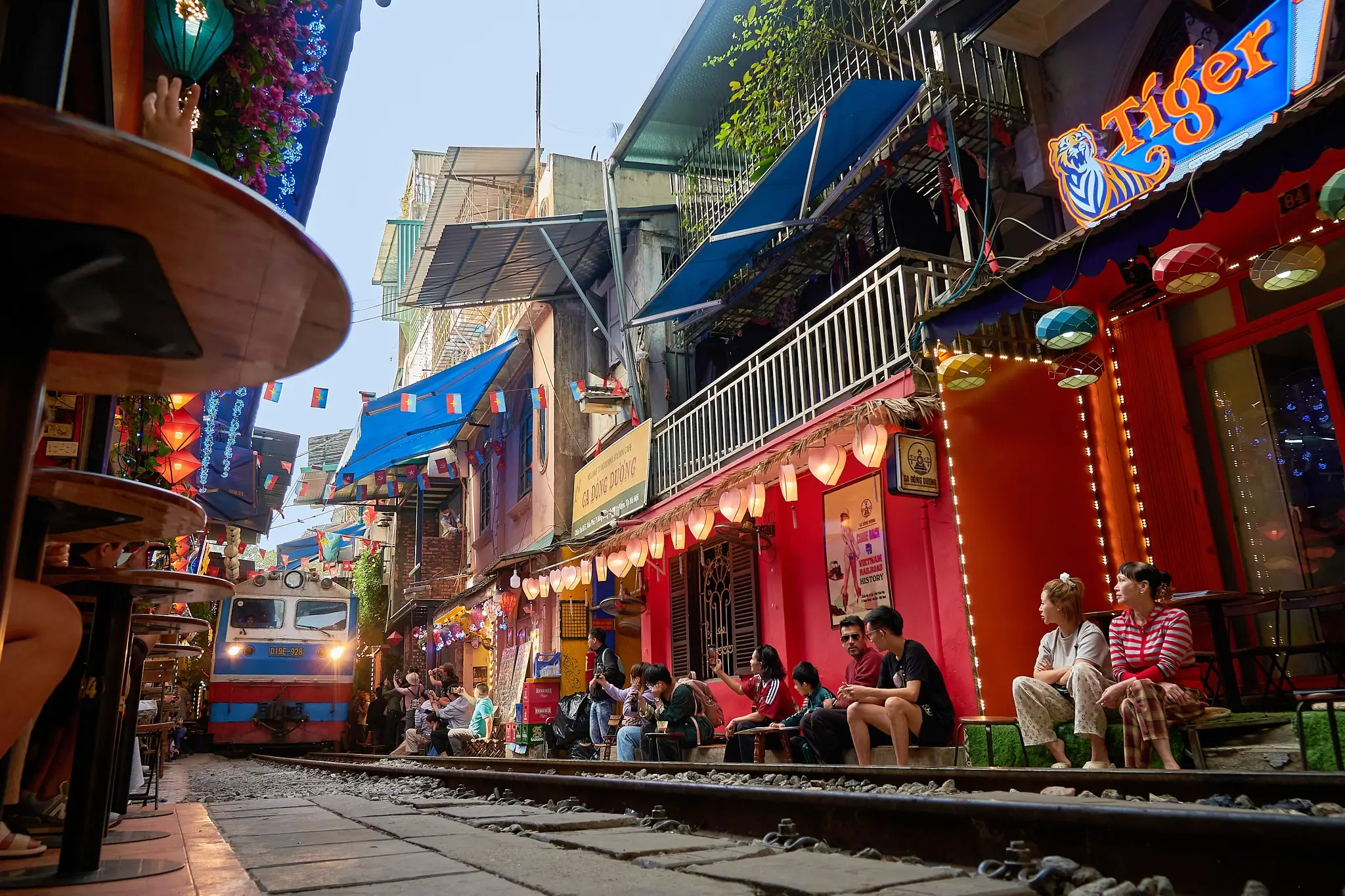
We sit down with a Bia Hà Nội and wait.
A distant whistle silences the voices.
The train glides past tables and glasses just a few centimetres away, and for a moment the entire street holds its breath.
Then it disappears around the bend, and footsteps once again fill the tracks.
An explosion of vitality before entering the composed, almost austere space of Ho Chi Minh’s Mausoleum.
We proceed in a line, walking in silence.
I look around, trying to understand how much of that respect is devotion and how much is state discipline.
Not far away stands the Presidential Palace, an elegant yellow building in French colonial style, which Ho Chi Minh never wished to inhabit.
Instead, he chose a simple stilt house surrounded by greenery, with just a few modest rooms and sparse furnishings.
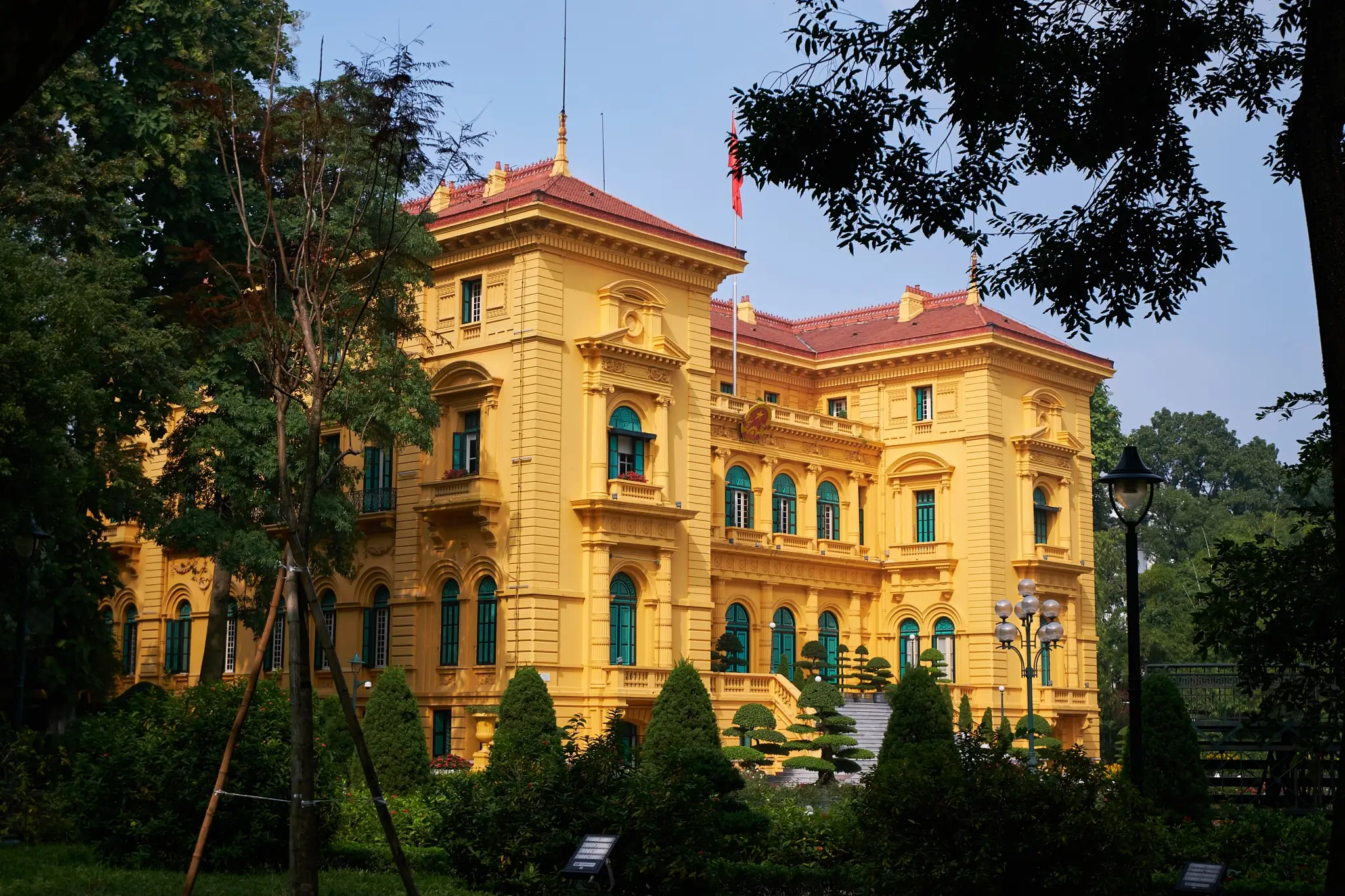
The two residences reveal two dimensions of the same man: the myth shaped by history, and the man who chose a life of remarkable simplicity.
The smell of charcoal has now replaced that of incense.
For lunch, we stop where the locals eat: an open-fronted room facing the street, low tables, brightly coloured plastic chairs, and above them, the rooms where the owner’s family sleeps and wakes each day.
The bún chả arrives — grilled pork meatballs and slices of pork immersed in a sweet-and-sour broth.
Beside it, a cloud of cold rice vermicelli and a basket of herbs fragrant with the scent of a garden.
Nothing could be simpler, nothing could be more Hanoi.
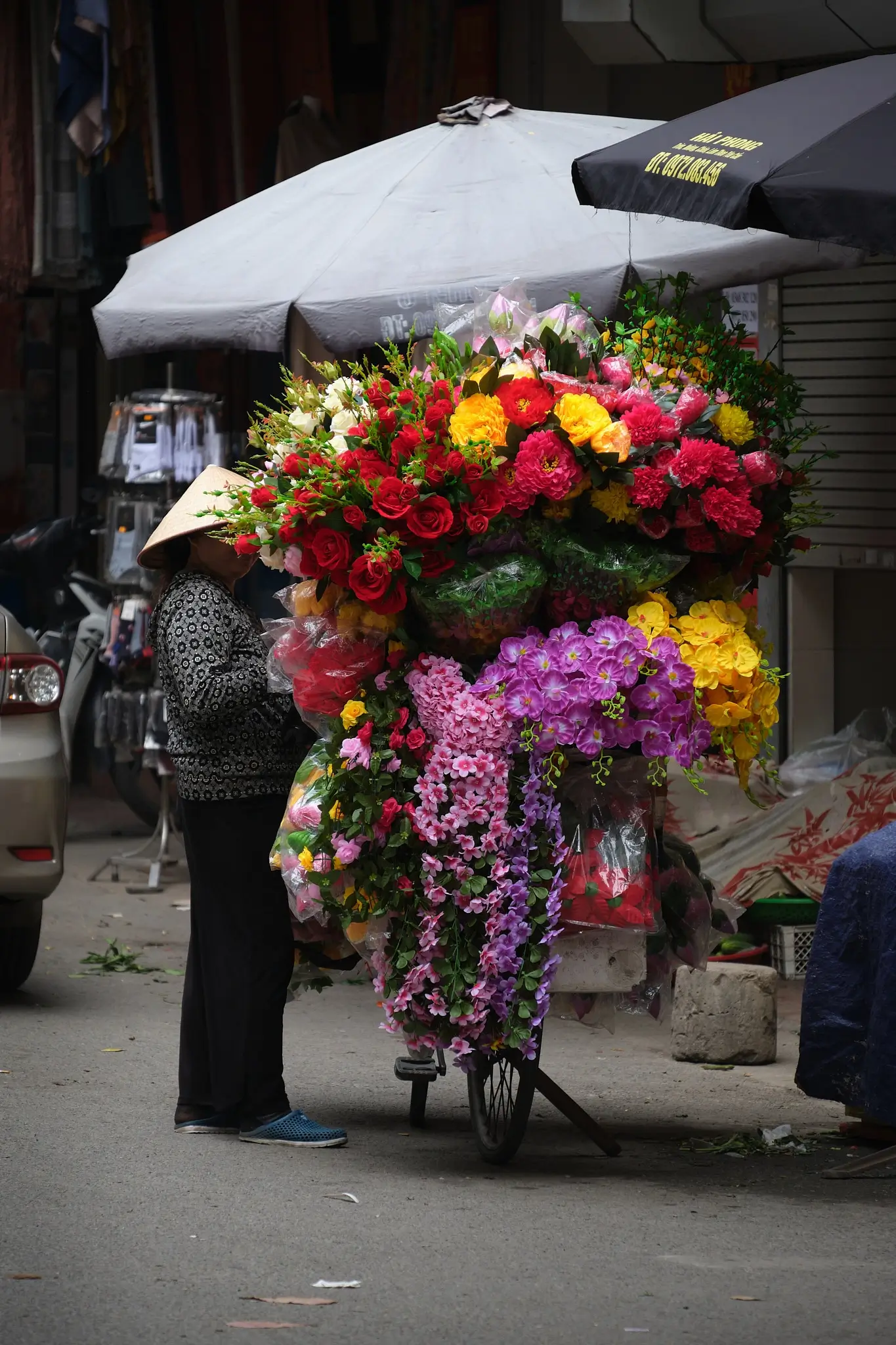
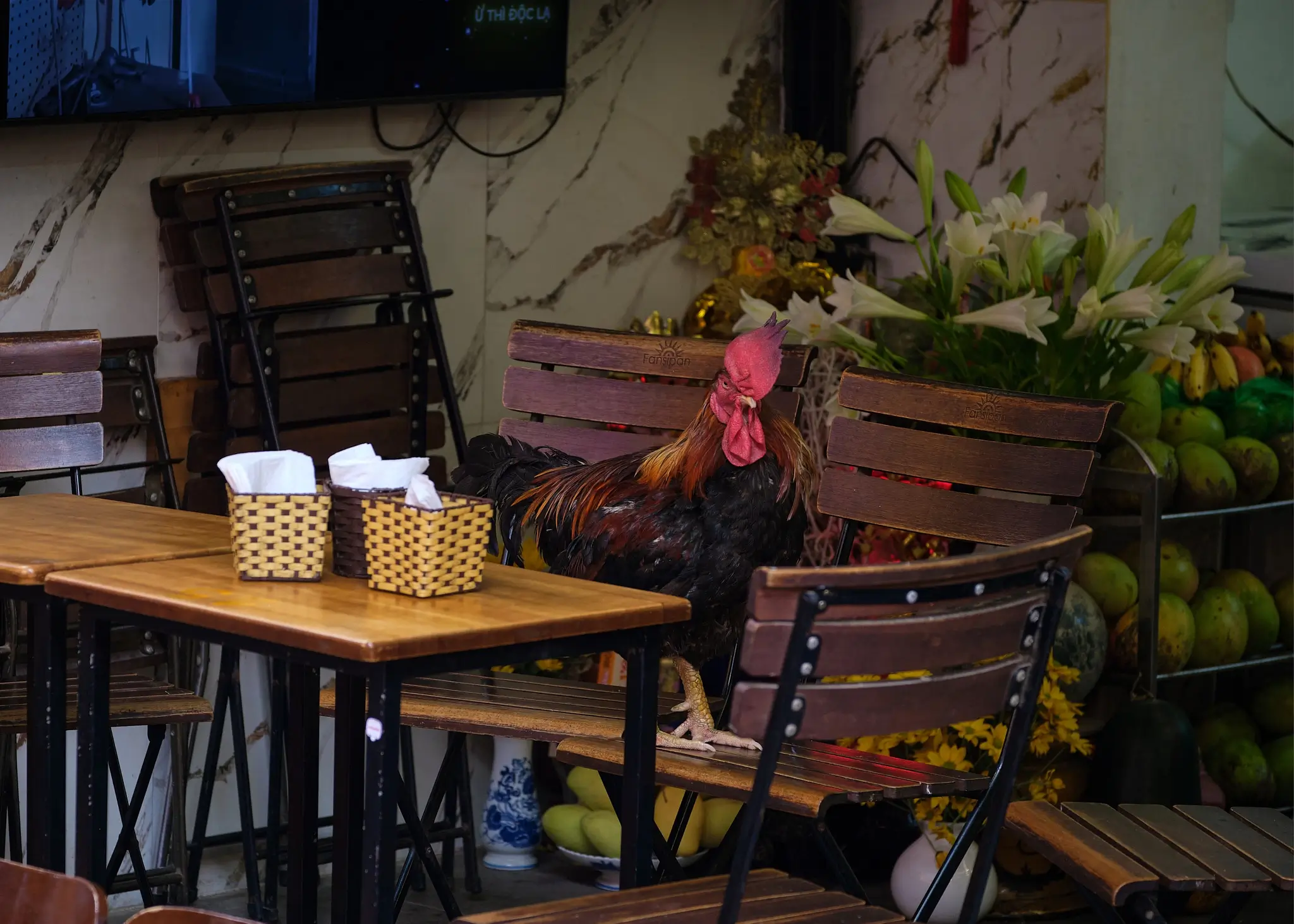
In the early afternoon, we let ourselves be swallowed by a local market, the real kind, not tamed for outsiders: vendors weigh fruit by eye, voices overlap in a commercial dialect made of gestures and numbers held up on fingers.
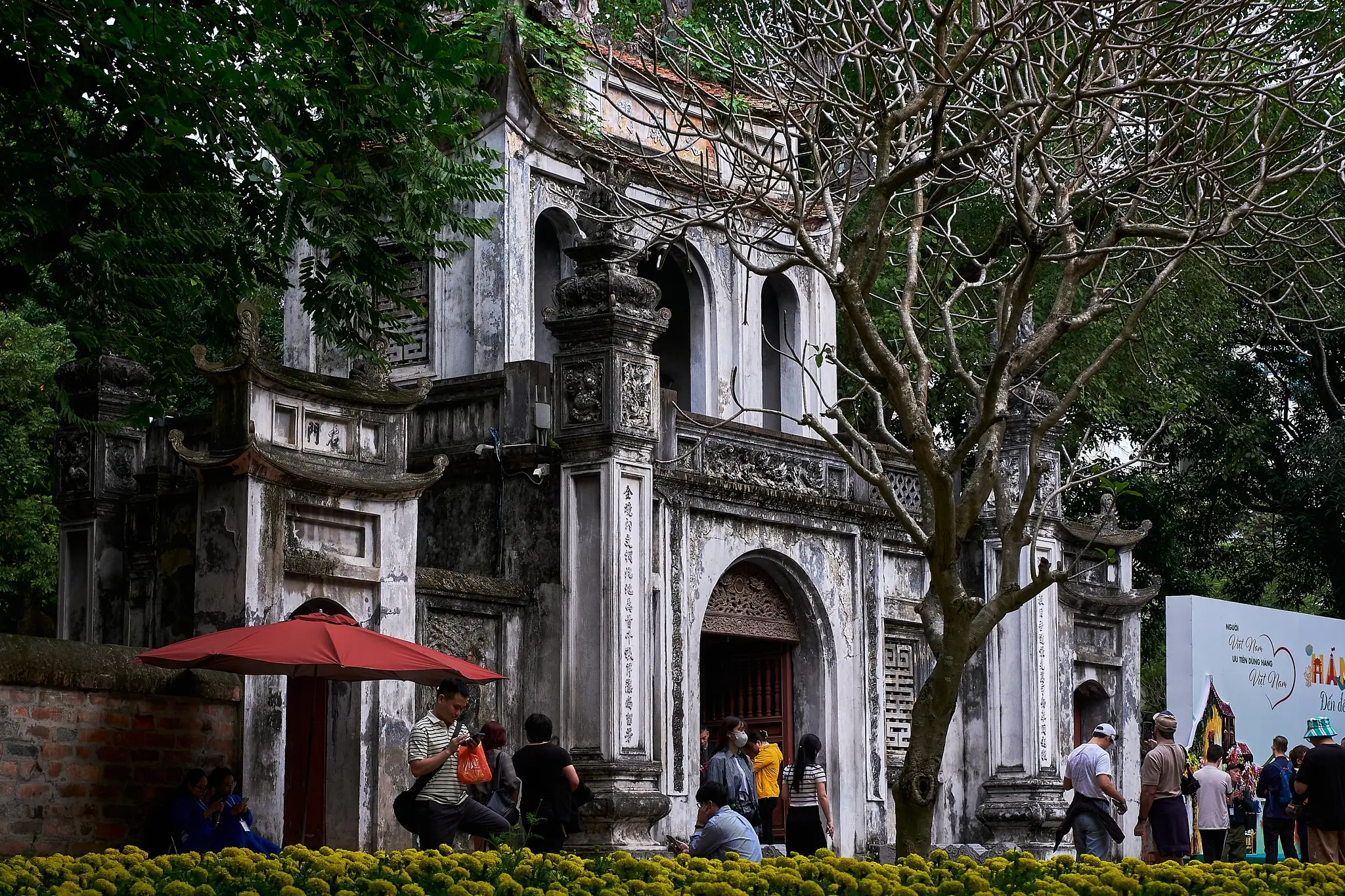
From the maze of stalls to the Temple of Literature, the distance is short, but the leap is immense.
We plunge from the bustle of everyday life into the ordered tranquillity of courtyards dedicated to Confucius.
For centuries, Vietnam’s scholars were educated here.
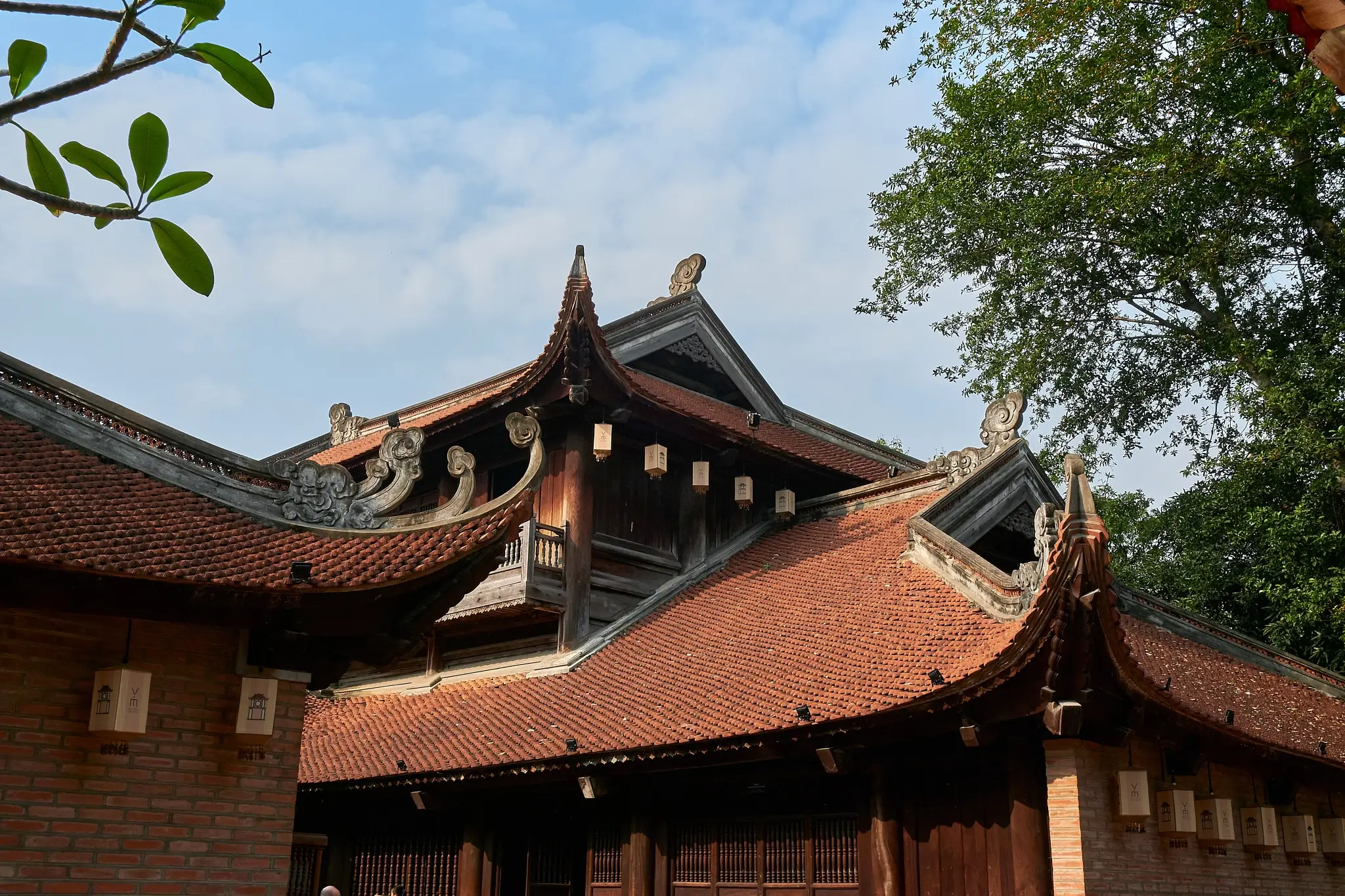
Stone stelae rest upon the backs of carved turtles, bearing the names of those who passed the imperial examinations. A monument to the patience and dedication required for knowledge to leave a lasting trace.
I pause before an inscription worn smooth by the elements and by visitors’ hands, thinking about how long it must have taken to earn those few lines, while I try to gather what a city thousands of years old grants to those who encounter it only in passing.
When we leave the temple, the sun is already low: Hanoi stays with us in fragments.
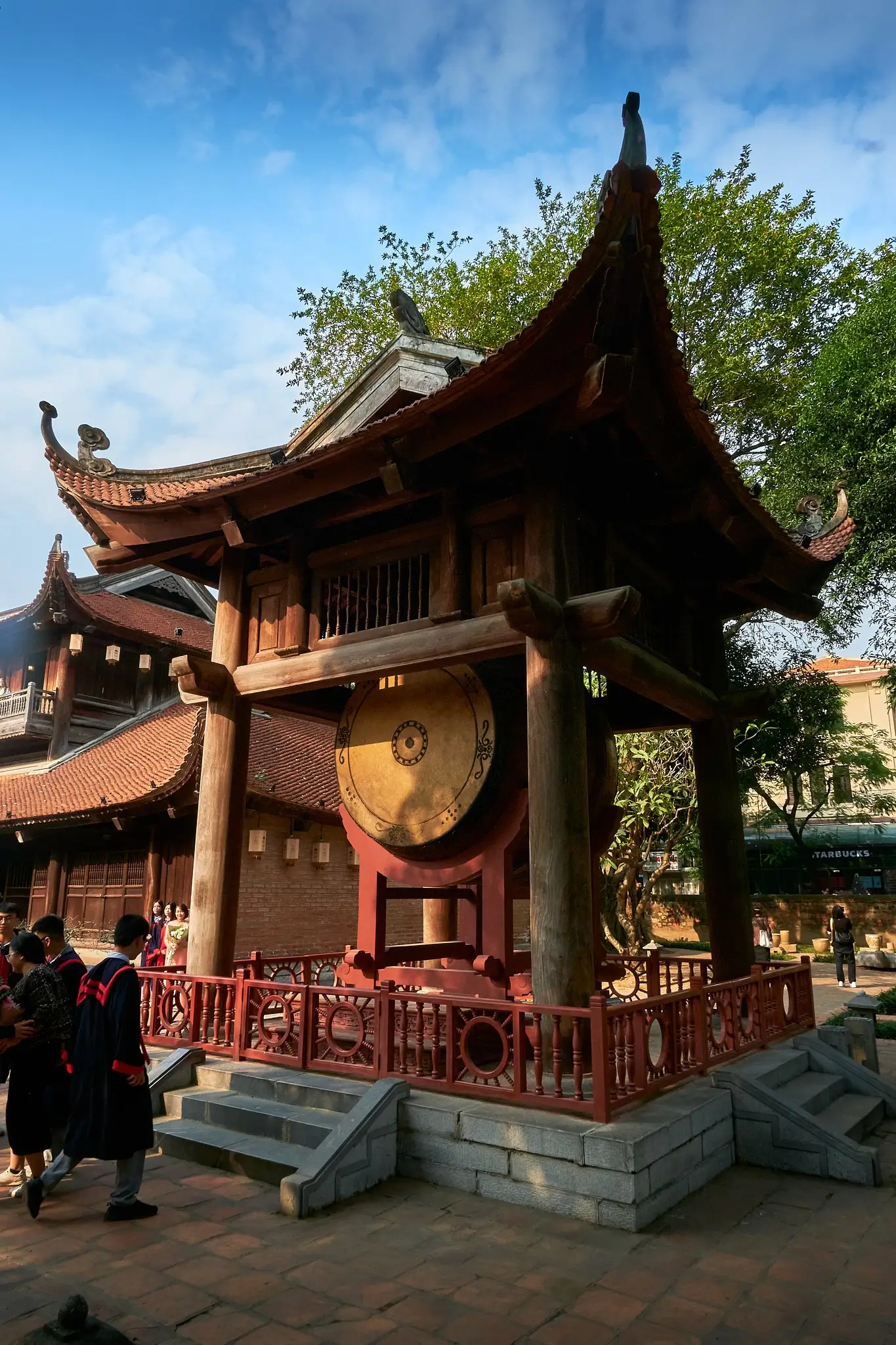
The lake and its legend, the train cutting through the Old Quarter, the shrine gathered in silence, the house that speaks of one man’s simplicity, the market that never stops breathing, the temple steeped in ancient tranquillity. Everything else, all that remained beyond our gaze, becomes the best reason to return one day, without haste.
Take care and talk soon!
Versione italiana
Le quattro e trenta del mattino non sono un’ora, sono una soglia.
È il momento in cui le città non sanno ancora di che umore saranno.
Hanoi, quando l’aereo tocca terra, è sprofondata in un buio caldo e umido che sa di terra bagnata e di benzina. Ho uno scalo lungo, poche ore rubate a un viaggio più grande. Mentre aspetto i bagagli sul nastro che gira lento, ho la sensazione di aver trovato una crepa nel tempo da cui infilarmi.
Il taxi ci porta in un bar ancora vuoto.
Le sedie sono capovolte sui tavoli, qualcuno spazza la strada davanti all’ingresso.
Aspettiamo Elena, la guida che ho scelto per queste poche ore, mentre sorseggiamo lentamente un caffè intenso, dal retrogusto di cioccolato che indugia sulla lingua.
Quando arriva, ci conduce subito verso il primo appuntamento, come se fosse la città stessa ad aver fissato un programma da rispettare.
Il lago Hoan Kiem, il Lago della Spada Restituita, si apre davanti a noi sotto una foschia sottile, quasi sospeso tra acqua e leggenda.
Il suo nome racconta dell’imperatore Lê Lợi, che liberò il Vietnam grazie a una spada magica ricevuta dal Re Drago delle Acque. Proprio qui una gigantesca tartaruga emerse per reclamarla. Lê Lợi la riconsegnò, e quel gesto impresse nella memoria collettiva un insegnamento che riecheggia tuttora: la spada non è un trofeo, ma un mandato temporaneo a servire il proprio Paese; il potere non si possiede, si restituisce una volta compiuto il proprio compito.
Un ponte rosso laccato conduce al tempio di Ngoc Son, avvolto nell’incenso come in un’immagine già composta.
In un angolo, un ông đồ in tunica scarlatta e barba bianca intinge il pennello nell’inchiostro.
Il tratto si allarga, si assottiglia, torna su se stesso. Sulla carta compare un carattere Hán-Nôm: l’antica scrittura sino-vietnamita, un ideogramma capace di racchiudere in poche linee un intero augurio consegnato in silenzio a chi resta a guardare.
Poco dopo raggiungiamo Train Street.
Il binario si insinua tra bandierine colorate e lanterne appese ai balconi, insegne luminose e file di lucine che si rincorrono lungo le facciate.
Ci sediamo con una Bia Hà Nội, in attesa.
Un fischio lontano zittisce le voci, il convoglio sfiora tavolini e bicchieri a pochi centimetri, e per un istante l’intera strada trattiene il fiato.
Poi scompare dietro la curva, e le rotaie tornano a riempirsi di passi.
Un’esplosione di vitalità, prima di entrare nello spazio composto e quasi severo del mausoleo di Ho Chi Minh.
Si procede in fila e si cammina in silenzio.
Mi guardo intorno, cercando di capire quanto di quel rispetto sia devozione e quanto disciplina di Stato.
Poco distante sorge il Palazzo Presidenziale, elegante edificio giallo in stile coloniale francese, che Ho Chi Minh non volle mai abitare: preferì una casa su palafitte immersa nel verde, poche stanze essenziali, arredi sobri.
Le due dimore rivelano due dimensioni della stessa persona: il mito costruito dalla storia e l’uomo che aveva scelto una vita di sorprendente semplicità.
L’odore della brace ha ormai sostituito quello dell’incenso.
A pranzo ci fermiamo dove mangiano i residenti: una sala aperta sulla strada, tavolini bassi, sedie di plastica colorata, e sopra le stanze dove la famiglia del gestore dorme e si risveglia ogni giorno.
Arriva il bún chả — polpette e fettine di maiale segnate dalla griglia, immerse in un brodo agrodolce. Accanto una nuvola di vermicelli freddi e un cesto di erbe che profuma di orto.
Niente di più semplice, niente di più Hanoi.
Nel primo pomeriggio ci lasciamo inghiottire da un mercato popolare, quello vero, non addomesticato per i forestieri: i venditori pesano la frutta a occhio, le voci si sovrappongono in un dialetto commerciale fatto di gesti e numeri sulle dita.
Dal dedalo delle bancarelle al Tempio della Letteratura il passo è breve, ma il salto è netto.
Si piomba dal brulicare della vita di ogni giorno alla quiete ordinata dei cortili dedicati a Confucio.
Qui, per secoli, si sono formati i letterati del Vietnam.
Le stele di pietra poggiano sul dorso di tartarughe scolpite e portano i nomi di chi superò gli esami imperiali. Un monumento alla pazienza e alla dedizione necessarie perché il sapere lasci una traccia.
Mi soffermo davanti a un’iscrizione levigata dalle intemperie e dalle mani dei visitatori, pensando a quanto tempo ci sia voluto per conquistare quelle poche righe, mentre io provo a raccogliere ciò che una città millenaria concede a chi la incontra solo di passaggio.
Quando lasciamo il tempio, il sole è già basso: Hanoi ci resta addosso per frammenti.
Il lago con la sua leggenda, il treno che attraversa il centro storico, il sacrario raccolto nel silenzio, la casa che racconta la sobrietà di un uomo, il mercato che non smette di respirare, il tempio dalla quiete antica.
Tutto il resto, ciò che è rimasto fuori dallo sguardo, diventa il motivo migliore per ritornare, un giorno, senza fretta.