
Questo articolo è disponibile anche in Italiano
Happy Tuesday my friend! And welcome back to another article from the series My Travel Diary Chronicles.
It’s hot here in Italy these days, the first taste of our long and hopefully sunny summer. Slowing down for this part of the year where relax and meditation are, for me, the main target is also a chance to share the experience Tamara had during her trip to Laos.
This episode is about tradition, life and being immersed in nature in a way that, I think, none of us can even imagine.
No more words from me. Here the story.
The paved road ends shortly after Luang Namtha.

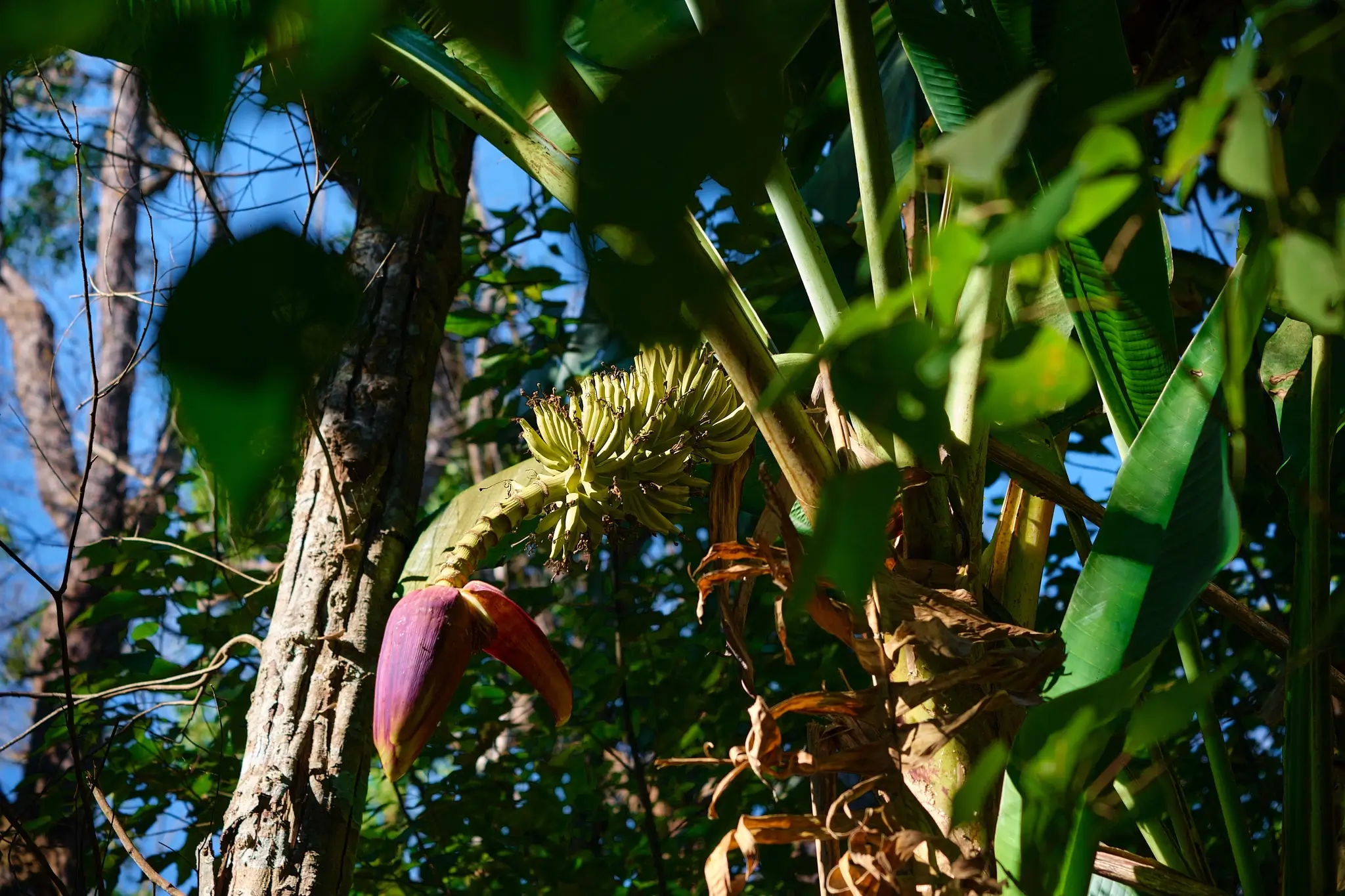
From that point on, Laos returns to red earth, dust, and jungle. The mountains of the north rise one after another, covered in vegetation so dense it seems impenetrable. It is within this landscape that the Nam Ha National Protected Area unfolds, a mosaic of rainforest, rivers, and remote villages.
With us is Pent, who will be our guide for the next three days.
We stop at the market.
Between the stalls are heaps of vegetables, fish, spices, tropical fruit, and products I cannot even identify. Women bargain without hurry, children run through the aisles, and the smells change with every step.
This is where we stock up on supplies for the jungle trek.
Shortly afterward, we reach the meeting point with Sein. She is a petite Khmu woman who speaks only the language of her people. She will be a discreet yet constant presence, taking care of meals and carrying part of the shared equipment.
The trail begins uphill immediately. Pent calls it the hunters’ path.
For generations, villagers have followed these tracks to reach hunting grounds and gather medicinal plants, rattan, and shoots.
The sounds of the road disappear, replaced by the hum of insects and the rustle of leaves stirred by the wind. We walk for hours through vegetation that constantly changes shape: bamboo groves, giant trees, and vines descending from the canopy like natural ropes.
Every hour we stop for a few minutes.
Brief pauses. Just enough time to drink, catch our breath, and set off again.

Several times I see Sein bend among the plants. She gathers wild berries and herbs emerging from the undergrowth. She spots them instantly, without hesitation. To my eyes, they are indistinguishable from the hundreds of other species surrounding us.
It is knowledge built on patient observation and inherited experience.
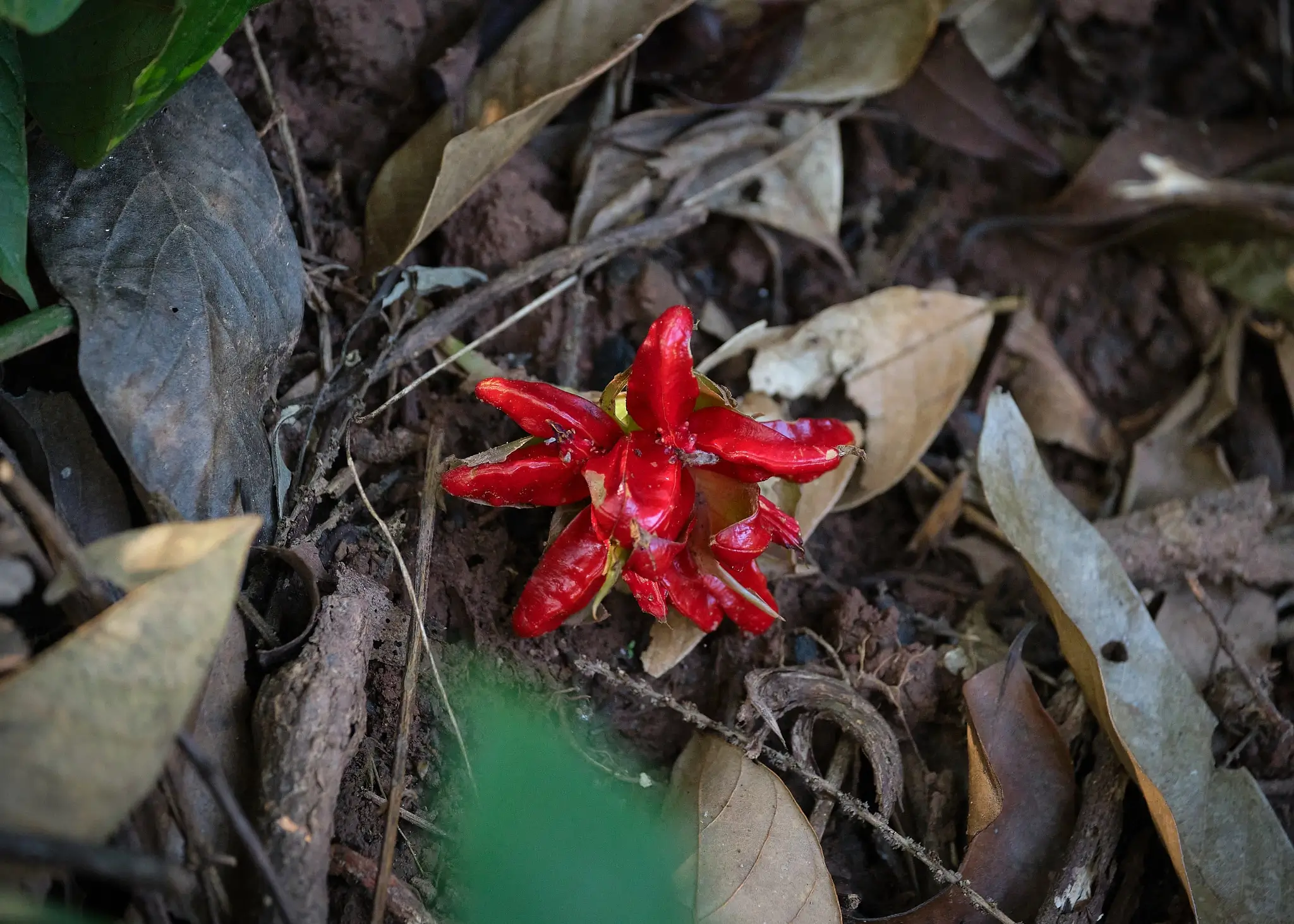
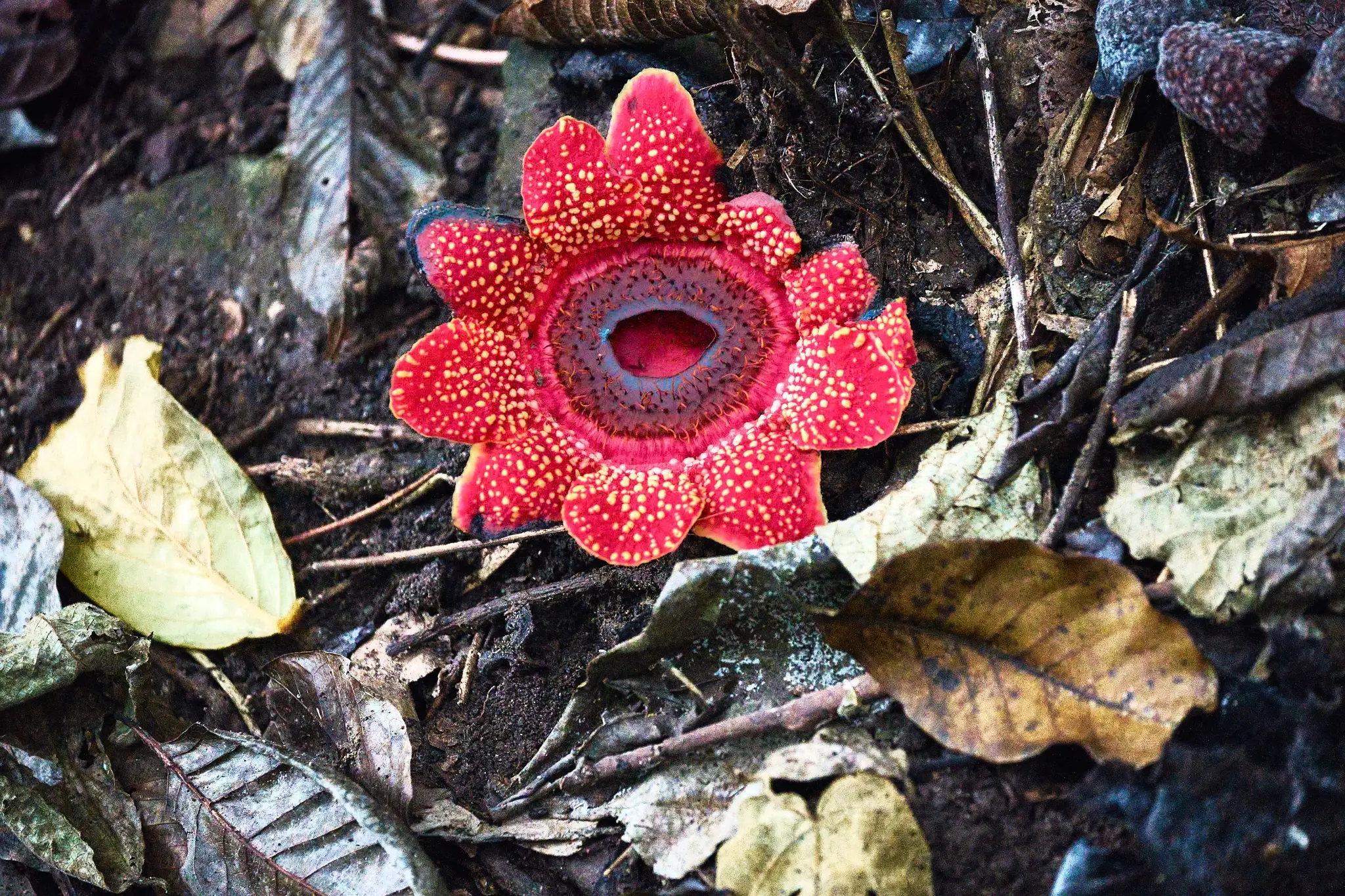
The same knowledge that has allowed the Khmu to live from what the forest provides, learning to distinguish the edible from the poisonous, the medicinal from the useless.
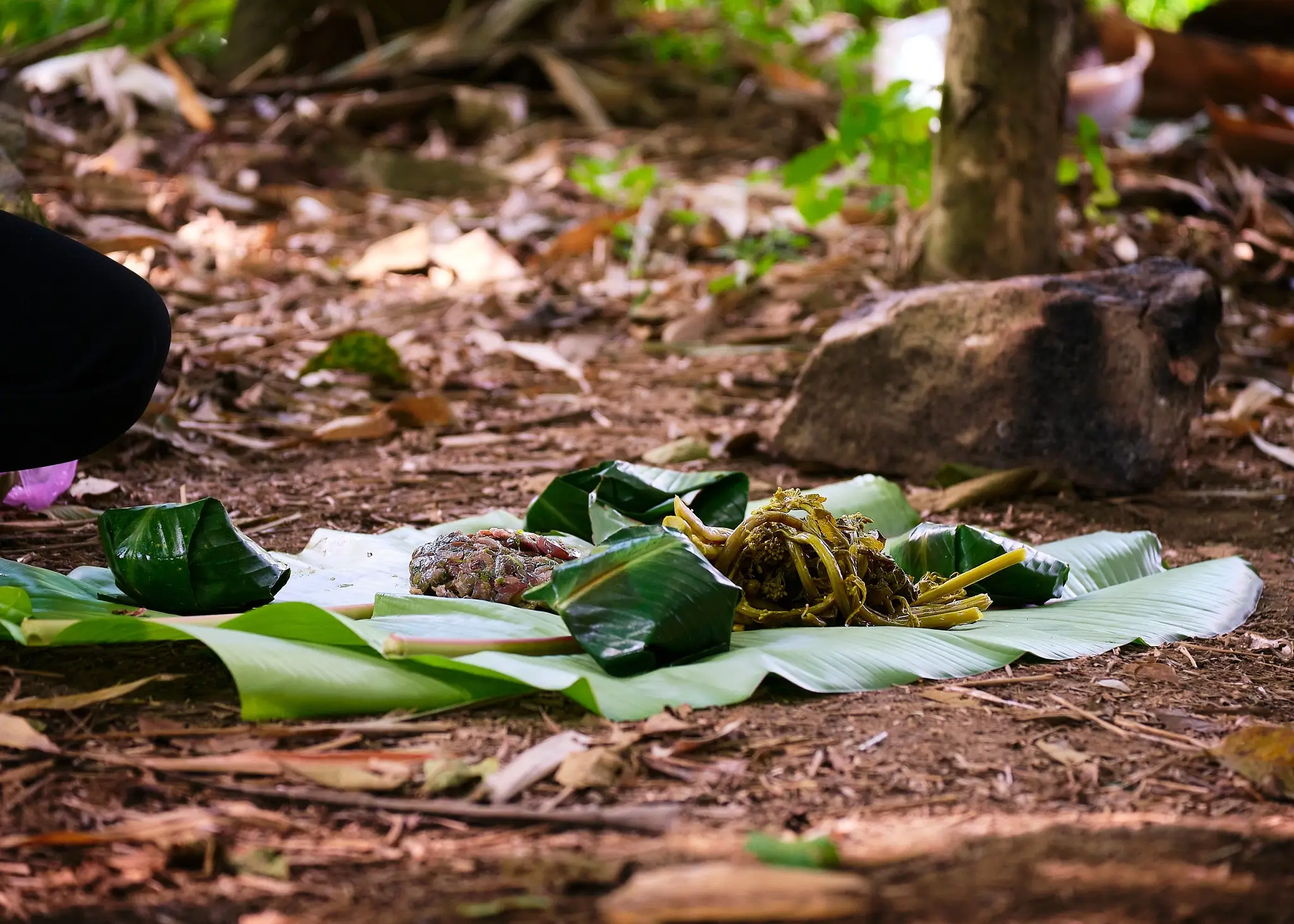
When lunchtime arrives, Pent chooses a shaded spot. Sein spreads two banana leaves on the ground and arranges the food we bought at the market.
Hands reach into the same rice and vegetables, repeating a shared gesture.
Later, during one of our breaks, I try to lift Sein’s bag.
It is an instinctive movement. But the moment I grab it, the weight surprises me. For a few seconds I stand there in disbelief. She has been carrying it for hours with apparent ease, while for me simply lifting it off the ground requires considerable effort.
What seems extraordinary to me is part of her everyday life.
In the afternoon, Pent takes his half-full water bottle and pours rice into it. He leaves it to soak.
In about two hours it will be ready to cook. Twenty minutes of boiling will be enough.
For the Khmu, rice is everyday food, the foundation of every meal: carried along, prepared, and eaten without waste, using whatever the forest provides.
After seven hours of walking, we reach the hunters’ camp.


A simple wooden and bamboo shelter used during long stays in the forest. Outside are the remains of old campfires. Inside are worn mattresses with stuffing spilling through tears in the fabric. And spiders. Far more spiders than I was prepared to face.
For a few minutes panic takes over. Then, slowly, it gives way to laughter.
As dusk falls, the fire defines our space. Huge bees cross the flickering light of the flames while we eat the meal Sein has prepared.

Then that glow, too, fades away, and darkness takes everything.
We sleep in hammocks, suspended in the night.
The following morning we are awake before the agreed time. By seven o’clock the backpacks are already packed. We eat breakfast—rice and mango—and set off once more.
Pent had reassured us.
“Flat.”
Just one word.
In his definition of flat, there are evidently climbs and descents that, combined, amount to several hundred meters of elevation gain.
The primary forest of Nam Ha envelops us once again.

Here the forest is ancient, layered through time, with trees that have been regenerating for centuries. The canopy forms an almost continuous cover that filters the light and traps the humidity. The feeling is that of entering a different time.
This is the traditional territory of the Khmu, one of the oldest ethnic groups in northern Laos and among the most numerous in the country. For generations they have built their lives within the forest, developing a deep knowledge of its plants, animals, and resources.
It is unwritten wisdom. It lives in memory and daily experience, passed down orally, from one generation to the next, through practice and storytelling.
Meanwhile, the trees begin to thin and the first signs of human presence appear: a more defined track, a few cultivated plants, the orderly outline of a clearing. After two days immersed in the jungle, the sight of houses in the valley feels almost unreal.
We descend the slope toward the river.


Separating us from the village is only a bridge woven from canes. It is narrow, flexible, and seemingly fragile; with every step it sways beneath our weight.
Below, the current moves slowly between the rocks.
On the other side stand wooden stilt houses and woven walls of plant fibers, beneath which domestic animals find shelter.

We leave our backpacks in the hut that will host us for the night and head toward a pool where the river slows its course. The turquoise water contrasts with the orange glow of sunset, while green surrounds everything.
For the local people, the river is part of everyday life: they wash there, fish there, gather edible algae, and, in the right season, catch frogs and small fish.
For us, it is above all a chance to wash away the sweat and dust accumulated during the trek.
The water is cold.
But after hours of walking, any resistance lasts only a few seconds.
As the light withdraws and the sky closes in, the village gathers around the fire. Only the bright red glow of the embers illuminates the faces, and from the mouths of the elders stories take shape: forest spirits, ancestors, crossed mountains, and past lives that continue to breathe in the present.
A small handful of rice is dropped onto the ground—an offering to the spirits that inhabit the invisible world.
An elderly woman, crouched by the fire, smokes her pipe. She inhales slowly. The smoke rises and mingles with the stars.
I remain at the edge, present yet distant.
Within a flow that passes through me, but that I will never truly grasp.
The following morning, light filters through the leaves like liquid gold, carving delicate shadows across the bamboo houses.
In the small Khmu village, the day begins with the crow of a rooster and the warm breath of slowly cooking rice.
Thin strips of algae—the kai—are laid out in the sun with patient gestures. A carefully opened mango glows orange before being snatched away by the quick hands of a laughing child.
The women work the rice, sifting it with circular, rhythmic, almost hypnotic movements, like an ancient dance repeated since time immemorial. Then the pestle falls into the mortar, dull and steady, marking time among voices flowing in a language inaccessible to me.

The men disappear into the forest to hunt, following invisible tracks; others remain in the fields, bent over the earth.
Everything here is a necessary gesture, memory made tangible.
The community lives in attentive dialogue with the forest, immersed in a knowledge that is not taught but inherited.
The backpacks return to our shoulders.
We leave the village and the green swallows us one last time. For hours we walk along paths that, for us, are an adventure and that, for others, are simply the road home.
Then the asphalt appears.
The engines return, along with phone signal and speed.
Sein and Pent bid us farewell with a smile.
Much of what defines Khmu culture cannot be found in books.
It lives in gestures, in hands, in stories told around the fire.
We leave, returning to the time of clocks and deadlines, while among these mountains another kind of time continues to flow—older, measured by rain, harvests, and memory.
Take care and talk soon!
Versione Italiana
La strada asfaltata termina poco dopo Luang Namtha.
Da lì in avanti il Laos torna a essere terra rossa, polvere e selva.
Le montagne del Nord si susseguono una dopo l’altra, coperte da una vegetazione così fitta da sembrare impenetrabile.
È in questo paesaggio che si trova la Nam Ha National Protected Area, un mosaico di foresta pluviale, fiumi e villaggi remoti.
Con noi c’è Pent, che sarà la nostra guida per i prossimi tre giorni.
Facciamo una tappa al mercato.
Tra le bancarelle si alternano montagne di verdure, pesce, spezie, frutta tropicale e prodotti che non riesco nemmeno a identificare. Le donne contrattano senza fretta, i bambini corrono tra i corridoi, gli odori cambiano a ogni passo.
È qui che facciamo scorta di viveri per il trekking nella giungla.
Poco dopo raggiungiamo il punto d’incontro con Sein. È una ragazza Khmu minuta che parla esclusivamente la lingua del suo popolo. Sarà una presenza discreta ma costante, occupandosi dei pasti e di parte dell’attrezzatura comune.
Il cammino inizia subito in salita. Pent lo chiama il sentiero dei cacciatori.
Per generazioni, gli abitanti dei villaggi hanno seguito queste tracce per raggiungere le aree di caccia, raccogliere piante medicinali, rattan e germogli.
I rumori della strada scompaiono, sostituiti dal ronzio degli insetti e dal fruscio delle foglie mosse dal vento. Camminiamo per ore attraversando una vegetazione che cambia continuamente forma: canneti di bambù, alberi giganteschi, liane che scendono dalle chiome come corde naturali.
Ogni ora ci fermiamo per qualche minuto.
Soste brevi. Il tempo di bere, riprendere fiato e rimettersi in marcia.
Più volte vedo Sein chinarsi tra le piante. Raccoglie bacche selvatiche ed erbe che affiorano dal sottobosco. Le individua all’istante, senza esitazione. Ai miei occhi sono uguali alle centinaia di altre specie che ci circondano.
È un sapere fatto di osservazione paziente ed esperienza tramandata.
La stessa che ha permesso ai Khmu di vivere di ciò che la foresta offre, imparando a distinguere il commestibile dal velenoso, il medicinale dall’inutile.
Quando arriva l’ora di pranzo, Pent sceglie un punto all’ombra. Sein stende due foglie di banana a terra e vi dispone il cibo acquistato al mercato.
Le mani affondano nello stesso riso, tra le verdure, ripetendo un gesto condiviso.
Più tardi, durante una delle soste, provo a sollevare la borsa di Sein.
È un movimento istintivo. Ma appena la afferro, il peso mi sorprende. Per qualche secondo resto incredula. Lei la porta da ore con apparente leggerezza, mentre per me sollevarla da terra richiede uno sforzo notevole.
Ciò che a me appare straordinario appartiene alla normalità dei suoi giorni.
Nel pomeriggio Pent prende la sua mezza bottiglia d’acqua e vi versa del riso. Lo lascia in ammollo.
Tra circa due ore sarà pronto per essere cucinato. Venti minuti di cottura saranno sufficienti.
Per i Khmu è il cibo quotidiano, la base del pasto: si porta con sé, si prepara e si consuma senza sprechi, con ciò che la foresta concede.
Dopo sette ore di cammino raggiungiamo il campo dei cacciatori.
Una semplice struttura in legno e bambù utilizzata come riparo durante le lunghe permanenze nella foresta. All’esterno restano i segni di vecchi fuochi. All’interno materassi usurati, il cui contenuto fuoriesce da strappi nel tessuto. E ragni. Molti più ragni di quanti ne fossi pronta ad affrontare.
Per alcuni minuti il panico prende il sopravvento. Poi, lentamente, lascia spazio alle risate.
Con l’imbrunire il fuoco definisce il nostro spazio. Enormi api attraversano la luce instabile delle fiamme mentre ceniamo con ciò che ha cucinato Sein.
Poi anche quel bagliore si spegne e il buio prende tutto.
Dormiamo nelle amache, sospesi nella notte.
La mattina successiva siamo svegli prima dell’orario concordato. Alle sette gli zaini sono già pronti. Facciamo colazione con riso e mango e riprendiamo il cammino.
Pent ci aveva rassicurati.
«Flat.»
Una parola sola.
Nella sua definizione di pianeggiante rientrano evidentemente salite e discese che, sommate, raggiungono diverse centinaia di metri di dislivello.
La foresta primaria della Nam Ha ci avvolge di nuovo.
Qui il bosco è antico, stratificato nel tempo, con alberi che si rigenerano da secoli. Le chiome formano una copertura quasi continua che filtra la luce e trattiene l’umidità. La sensazione è quella di entrare in un tempo diverso.
Questo è il territorio tradizionale dei Khmu, uno dei gruppi etnici più antichi del Laos settentrionale e tra i più numerosi del Paese. Per generazioni hanno costruito la propria vita all’interno della foresta, sviluppando una conoscenza fine delle piante, degli animali e delle risorse che essa offre.
È una sapienza non scritta. Vive nella memoria e nell’esperienza quotidiana. Si trasmette oralmente, di generazione in generazione, attraverso la pratica e il racconto.
Intanto gli alberi si diradano e compaiono le prime tracce di presenza umana: una pista più battuta, qualche pianta coltivata, il profilo ordinato di una radura. Dopo due giorni immersi nella giungla, la vista delle case a valle sembra quasi irreale.
Scendiamo lungo il pendio fino al fiume.
A separarci dalle abitazioni c’è soltanto un ponte di canne intrecciate. È stretto, flessibile, apparentemente precario: a ogni passo oscilla sotto il peso del corpo.
Sotto, la corrente scorre lenta tra le rocce.
Dall’altra parte si alzano palafitte di legno e stuoie vegetali, sotto le quali trovano riparo gli animali domestici.
Posiamo gli zaini nella capanna che ci ospiterà per la notte e ci dirigiamo verso una conca dove il fiume rallenta il suo corso. Il turchese dell’acqua contrasta con l’arancio del tramonto, mentre il verde avvolge ogni cosa.
Per gli abitanti del luogo il fiume è parte della vita quotidiana: ci si lava, si pesca, si raccolgono alghe commestibili e, nella stagione giusta, si catturano rane e piccoli pesci.
Per noi è soprattutto l’occasione per liberarci del sudore e della polvere accumulati durante il trekking.
L’acqua è fredda.
Ma dopo ore di cammino ogni resistenza dura pochi secondi.
Quando la luce si ritrae e il cielo si chiude, il villaggio si raccoglie attorno al fuoco. Solo il rosso vivo delle braci illumina i volti, e dalle bocche degli anziani le storie prendono forma: spiriti della foresta, antenati, montagne attraversate, vite passate che continuano a respirare nel presente.
Una piccola manciata di riso viene lasciata cadere a terra: un’offerta agli spiriti che abitano lo spazio invisibile.
Un’anziana, accovacciata, fuma la sua pipa. Aspira lenta. Il fumo sale e si intreccia alle stelle.
Io resto ai margini, presente e distante.
Dentro un flusso che mi attraversa, ma che non potrò mai davvero afferrare.
Il mattino seguente, la luce filtra tra le fronde come oro liquido, incidendo ombre leggere sulle capanne di bambù.
Nel piccolo villaggio Khmu, il giorno nasce con il canto del gallo e il respiro caldo del riso che cuoce lento.
Sottili strisce di alghe — le kai — vengono distese al sole con gesti pazienti. Un mango aperto con cura brilla nella polpa arancione, subito sottratto dalle mani veloci di un bambino che fugge ridendo.
Le donne lavorano il riso: lo setacciano con movimenti circolari, ritmici, quasi ipnotici, come una danza antica che si ripete da sempre. Poi il pestello cade nel mortaio, sordo e regolare, battendo il tempo tra le voci che scorrono in una lingua per me inaccessibile.
Gli uomini scompaiono nella foresta, a caccia, seguendo tracce invisibili; altri restano nei campi, piegati alla terra.
Tutto qui è gesto necessario, memoria incarnata.
La comunità vive in ascolto della foresta, immersa in un sapere che non si insegna, ma si eredita.
Gli zaini tornano sulle spalle.
Lasciamo il villaggio e il verde ci inghiotte un’ultima volta. Per ore camminiamo lungo sentieri che per noi sono un’avventura e che per altri rappresentano semplicemente la strada di casa.
Poi compare l’asfalto.
Tornano i motori, il segnale del telefono, la velocità.
Sein e Pent ci salutano con un sorriso.
Molto di ciò che definisce la cultura Khmu non si trova nei libri.
Vive nei gesti, nelle mani, nelle storie attorno al fuoco.
Noi ce ne andiamo, tornando al tempo delle lancette e delle scadenze, mentre tra queste montagne continua a scorrerne un altro: più antico, scandito dalla pioggia, dai raccolti e dalla memoria.