
Questo articolo è disponibile anche in italiano
Hey my friend! Happy Tuesday and welcome back to another incredible story from Tamara‘s travels.
As it always happens, the way she describes the places she visits brings you directly there, as if you were a silent spectator of what’s happening in the story.
Take your time, this is a story of slowness, tradition and faith.
Breathe.
There are places where time seems to lose its purpose.
In Luang Prabang, it does not disappear.
It simply slows down.
Before dawn, the city holds its breath.
The streets are immersed in an uncertain light. The air is cool, almost still. Along the sidewalks, residents take their places with small bamboo baskets filled with rice and simple offerings.
Then the monks arrive.
They walk in a line, wrapped in their saffron-colored robes, carrying the alms bowls before them. Tak Bat1, the morning alms-giving ceremony, renews the bond between the community and the monasteries through an act of sharing handed down through generations.
When the last robe disappears around the corner, the city awakens. Shop shutters rise, freshly brewed coffee mingles with the aromas of the kitchens, and the banks of the Mekong begin to fill again.
The evening before, I had walked through the night market.
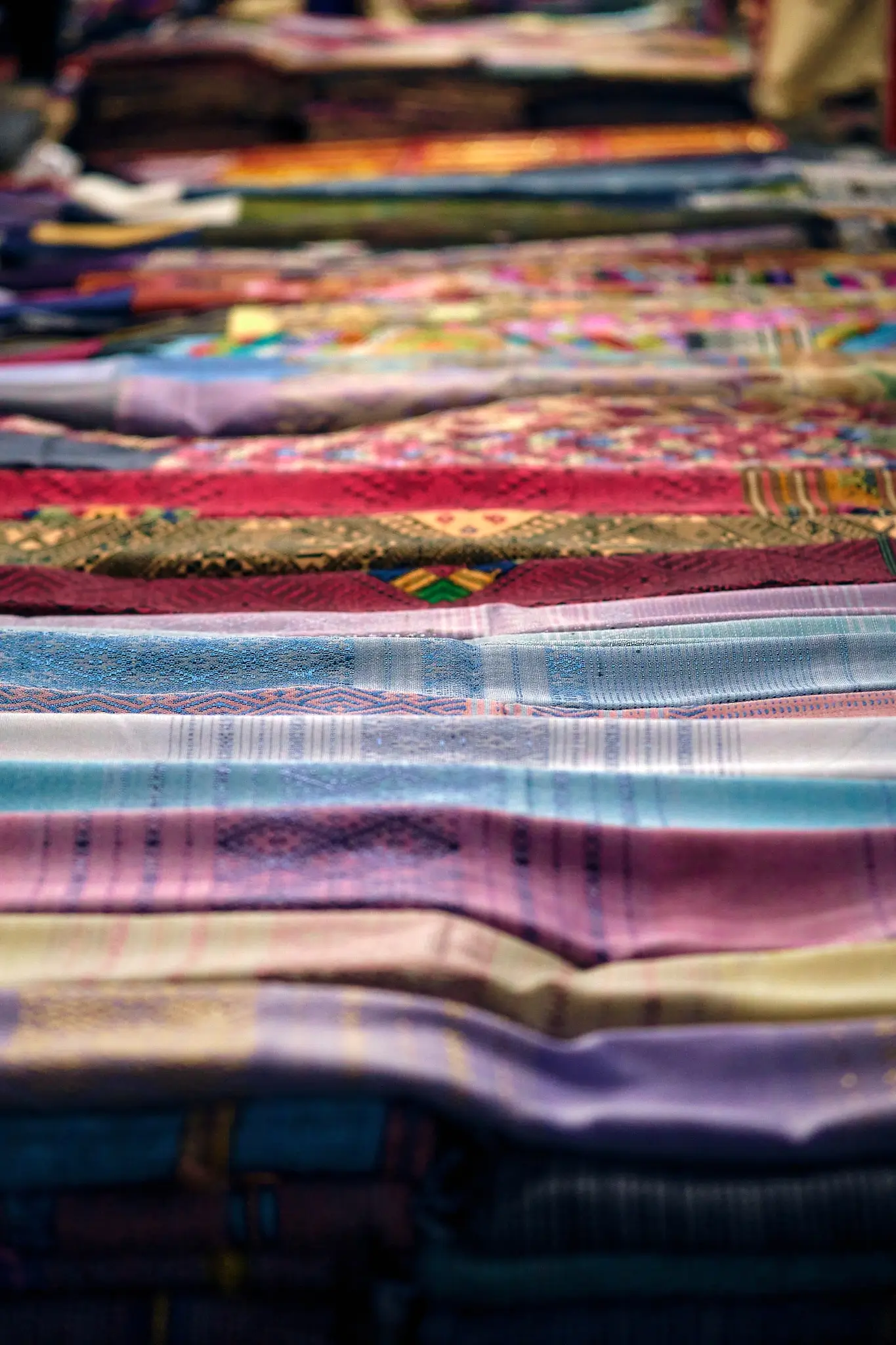
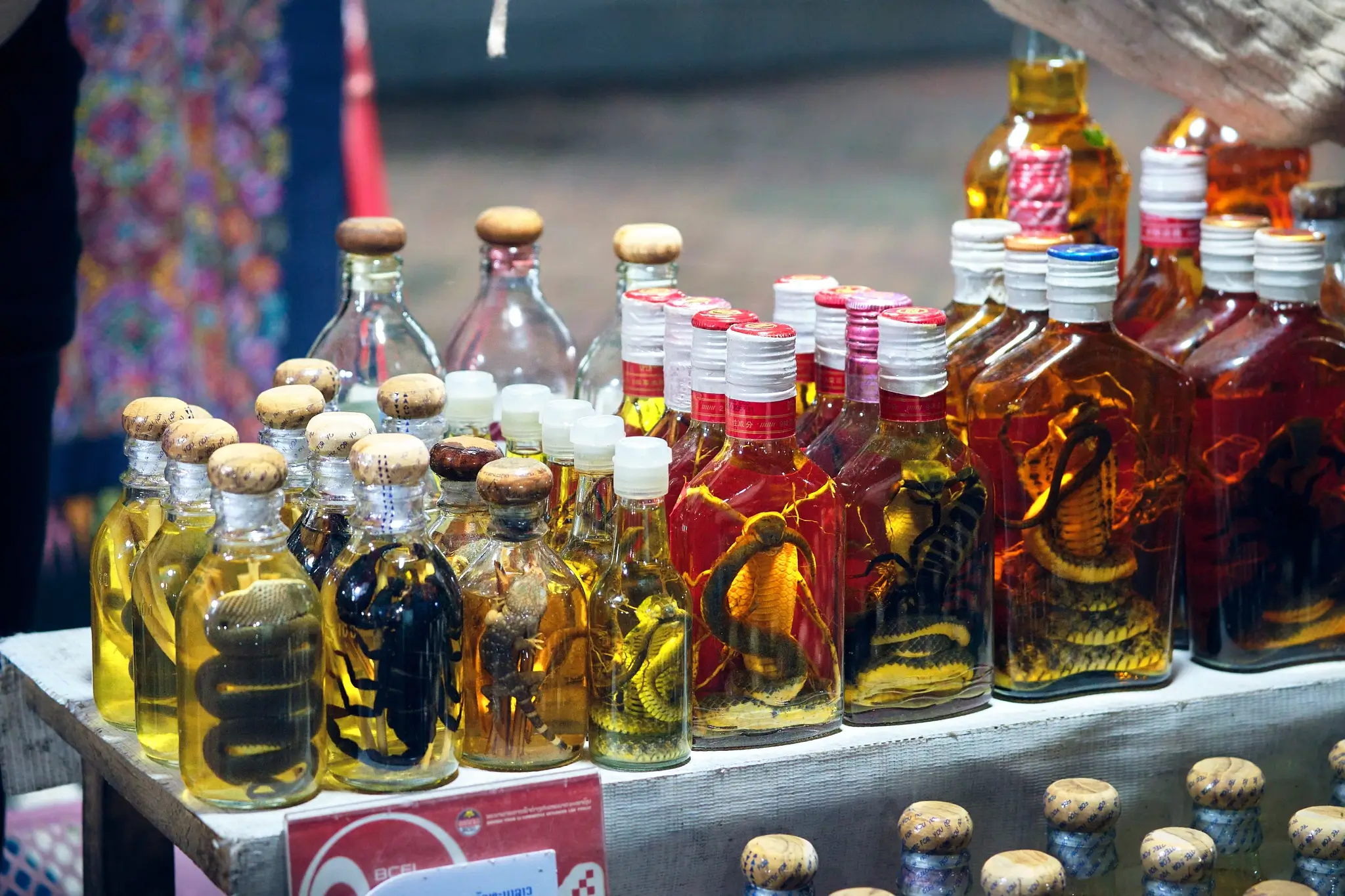
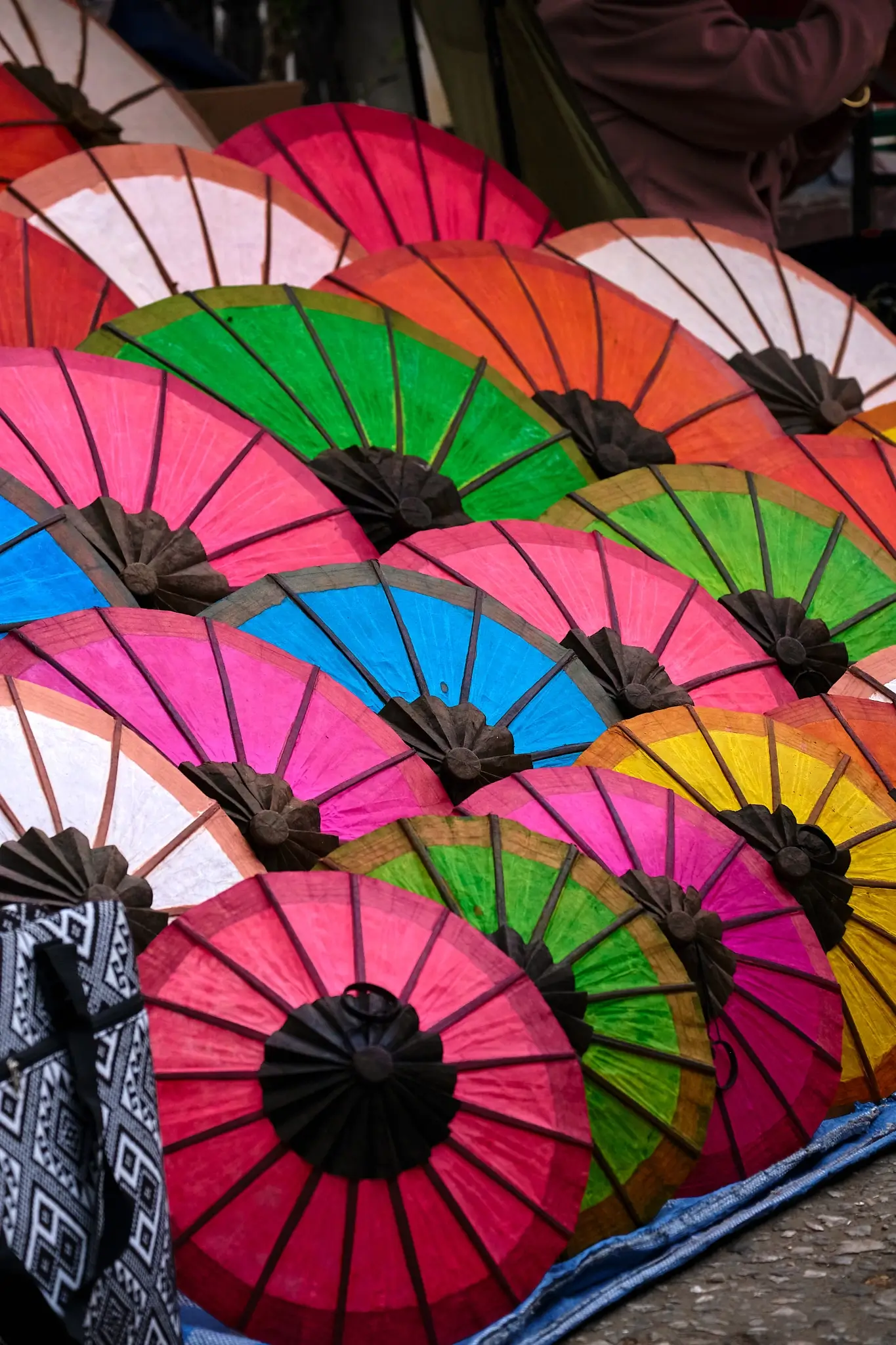
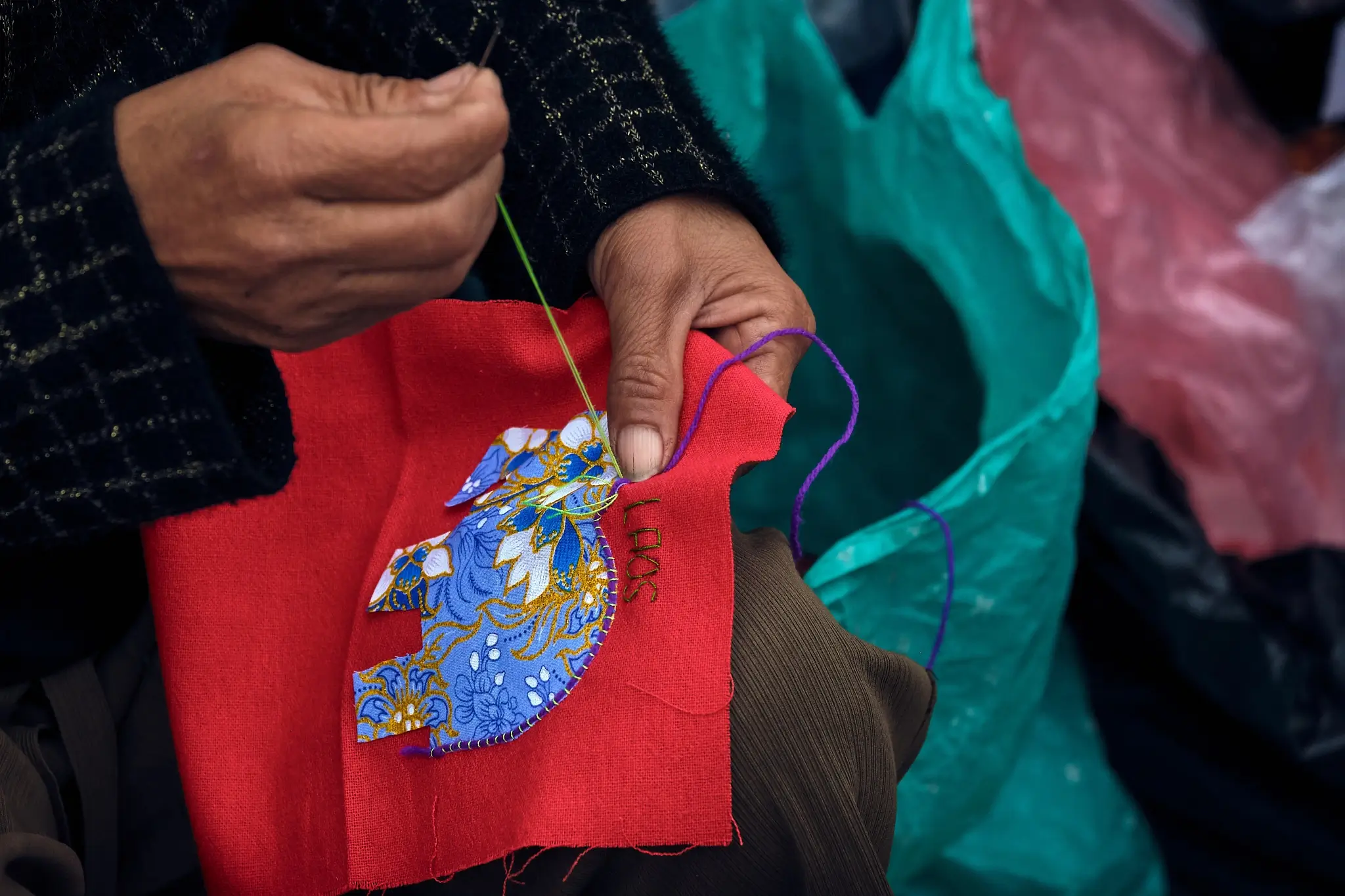
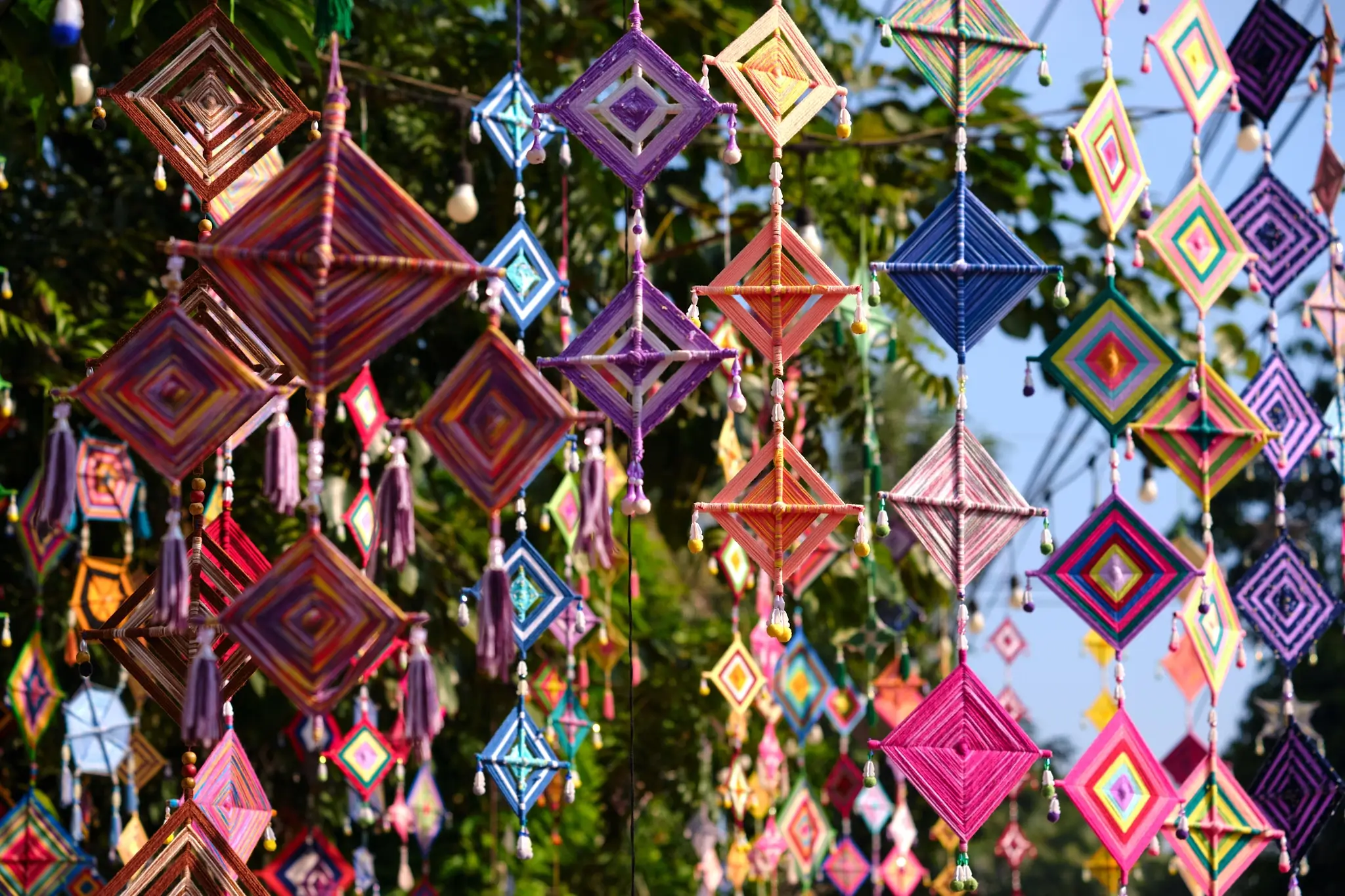
At dusk, the main street transforms into a succession of stalls illuminated by the warm glow of lamps. Embroidered fabrics, ceramics, paper lanterns and handcrafted objects reveal the cultural diversity of Laos. A little farther on, families and travelers gather around the long tables of the street food stalls.
Fish sizzles over the embers. Among the steaming pots, skewers of sticky rice dyed with natural colors appear, while the voices of the vendors blend with the clinking of dishes.
In these everyday gestures, a distinctive trait of this place emerges.
Luang Prabang lies where the Nam Khan meets the Mekong.
The ancient capital of the Lan Xang Kingdom2, it still preserves a rare balance between Buddhist spirituality, traditional architecture and the legacy of the French colonial period.
I walk among the old residences. Their faded facades, half-closed wooden shutters and balconies adorned with discreet arches preserve the memory of another era. Beneath the porticoes, shadows glide across stones polished by the passage of generations. Here, architecture does not impose itself: it merges with the life flowing around it.
I reach Wat3 Phonxay Xayxana Songkham.
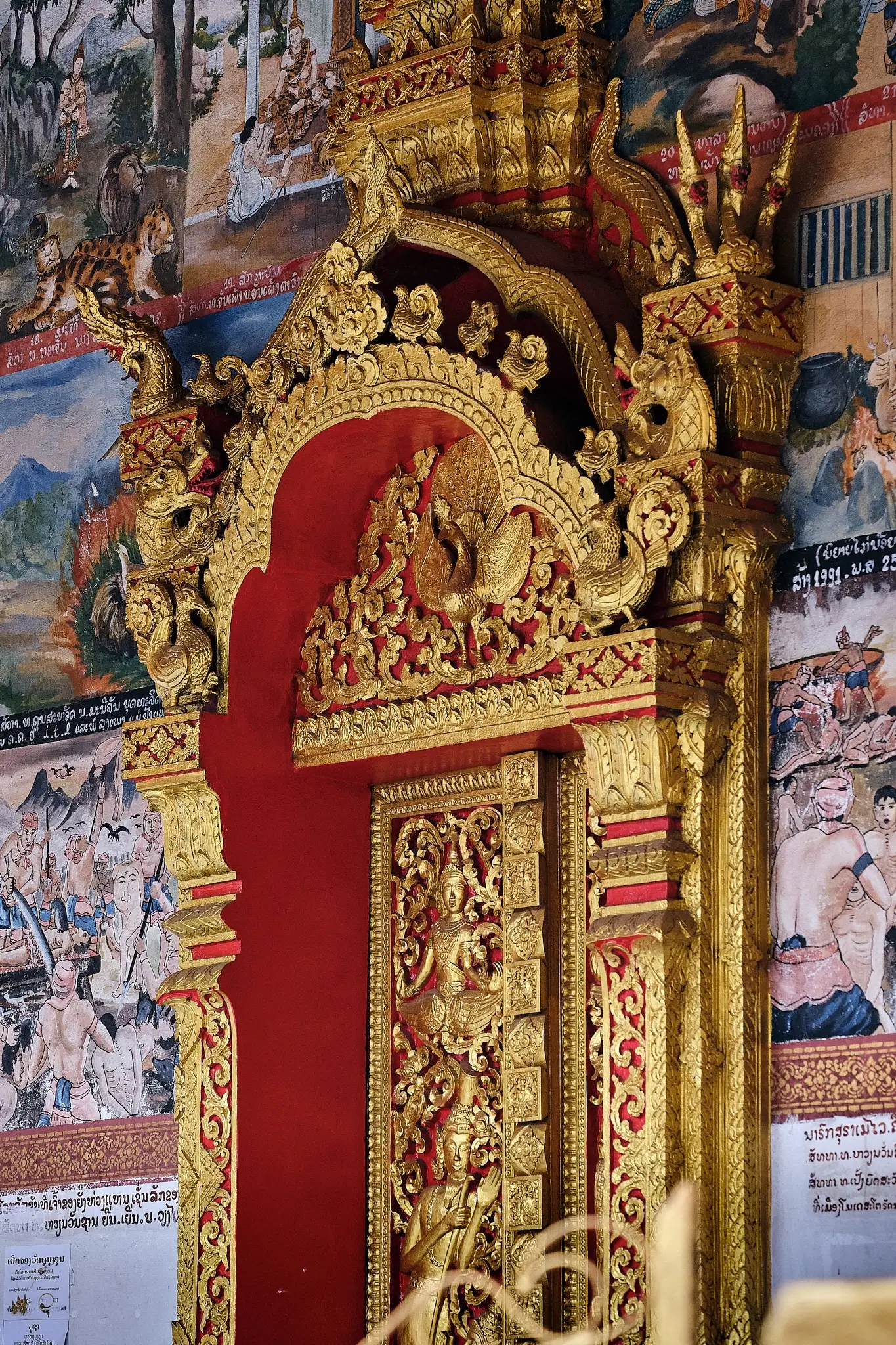
There are few visitors. A young monk patiently sweeps the courtyard with a bamboo broom, while delicate spirals of incense rise before the Buddha statues. In the monasteries, people study, pray and work. Every gesture belongs to the same flow of daily life.
I arrive at Wat Sensoukharam, where a large Buddha statue dominates the courtyard, surrounded by the quiet presence of the faithful. The red and gold walls emerge among the green palms and continue to draw my gaze as I pass through the gate.
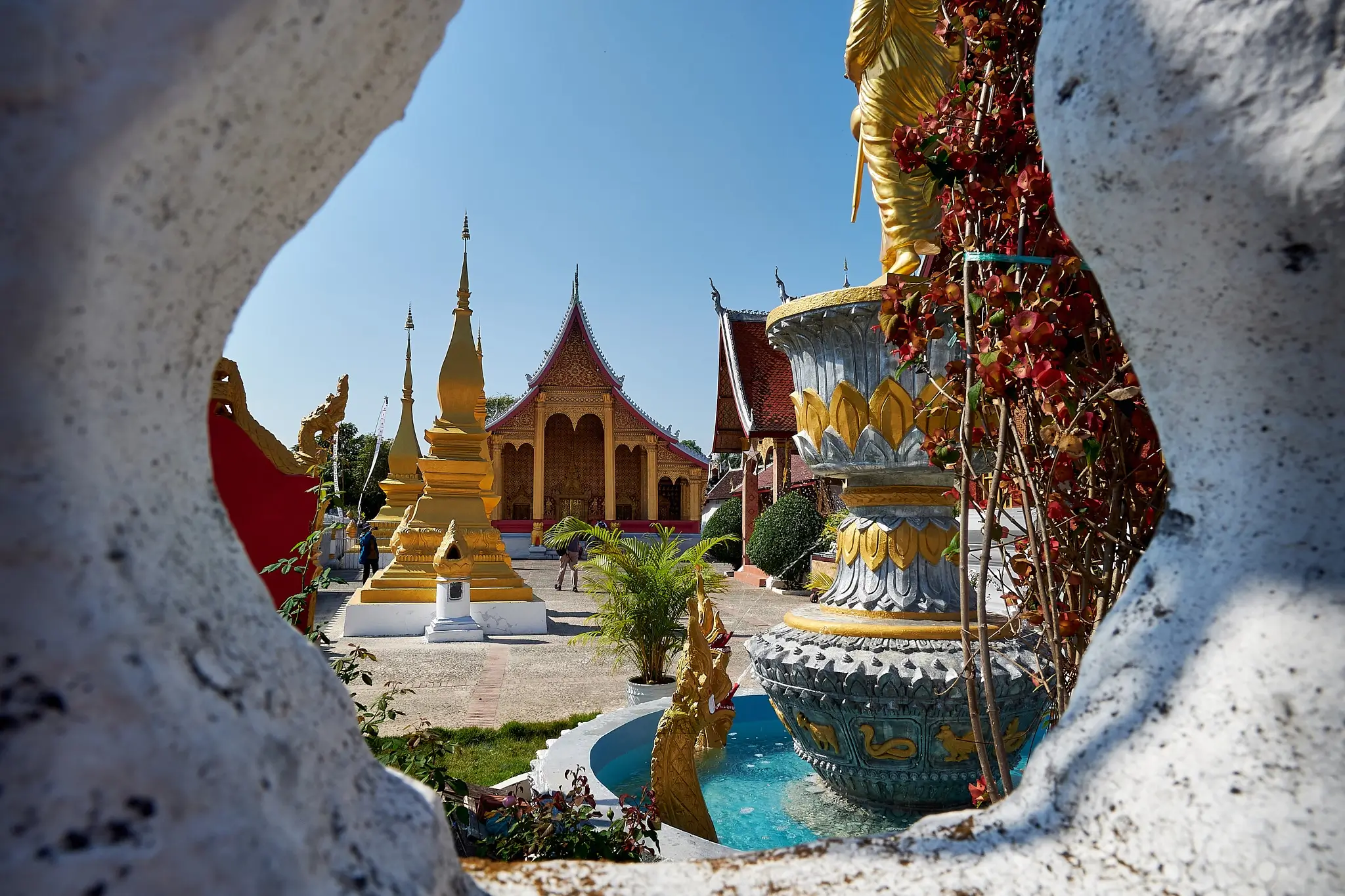
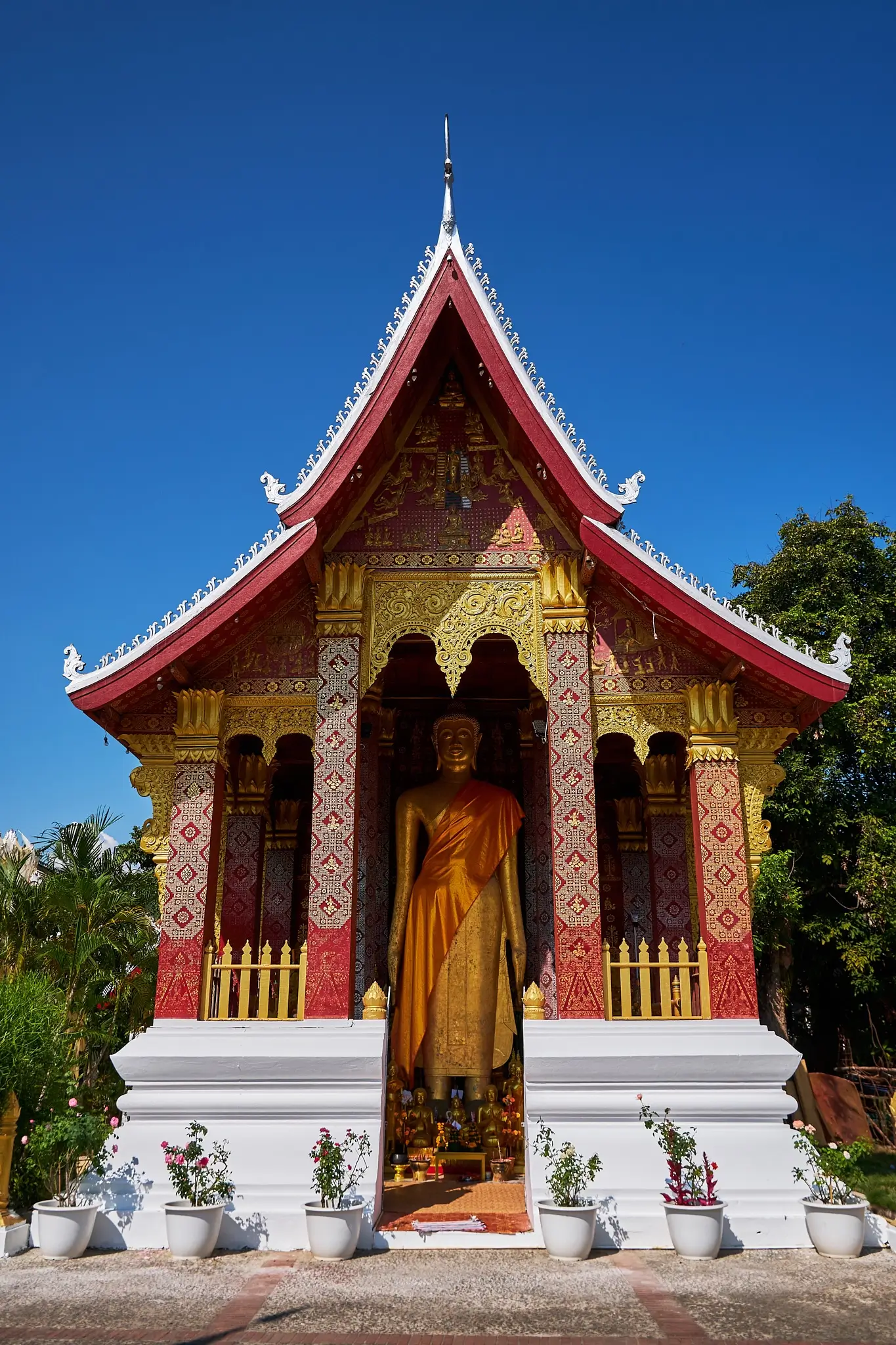
Behind me remains the silence of the temple, while the sounds of the street become clearer until they merge with the hum of the morning market.
Among the stalls are baskets of vegetables, strips of dried buffalo meat, sheets of khaiphaen4, banana chips and rows of small transparent bags filled with fried insects. A woman moves through the crowd carrying a tray of tiny bamboo cages. Inside, a single bird.
I buy one and carry it with me to Wat Xieng Thong.
In Buddhist tradition, returning freedom to an animal is an act of compassion that generates good karma and accumulates spiritual merit.
I gently loosen the thin slats. Just a small opening.
For a moment, the little bird remains still.
Then it takes flight.
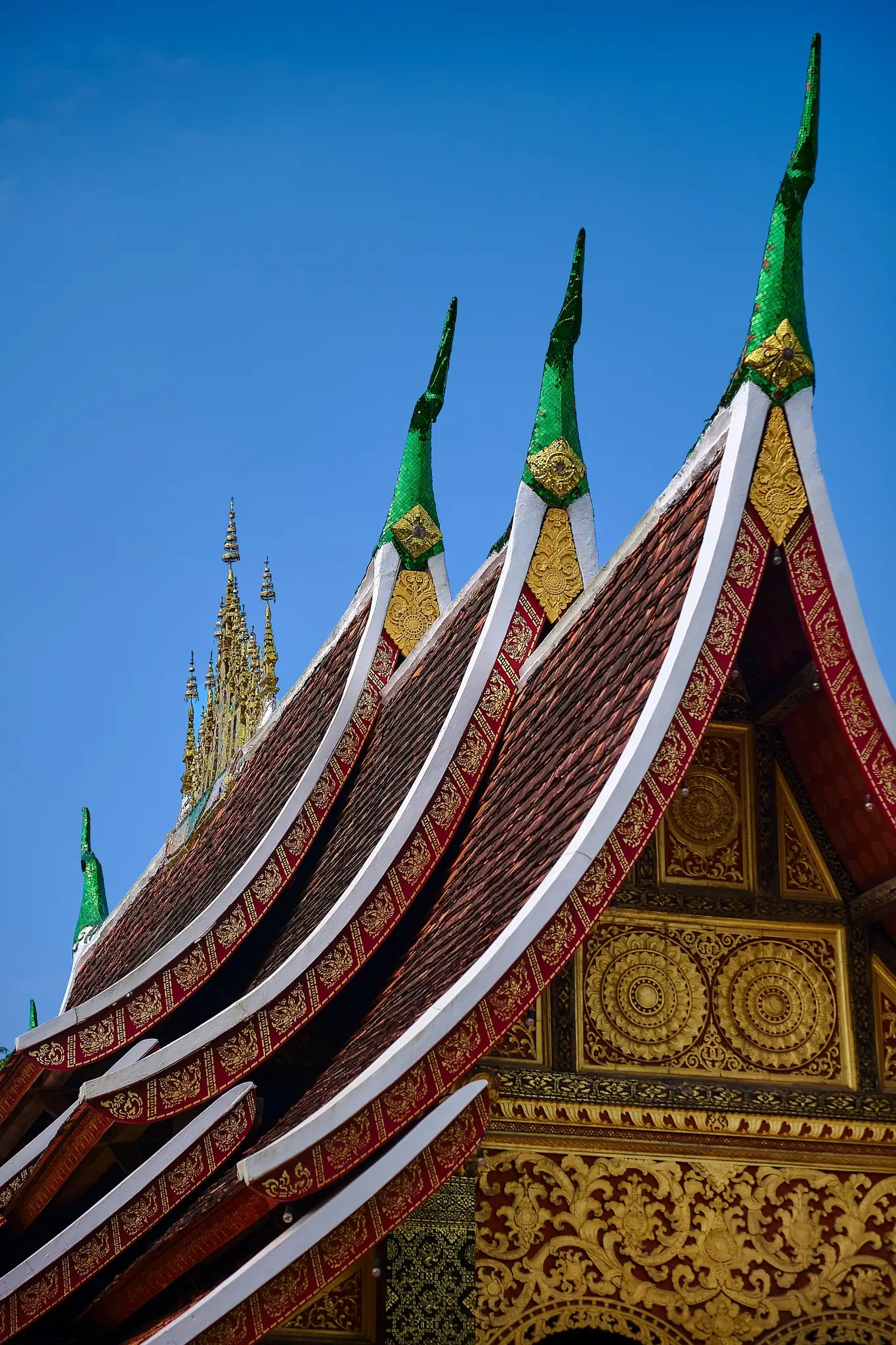
The flutter of its wings crosses the courtyard of Wat Xieng Thong and rises beyond the long rooflines, which seem to brush the earth before surrendering to the blue sky. I follow it with my eyes until it disappears beyond the treetops.
On the rear wall of the sim5, the famous Tree of Life comes alive in a mosaic of colored glass. Each fragment reflects the colors of the day, creating a design that continually changes before the eyes.
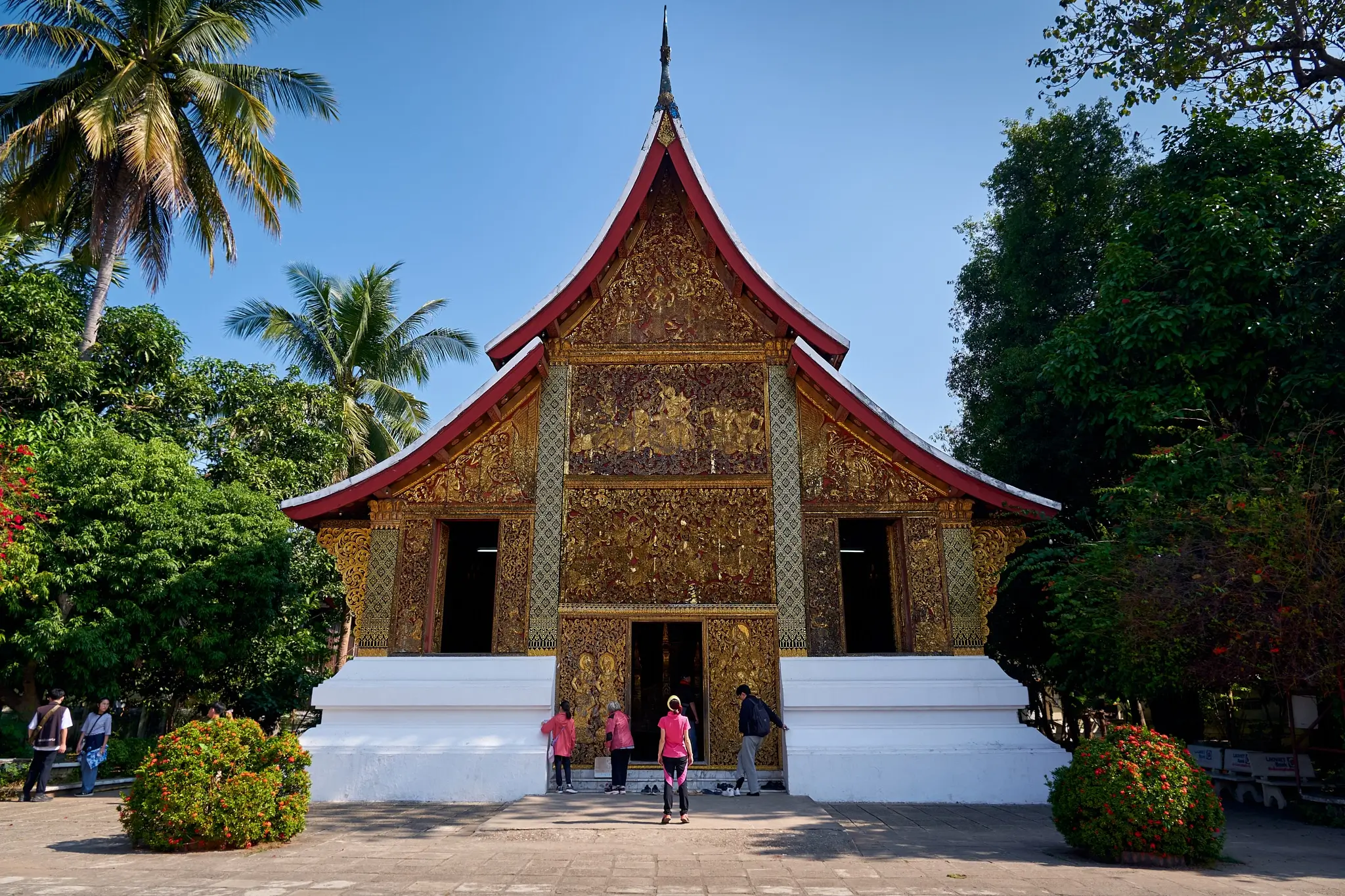
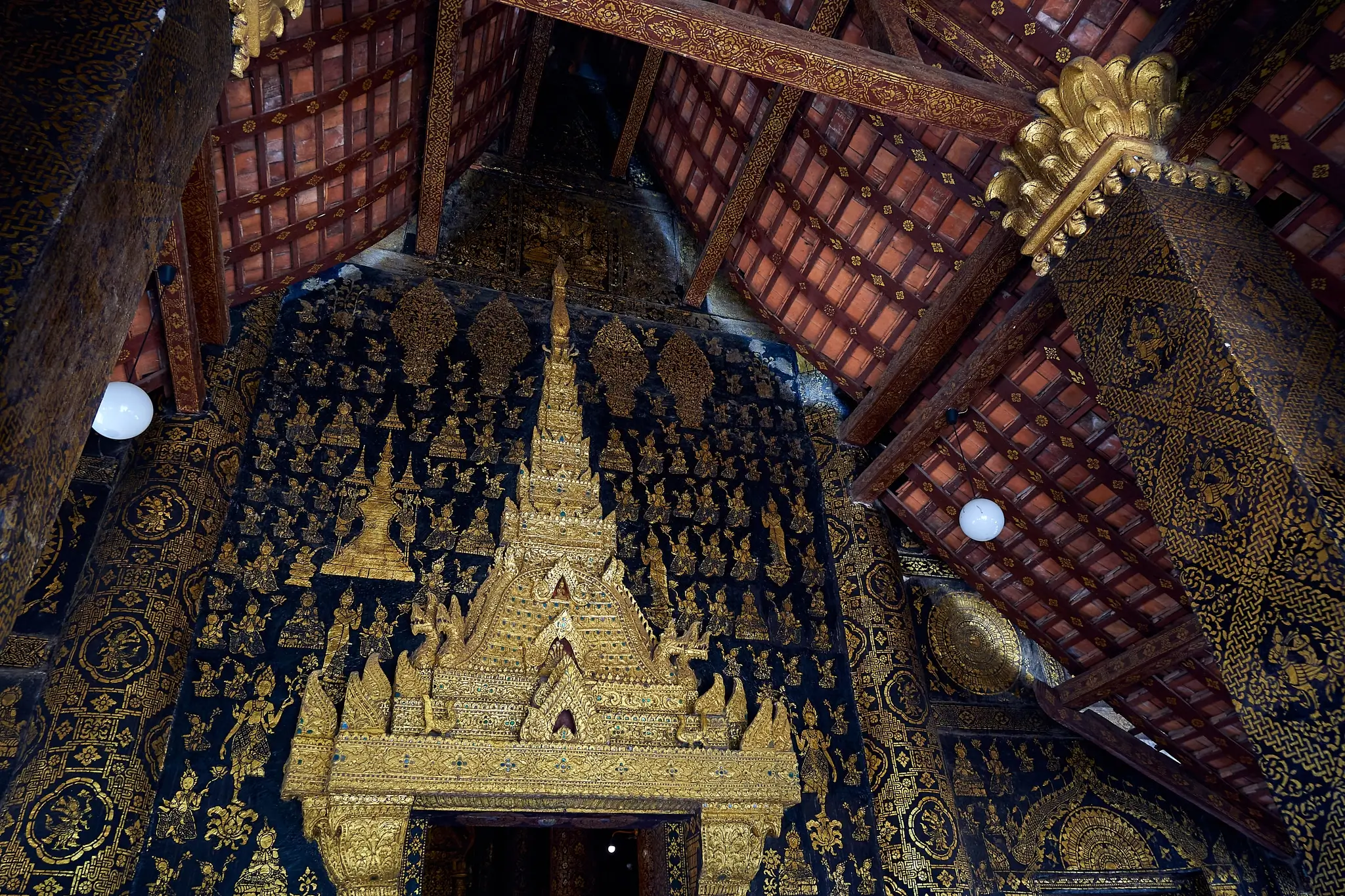
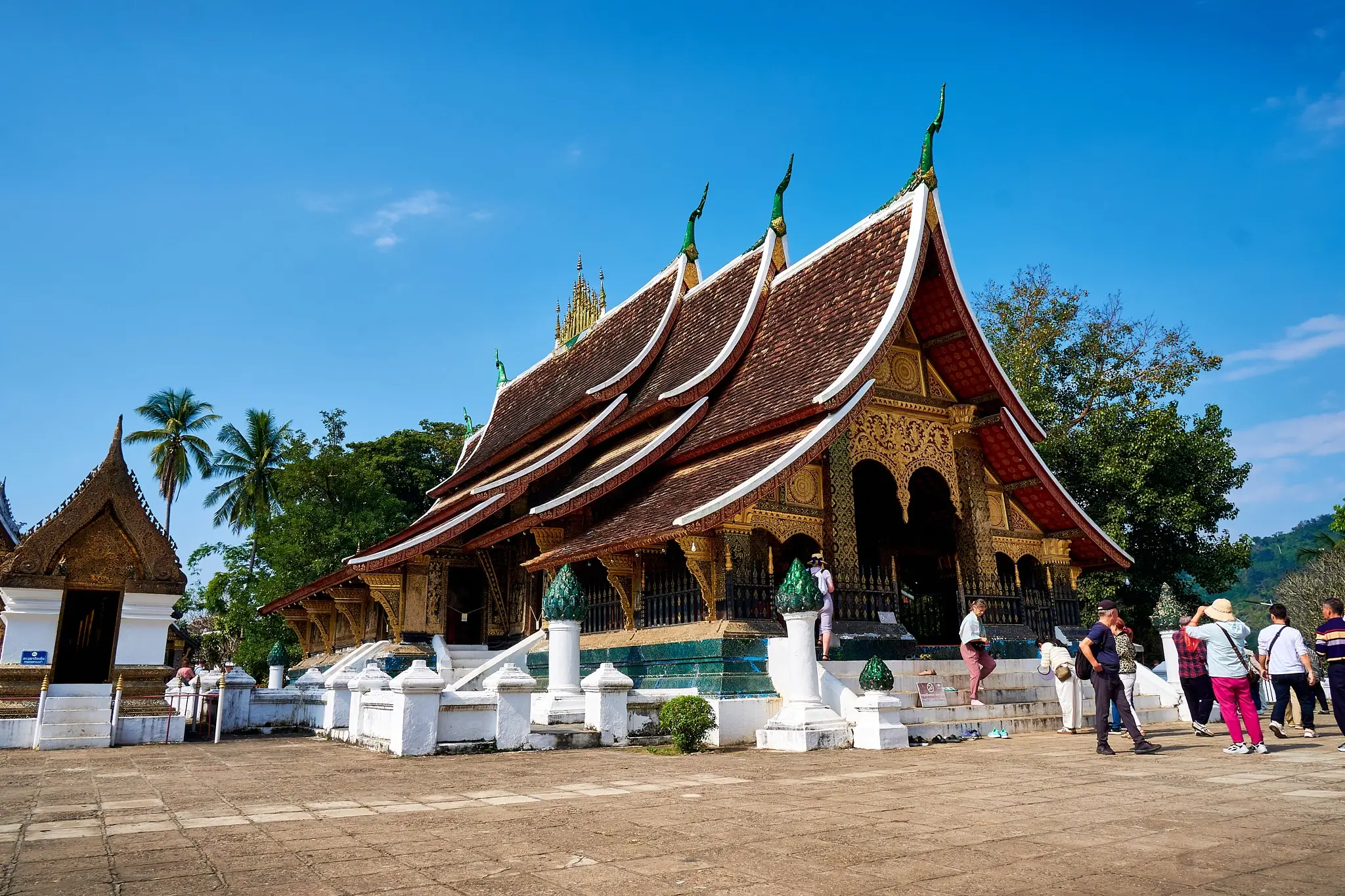
For more than four centuries, this was the religious heart of the Lan Xang Kingdom. Here, sovereigns were crowned and the court’s main official ceremonies were held.
In the late afternoon, we board a small boat as the sun slips behind the hills. The Mekong turns into dark silk. Its current widens and grows calmer as the sky fades into tired shades of orange and pink.
The city drifts away without a sound.
The temple roofs barely emerge among the trees, while on the banks a few fishermen pull in their nets and, little by little, the windows of the houses begin to glow.
When dinner is served, the amber light absorbs the last golden reflections, then dissolves into an ever-deeper blue.
The Mekong is not only the great river that crosses Laos.
It is a constant presence.
A current of water that has united villages, cultures and landscapes for centuries, shaping the lives of those who dwell along its course.
The final morning is dedicated to the Royal Palace.
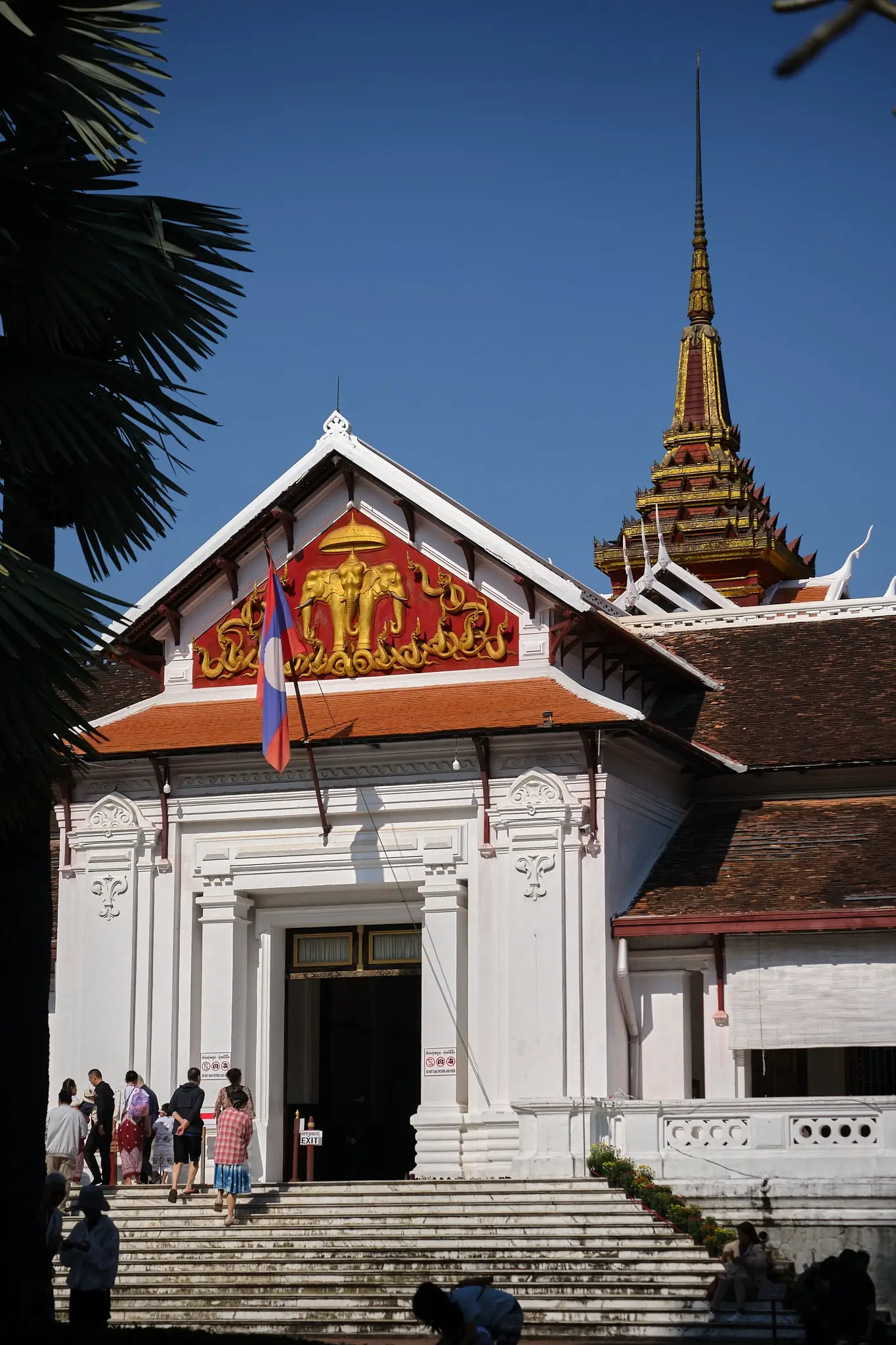
Built in 1904 during the French protectorate, the building combines European elegance with Lao tradition. I walk through its halls on polished wooden floors and observe the original furnishings, the diplomatic gifts received by the royal family and the objects that once belonged to the court. Each room conveys the image of a nation suspended between power, spirituality and openness to the world.
Beside it stands Haw Pha Bang, the sanctuary built to house the Phra Bang.
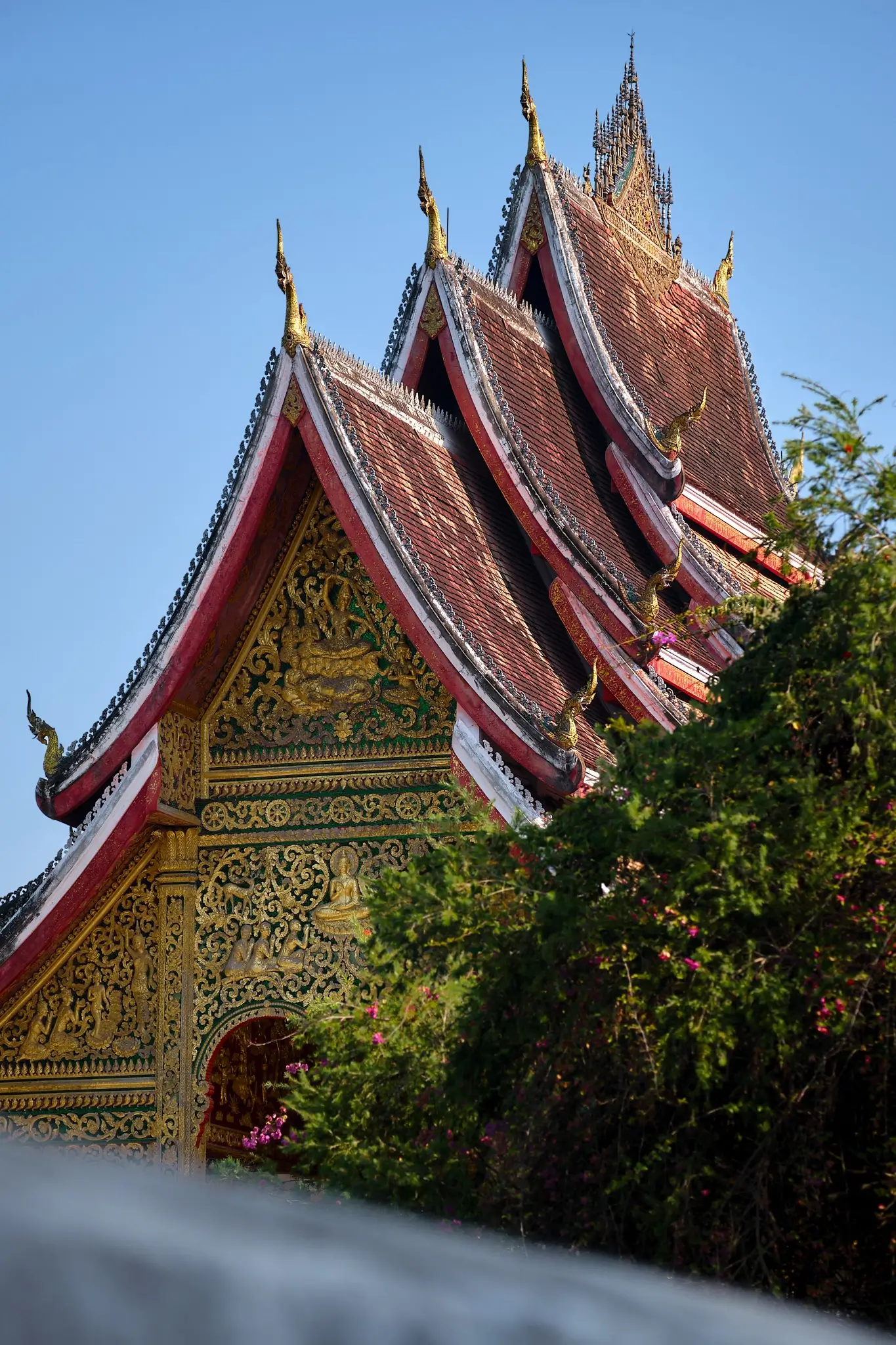
Among all the symbols of the country, none is revered as much as this precious effigy. Arriving in the Lao kingdom in the 14th century, its importance was such that it gave its name to the royal capital itself: Luang Prabang, “the City of the Sacred Phra Bang.”
Around this statue, devotion, legends and mysteries intertwine.
Over the centuries it was moved, hidden and contested during invasions, eventually becoming the emblem of an entire people.
According to some accounts, the one currently kept in Haw Pha Bang is a copy, while the original is preserved in a safe location in Vientiane. Other stories claim instead that the authentic one was given to the Russians in 1975 in exchange for aid during a decisive phase of Laos’ recent history.
For years it was housed in the nearby Wat Mai Suwannaphumaham, where it still symbolically returns during Lao New Year celebrations.
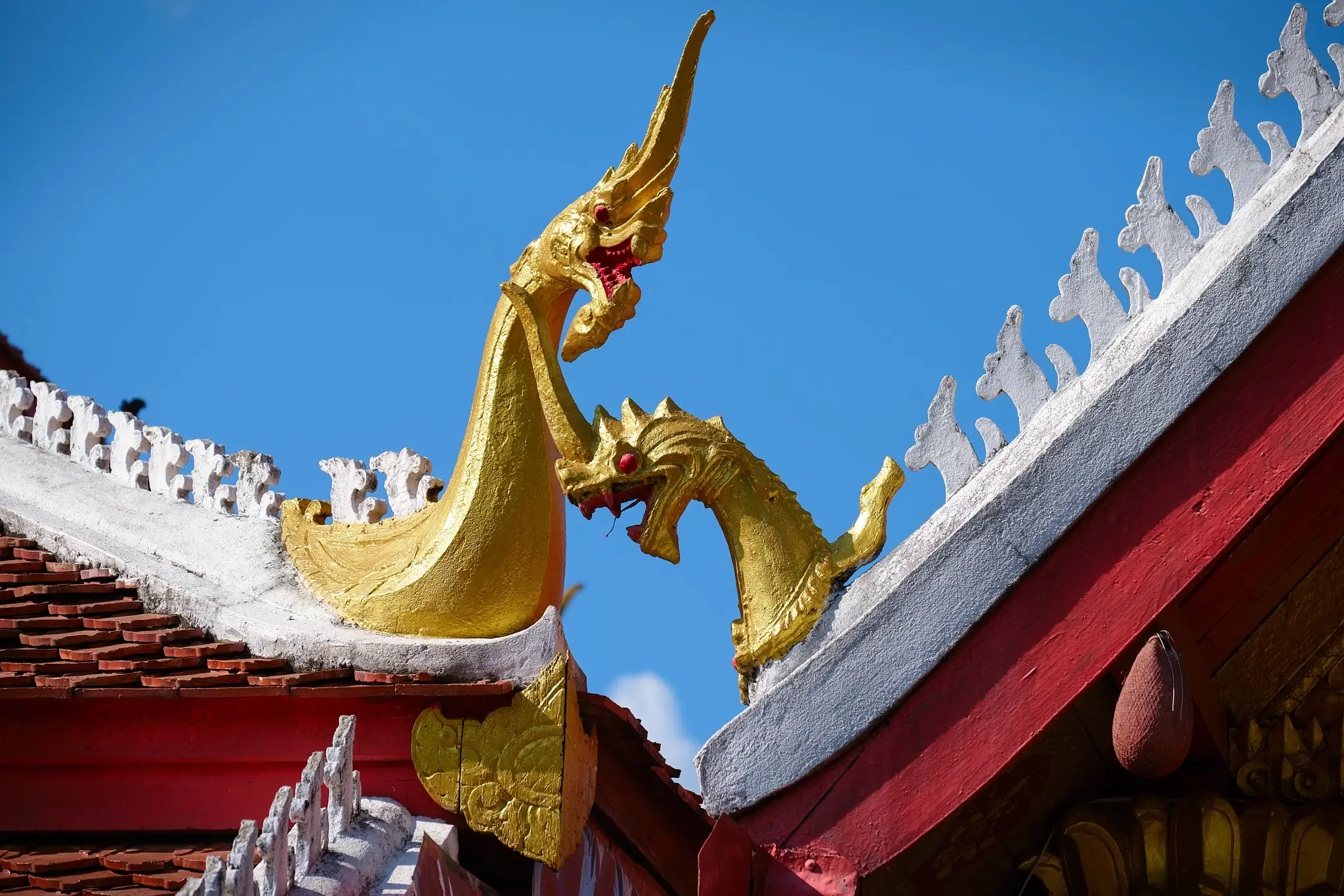
I stop before Haw Pha Bang.
I do not enter immediately.
I remain there, observing.
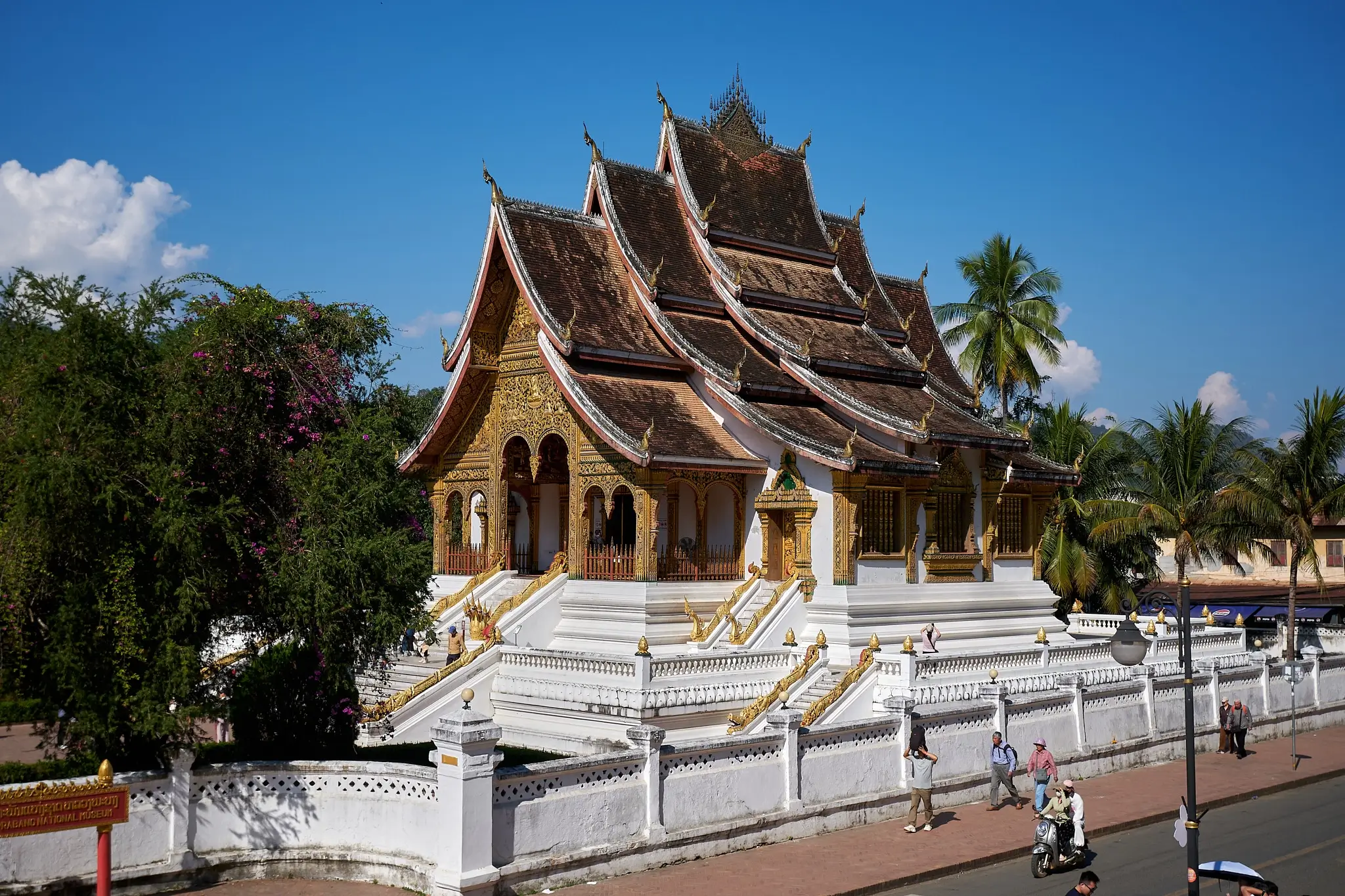
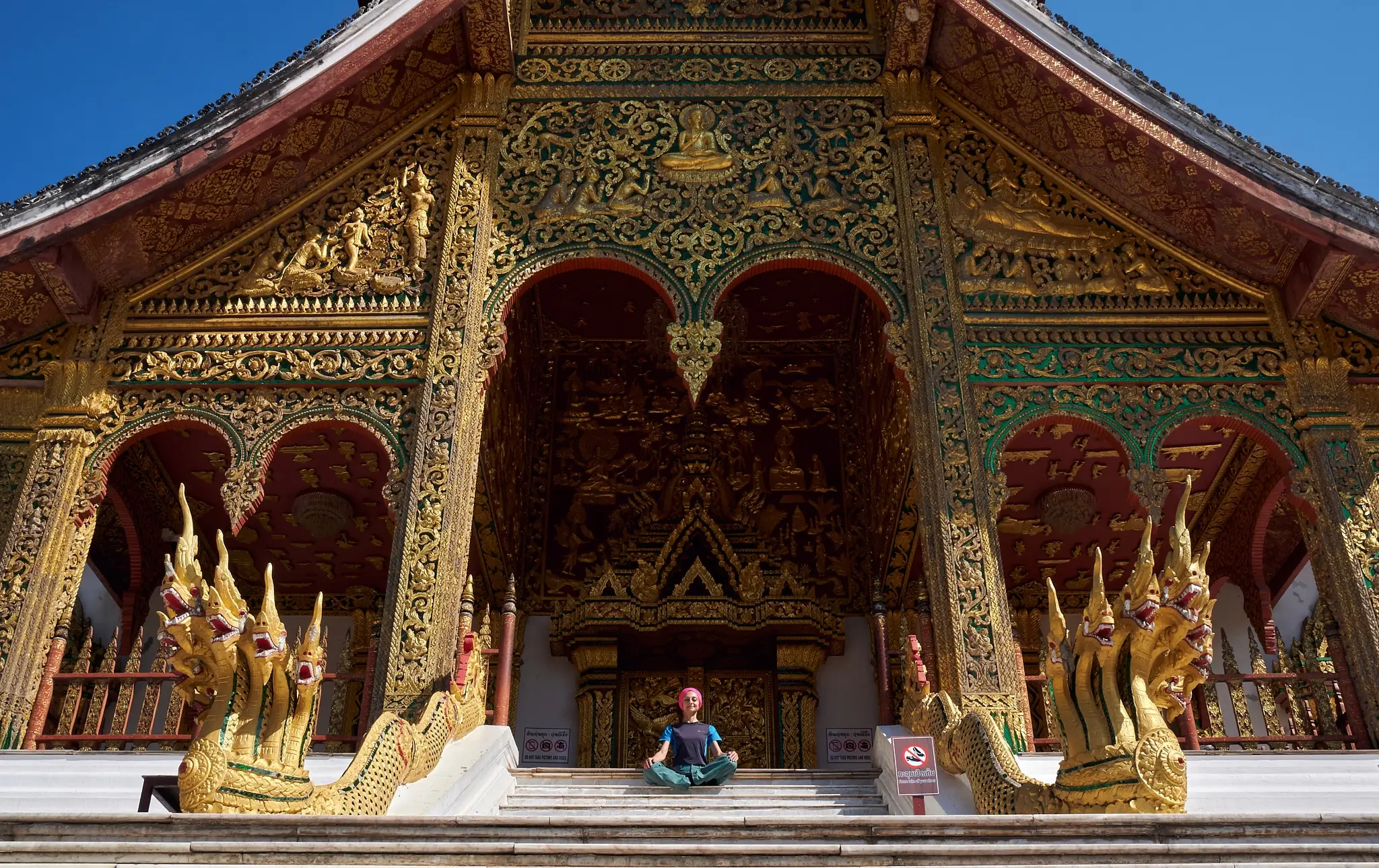
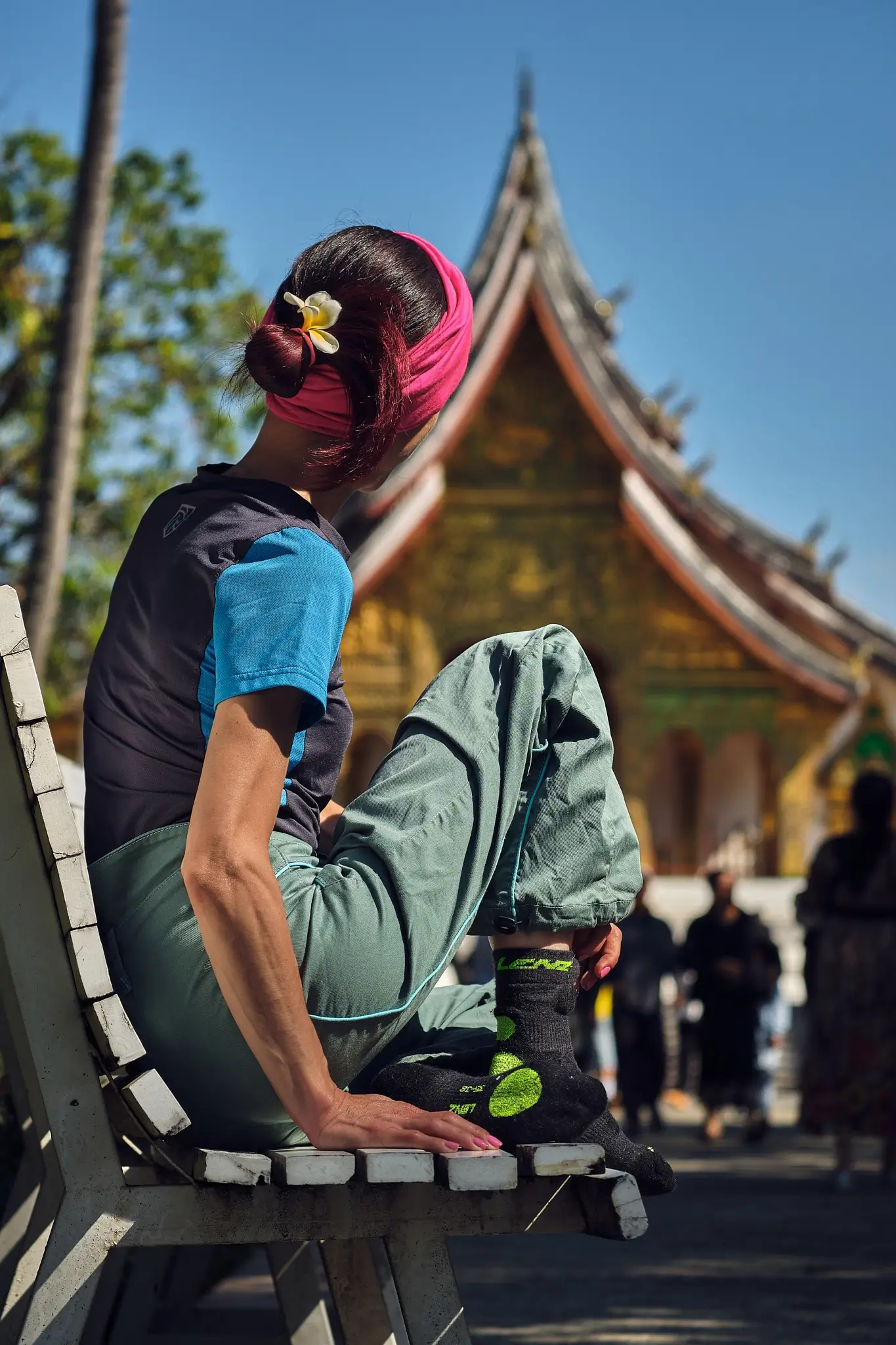
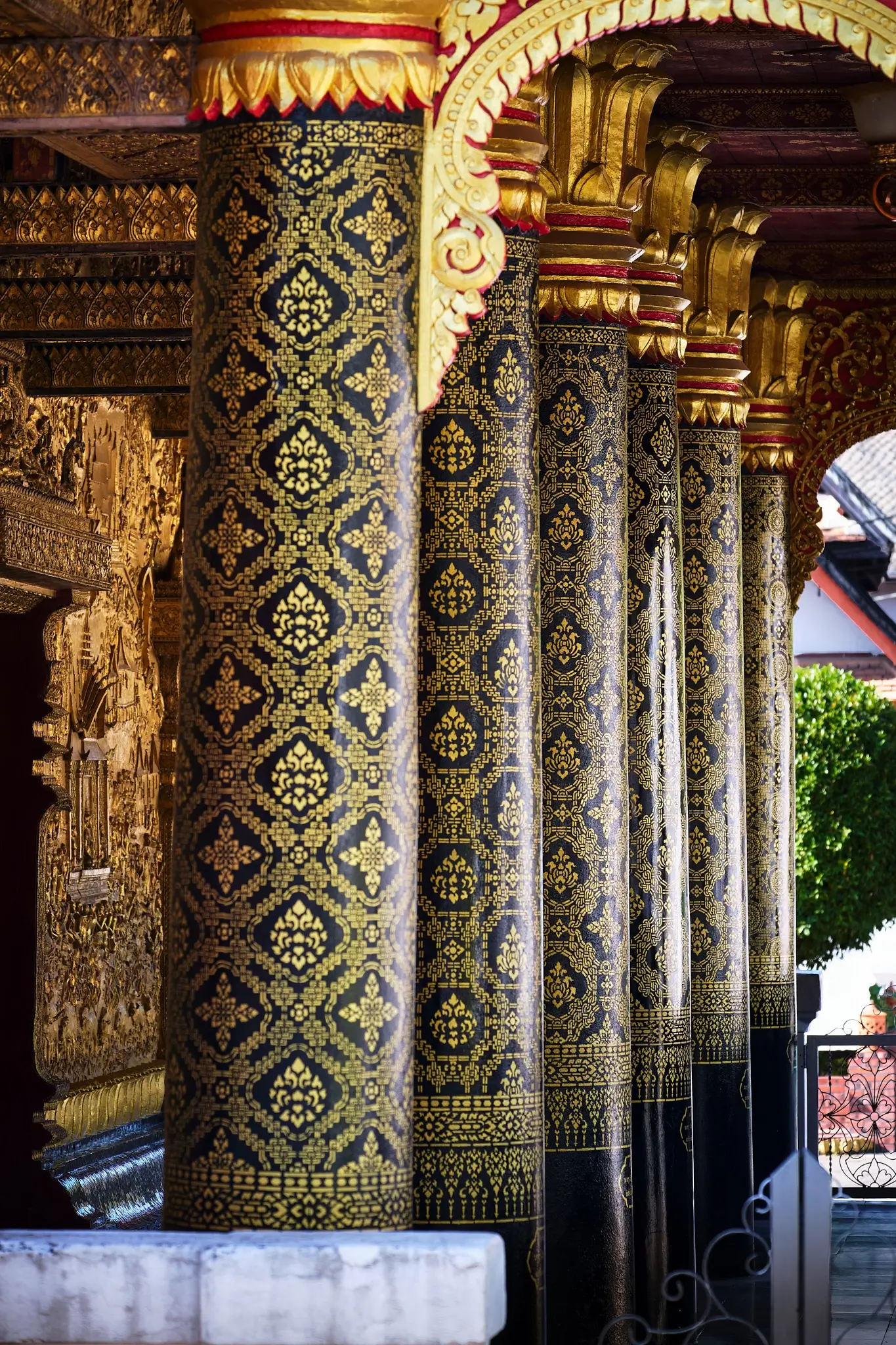
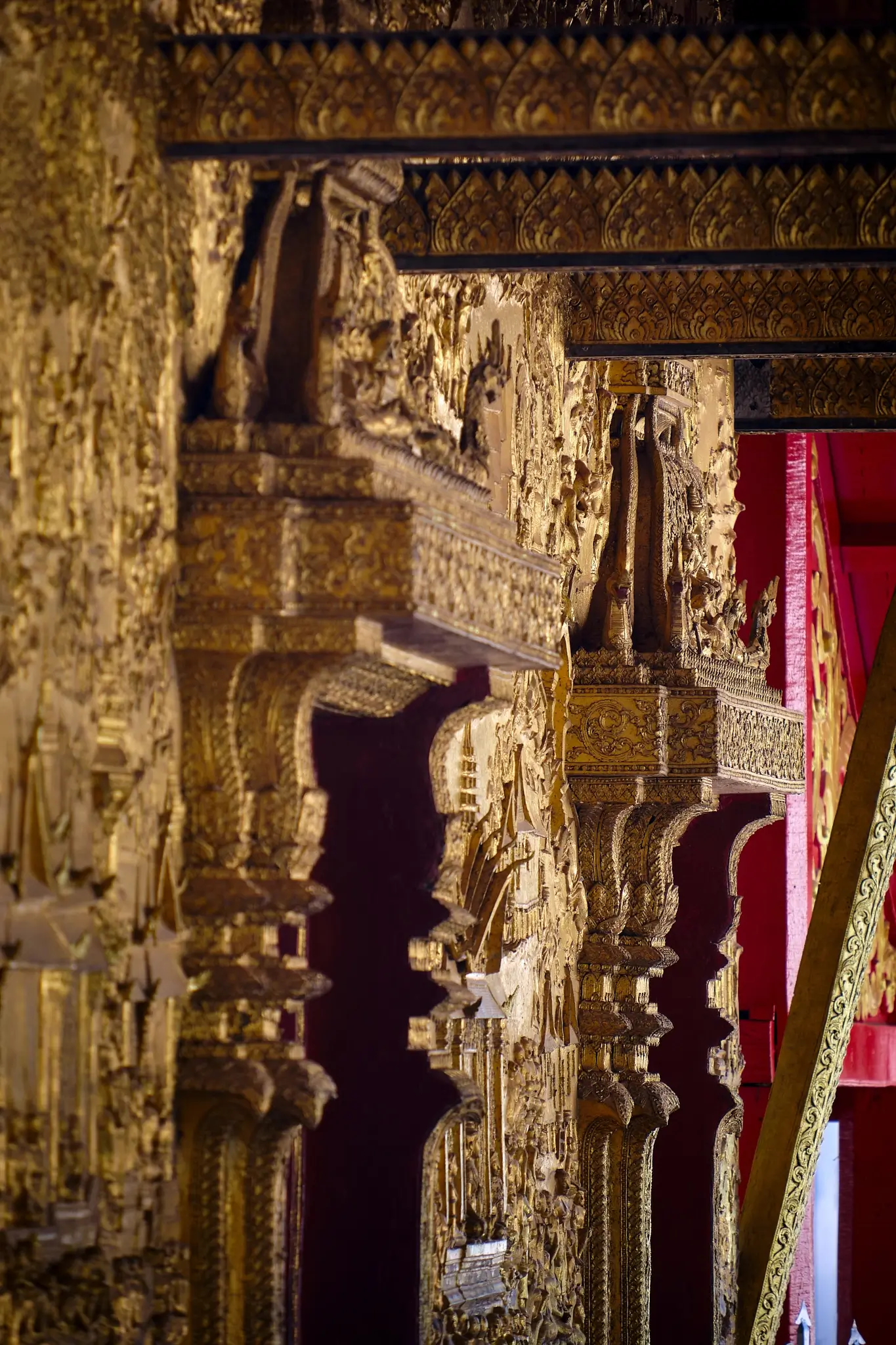
The facade radiates the light reflected from the golden surfaces, in a weave of carved wood and ancient symbols. The sculpted forms seem to come alive as I slowly climb the staircase, guarded by the sinuous figures of the nagas6. Inside, golden reflections, crimson tones and black lacquer7 intertwine in vegetal motifs and Buddhist references. The intricate craftsmanship reveals a universe of forms shaped by a deep-rooted wisdom. Above me, the ascending lines of the roof guide the gaze toward the sky. Although it is a relatively recent construction, the temple carries the echo of the sacred places that came before it.
In the courtyard, a bell rings among the trees.
Outside, the city continues its course.
The monks cross the streets.
Markets reopen.
The Mekong continues its journey.
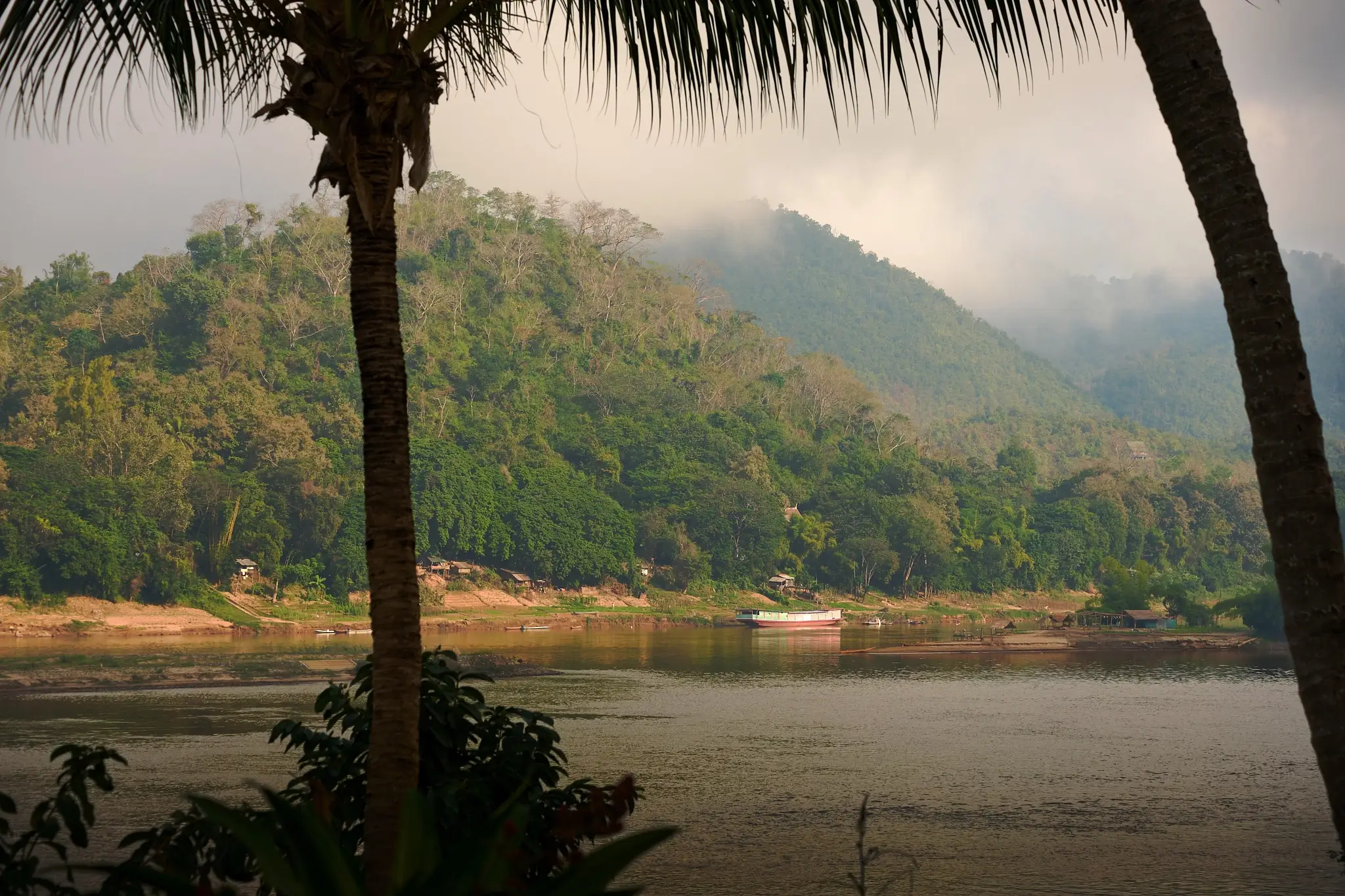
Leaving Luang Prabang, I am left with the feeling of having encountered a place that is not told through its monuments, but through the way they are lived.
In a part of the world that is moving ever faster, this small city continues to measure time by the steps of the monks and the breath of the Mekong.
Take care and talk soon!
Versione italiana
Ci sono luoghi in cui il tempo sembra perdere la sua funzione.
A Luang Prabang non scompare.
Semplicemente rallenta.
Prima dell’alba la città trattiene il respiro.
Le strade sono immerse in una luce incerta. L’aria è fresca, quasi immobile. Lungo i marciapiedi gli abitanti prendono posto con piccoli cesti di bambù colmi di riso e semplici doni.
Poi arrivano i monaci.
Procedono in fila, avvolti nelle loro tuniche color zafferano, custodendo davanti a sé la ciotola delle offerte. Il Tak Bat8, la questua mattutina, rinnova il legame tra la comunità e i monasteri attraverso un gesto di condivisione tramandato da generazioni.
Quando l’ultimo saio scompare dietro l’angolo, la città si risveglia. Le serrande dei negozi si alzano, il caffè appena preparato si mescola agli aromi delle cucine e le rive del Mekong tornano a popolarsi.
La sera precedente avevo attraversato il mercato notturno.
All’imbrunire la via principale si trasforma in un susseguirsi di bancarelle illuminate dai bagliori caldi delle lampade. Tessuti ricamati, ceramiche, lanterne di carta e oggetti d’artigianato raccontano la varietà culturale del Laos. Poco più in là, famiglie e viaggiatori si raccolgono attorno ai lunghi tavoli del cibo di strada.
Il pesce sfrigola sulle braci. Tra le pentole fumanti affiorano spiedini di riso glutinoso tinto con colori naturali, mentre le voci dei venditori si confondono con il tintinnio delle stoviglie.
In questi gesti quotidiani riaffiora un tratto distintivo di questo luogo.
Luang Prabang sorge dove il Nam Khan incontra il Mekong.
Antica capitale del regno di Lan Xang9, conserva ancora oggi un equilibrio raro tra spiritualità buddhista, architettura tradizionale e l’eredità del periodo coloniale francese.
Passeggio tra le antiche dimore. Le facciate dai colori sbiaditi, le persiane di legno socchiuse e i balconi ornati da archi discreti custodiscono il ricordo di un’altra epoca. Sotto i porticati, l’ombra scivola sulle pietre levigate dal passaggio di generazioni. Qui l’architettura non si impone: si fonde con la vita che le scorre intorno.
Raggiungo il Wat10 Phonxay Xayxana Songkham.
I visitatori sono pochi. Un giovane monaco spazza pazientemente il cortile con una scopa di bambù, mentre sottili volute d’incenso salgono davanti alle statue del Buddha. Nei monasteri si studia, si prega, si lavora. Ogni gesto appartiene allo stesso fluire delle giornate.
Arrivo al Wat Sensoukharam, dove una grande statua del Buddha domina il cortile, circondata dalla quieta presenza dei fedeli. Le pareti rosse e oro emergono tra il verde delle palme e continuano ad attirare il mio sguardo mentre attraverso il cancello.
Alle mie spalle rimane il silenzio del tempio, mentre i suoni della strada si fanno più nitidi fino a fondersi con il brusio del mercato del mattino.
Tra i banchi compaiono ceste di verdure, strisce di carne di bufalo essiccata, fogli di khaiphaen11, chips di banana e file di piccoli sacchetti trasparenti colmi di insetti fritti. Una donna avanza tra la folla con un vassoio di minuscole gabbie di bambù. Dentro, un solo uccellino.
Ne acquisto una e la porto con me fino al Wat Xieng Thong.
Nella tradizione buddhista restituire la libertà a un animale è un atto di compassione che genera buon karma e accumula meriti spirituali.
Allargo appena le sottili stecche. Basta uno spiraglio.
Per un istante l’uccellino rimane immobile.
Poi spicca il volo.
Il battito d’ali attraversa il cortile del Wat Xieng Thong e supera le lunghe falde del tetto, che sembrano sfiorare la terra prima di affidarsi all’azzurro. Lo seguo con lo sguardo finché scompare oltre le cime degli alberi.
Sulla parete posteriore del sim12, il celebre Albero della Vita si anima in un mosaico di vetro colorato. Ogni tessera rifrange i colori del giorno, componendo un disegno che muta continuamente davanti agli occhi.
Per oltre quattro secoli questo fu il cuore religioso del regno di Lan Xang. Qui venivano incoronati i sovrani e si celebravano le principali cerimonie ufficiali.
Nel tardo pomeriggio ci imbarchiamo su una piccola nave mentre il sole scivola dietro le colline. Il Mekong si fa seta scura. Il suo corso si allarga e si acquieta mentre il cielo si spegne in aranci e rosa stanchi.
La città si allontana senza fare rumore.
I tetti dei templi emergono appena tra gli alberi, mentre sulle rive qualche pescatore ritira le reti e, poco alla volta, le finestre delle case iniziano a illuminarsi.
Quando viene servita la cena, l’ambra assorbe gli ultimi riflessi d’oro, poi si dissolve in un blu sempre più profondo.
Il Mekong non è soltanto il grande fiume che attraversa il Laos.
È una presenza costante.
Una corrente d’acqua che unisce villaggi, culture e paesaggi, plasmando da secoli l’esistenza di chi vive lungo il suo corso.
L’ultima mattina è dedicata al Palazzo Reale.
Costruito nel 1904 durante il protettorato francese, l’edificio unisce l’eleganza europea alla tradizione laotiana. Cammino tra le sue sale su pavimenti di legno lucido e osservo gli arredi originali, i doni diplomatici ricevuti dalla famiglia reale e gli oggetti appartenuti alla corte. Ogni ambiente restituisce l’immagine di una nazione sospesa tra potere, spiritualità e apertura al mondo.
Lì accanto sorge l’Haw Pha Bang, il santuario costruito per custodire il Phra Bang.
Tra tutti i simboli del Paese, nessuno è venerato quanto questa preziosa effigie. Giunta nel regno lao nel XIV secolo, la sua importanza fu tale da dare il nome alla stessa capitale reale: Luang Prabang, “la Città del Sacro Phra Bang”.
Attorno a questa statua si intrecciano devozione, leggende e misteri.
Nei secoli fu trasferita, nascosta e contesa durante le invasioni, fino a diventare l’emblema di un intero popolo.
Secondo alcune versioni, quella oggi custodita nell’Haw Pha Bang sarebbe una copia, mentre l’originale sarebbe conservato in un luogo sicuro a Vientiane. Altri racconti sostengono invece che quella autentica sarebbe stata ceduta ai russi nel 1975, in cambio di aiuti durante una fase decisiva della storia recente del Laos.
Per anni fu ospitata nel vicino Wat Mai Suwannaphumaham, dove ancora oggi ritorna simbolicamente durante le celebrazioni del Capodanno laotiano.
Mi fermo davanti all’Haw Pha Bang.
Non entro subito.
Rimango ad osservare.
La facciata irradia il chiarore riflesso dalle superfici dorate, in un intreccio di legno intagliato e simboli antichi. Le forme scolpite sembrano prendere vita mentre salgo lentamente la scalinata, custodita dalle sinuose figure dei naga13. All’interno, riverberi dorati, tonalità cremisi e lacca nera14 si intrecciano in motivi vegetali e richiami buddhisti. Le preziose lavorazioni rivelano un universo di forme scaturite da una radicata sapienza. Sopra di me, il tetto dalle linee ascendenti conduce lo sguardo verso il cielo. Pur essendo una costruzione relativamente recente, il tempio raccoglie l’eco dei luoghi sacri che lo hanno preceduto.
Nel cortile una campana risuona tra gli alberi.
Fuori, la città continua il suo corso.
I monaci attraversano le strade.
I mercati riaprono.
Il Mekong prosegue il suo viaggio.
Lasciando Luang Prabang resta la sensazione di aver conosciuto un luogo che non si racconta attraverso i monumenti, ma attraverso il modo in cui vengono vissuti.
In una parte del mondo sempre più veloce, questa piccola città continua a misurare il tempo con il passo dei monaci e il respiro del Mekong.
- Tak Bat (in Lao: ຕັກບາດ): traditional Buddhist ritual practiced at dawn according to the Theravāda tradition. During the daily alms round, monks walk silently through the streets receiving rice and other offerings from devotees, who place them in the monks’ alms bowls (bāt). The ritual represents one of the most significant moments of Lao religious life and renews the bond between the lay community and the Saṅgha (the monastic community), based on the principle of merit (puñña) gained through the act of giving (dāna). ↩︎
- Kingdom of Lan Xang (1353–1707): historic kingdom of Southeast Asia, founded by Fa Ngum and considered the foundation of present-day Laos. Its name, Lan Xang Hom Khao, means “Kingdom of a Million Elephants and the White Parasol”. Luang Prabang was its first capital and remained one of its main religious and cultural centres even after the capital was moved to Vientiane in the 16th century. ↩︎
- Wat: Buddhist monastic complex. In Laos, a wat may include:
the main temple (sim), where Buddhist ceremonies and monastic ordinations take place;
monks’ residences, where the monastic community lives;
teaching and meditation halls, dedicated to the study of Buddhist texts and religious practice;
stupas or reliquaries, which preserve sacred relics or commemorate important figures;
service areas and courtyards, where the daily activities of the community take place. ↩︎ - Khaiphaen (khai phaen): traditional specialty of northern Laos, originating from the Luang Prabang region. It consists of thin sheets made from freshwater algae collected from the Mekong and its tributaries during the dry season, sun-dried and often enriched with sesame seeds, garlic, or tomato. They are usually fried or toasted shortly before being eaten and represent one of the most distinctive foods of Lao cuisine. ↩︎
- Sim: the most sacred space within the Buddhist complex, where religious ceremonies are held. In the architecture of Luang Prabang, it is distinguished by its characteristic multi-tiered, steeply sloping roof. ↩︎
- Naga: mythological creatures of Buddhist and Hindu traditions, represented as serpents or water dragons. Considered guardians of the sacred and protectors of the Dharma (the teachings of the Buddha), naga figures are often carved along temple stairways and entrances, their sinuous bodies guiding the path towards the sacred space. ↩︎
- Black lacquer: traditional decorative coating used in Lao art to protect and embellish wooden surfaces. In the temples of Luang Prabang, it is often used as a dark background to enhance gilded decorations and sacred motifs of Buddhist iconography. ↩︎
- Tak Bat (in lao: ຕັກບາດ): tradizionale rituale buddhista, praticato all’alba secondo la tradizione Theravāda. Durante la questua quotidiana, i monaci percorrono le strade in silenzio ricevendo riso e altri alimenti dai fedeli, che li depongono nelle ciotole delle elemosine (bāt). Il rito rappresenta uno dei momenti più significativi della vita religiosa laotiana e rinnova il legame tra la comunità laica e il Saṅgha (la comunità monastica), fondandosi sul principio del merito (puñña), acquisito attraverso l’atto della donazione (dāna). ↩︎
- Regno di Lan Xang (1353–1707): storico regno del Sud-est asiatico, fondato da Fa Ngum e considerato il nucleo originario dell’odierno Laos. Il suo nome, Lan Xang Hom Khao, significa “Regno di un milione di elefanti e del parasole bianco”. Luang Prabang ne fu la prima capitale e rimase uno dei principali centri religiosi e culturali del regno anche dopo il trasferimento della capitale a Vientiane nel XVI secolo. ↩︎
- Wat: un complesso monastico buddhista. In Laos, un wat può comprendere:
il tempio principale (sim), dove si svolgono le cerimonie buddhiste e le ordinazioni dei monaci;
le residenze dei monaci, dove vive la comunità monastica;
sale per l’insegnamento e la meditazione, dedicate allo studio dei testi buddhisti e alla pratica religiosa;
stupa o reliquiari, che custodiscono reliquie sacre o commemorano figure importanti;
spazi di servizio e cortili, dove si svolgono le attività quotidiane della comunità. ↩︎ - Khaiphaen (khai phaen): specialità tradizionale del Laos settentrionale, originaria della regione di Luang Prabang. Si tratta di sottili fogli ottenuti da alghe d’acqua dolce raccolte nel Mekong e nei suoi affluenti durante la stagione secca, essiccate al sole e spesso arricchite con semi di sesamo, aglio o pomodoro. Generalmente vengono fritte o tostate poco prima del consumo e costituiscono uno degli alimenti più caratteristici della gastronomia laotiana. ↩︎
- Sim: è lo spazio più sacro del complesso buddhista, dove si svolgono le cerimonie. Nell’architettura di Luang Prabang si distingue per il caratteristico tetto a più falde inclinate. ↩︎
- Naga: creature mitologiche della tradizione buddhista e induista, . Considerati custodi del sacro e difensori del Dharma (gli insegnamenti del Buddha), i naga vengono spesso scolpiti ai lati delle scalinate e degli ingressi dei templi, con i corpi sinuosi che accompagnano il percorso verso lo spazio religioso. ↩︎
- Lacca nera: rivestimento decorativo tradizionale utilizzato nell’arte del Laos per proteggere e impreziosire le superfici lignee. Nei templi di Luang Prabang è spesso impiegata come fondo scuro per valorizzare decorazioni dorate e motivi sacri dell’iconografia buddhista. ↩︎