
Hey hey, my dear friends! Christmas is around the corner, and I want to send my warmest wishes to everyone who celebrates it. May it be joyful and lighthearted, while still keeping in mind and in our hearts how tough this world can be in some places.
This month’s chapter of Tamara’s journeys for My Travel Diary Chronicles is, of course, wrapped in the magic of the season. It’s filled with tradition, joy, and a whole lot of love.
So grab a hot chocolate, settle in, and… Merry Christmas!
There is a moment, toward the end of November, when Alsace awakens like a dream taking shape.
The windows light up with golden stars, the streets dress themselves in lights, and the cold air smells of vin brûlé1 and gingerbread.
It is then that the French region, nestled between the Rhine valleys and the Vosges, transforms into a living Christmas story, one of those that seem to have come straight from an illustrated childhood book.
I arrive in Turckheim as evening falls like a blue cloak.
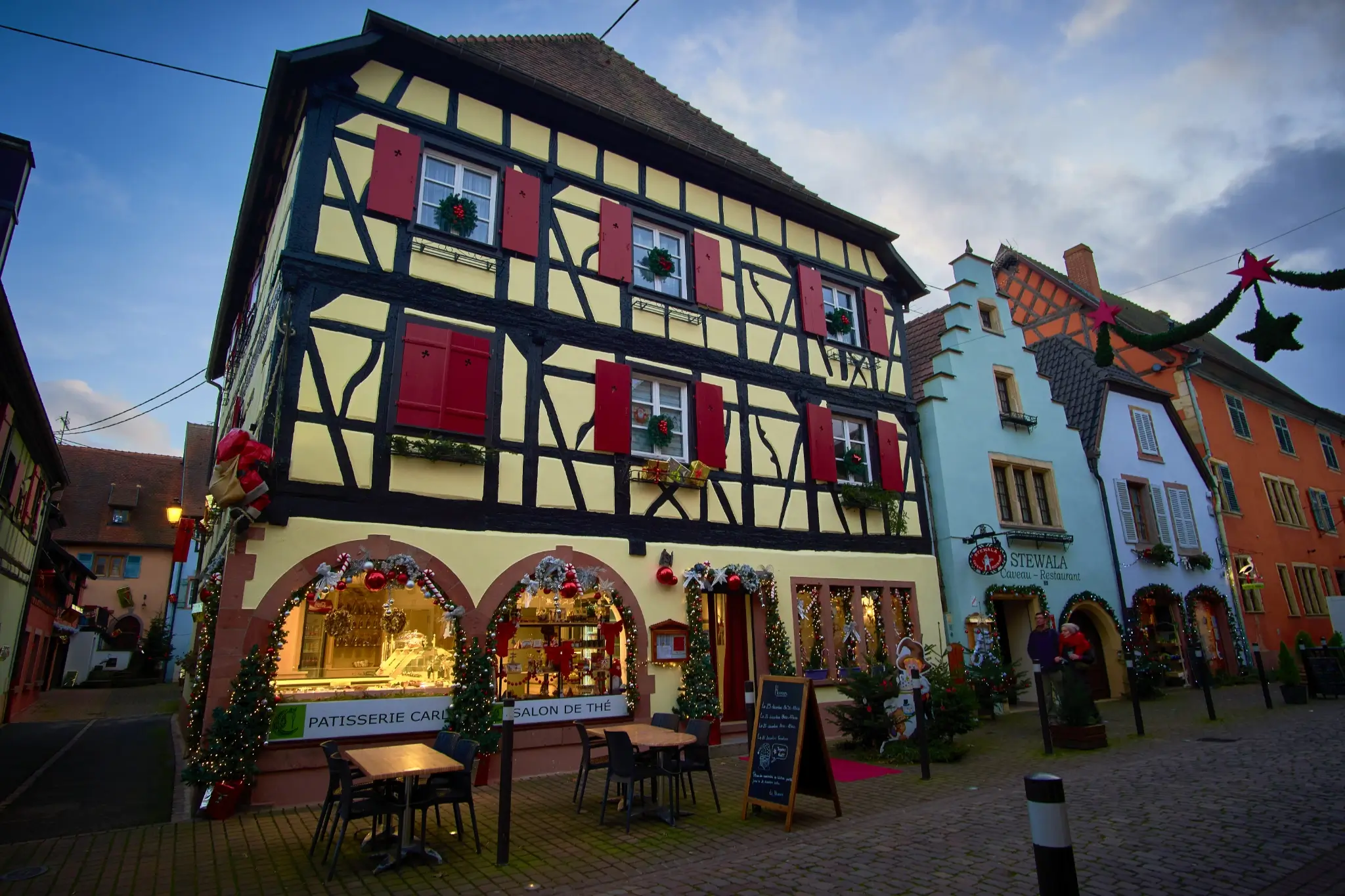
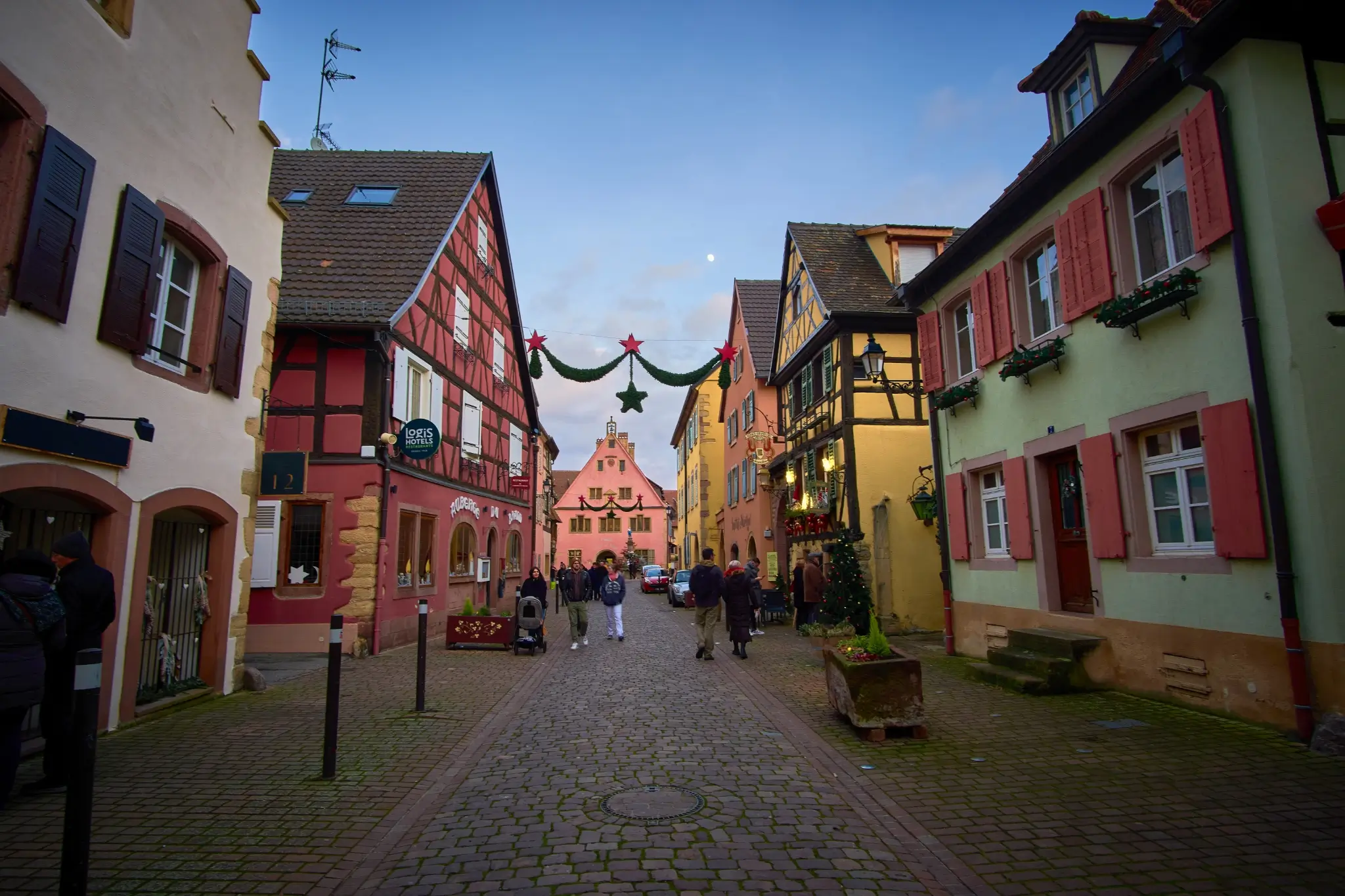
The road winds through sleeping vineyards and frost-covered meadows. The village walls emerge from the darkness like a mirage, wrapped in a thin mist that seems to breathe along with me.
Beyond the main gate, a cold gust, scented with burnt wood and cinnamon, guides me into the square. The stalls shine under the garlands, and from the rooftops fall flakes of light like snow. Lanterns enliven mountains of butter cookies, shiny nougats, and candied fruit. Children run around with sugar-sticky hands.
I turn and spot the Hôtel des Deux Clefs. The ancient beams intertwine like veins, and the sign with two golden keys jingles in the wind. Next to it, a brass bell gleams in the shadows. I touch it. Ding. The door opens with a slight creak, and a woman with light hair welcomes me with a smile.
“We were expecting you,” she murmurs. The air, filled with baked apples and beeswax, follows me up the stairs. “Your room is at the top,” she adds.
In the attic, the yellow light of the lamps casts soft shadows on the beams.
From the window, the tower clock moves its hands as if hesitating between one second and the next. The chime does not mark the hour, but a different time—the time of vision.
I lie down and sense a passage opening between the world I know and one that exists only on winter nights, when someone arrives and dares to still believe in magic.
The next morning I head to Strasbourg.
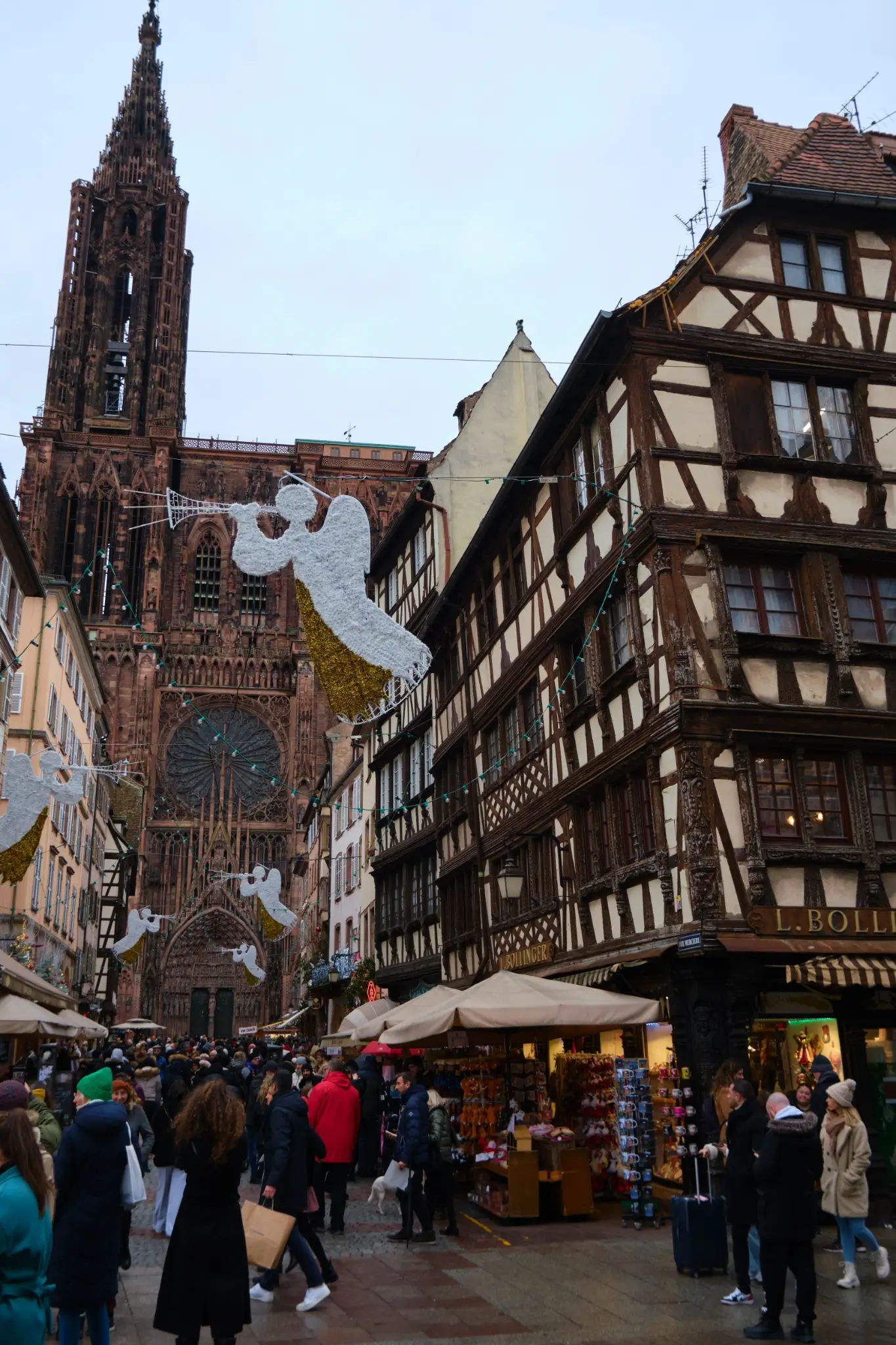
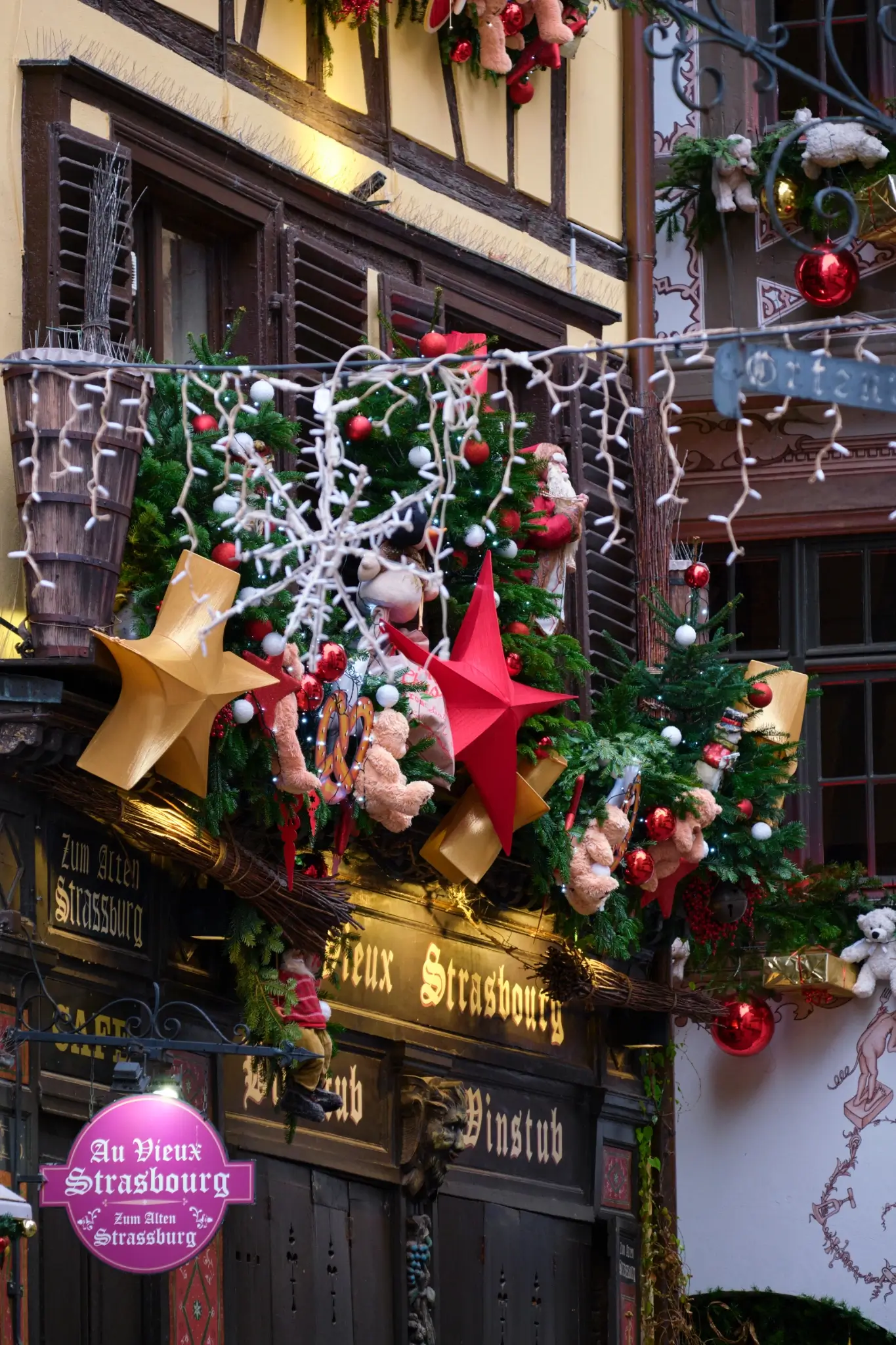
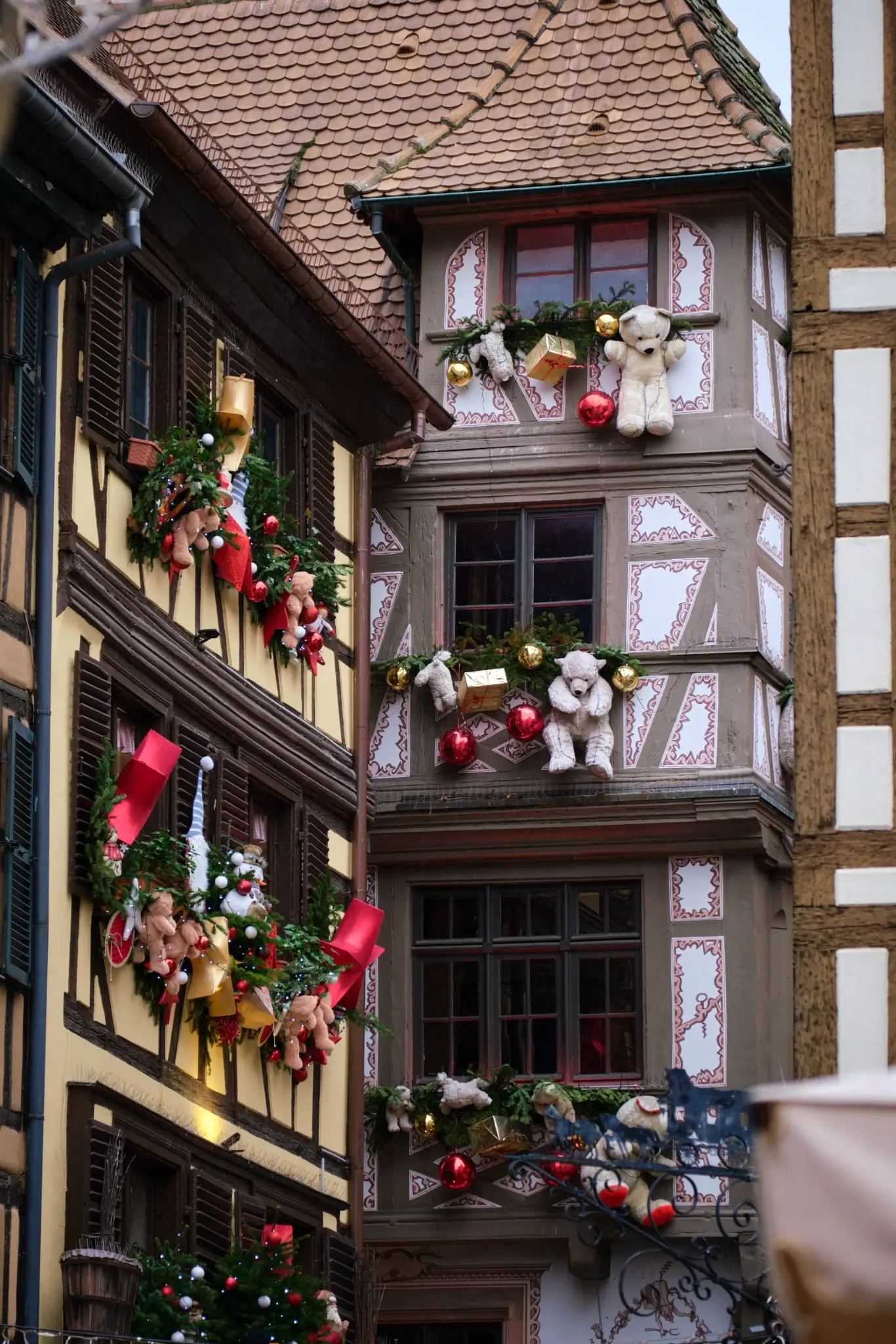
The city challenges the gray sky with a riot of decorations. A warm steam of vin brûlé brushes my face as I breathe in the air heavy with cinnamon and cloves.
Amid musical and olfactory notes, sparkles, and colorful decorations, the cathedral of Notre-Dame appears before me.
I stand still: it rises like a marvel of stone and faith, guardian of eight centuries of history. The spire—once the tallest in Europe—seems to pierce the leaden sky. Victor Hugo called it “a gigantic and delicate miracle,” and at dusk, the pinkish stones seem to glow.
I stroll along the canals, between half-timbered houses and sparkling shop windows. A shopkeeper wishes “Merry Christmas” as he wraps a gift; around him, visitors from every corner of the world watch.
Strasbourg reveals its dual soul: France and Germany intertwined like vin chaud2 and Lebkuchen3. It is the echo of merchants who, centuries ago, animated the Christkindelsmärik, the oldest Christmas market in Europe, founded in 1570.
This centuries-old magic also inspired Disney, which chose an Alsatian village as the model for Beauty and the Beast. The animators were fascinated by the harmony between medieval and Renaissance forms in Riquewihr, recognizing in it the quintessence of a place suspended between reality and fairy tale.
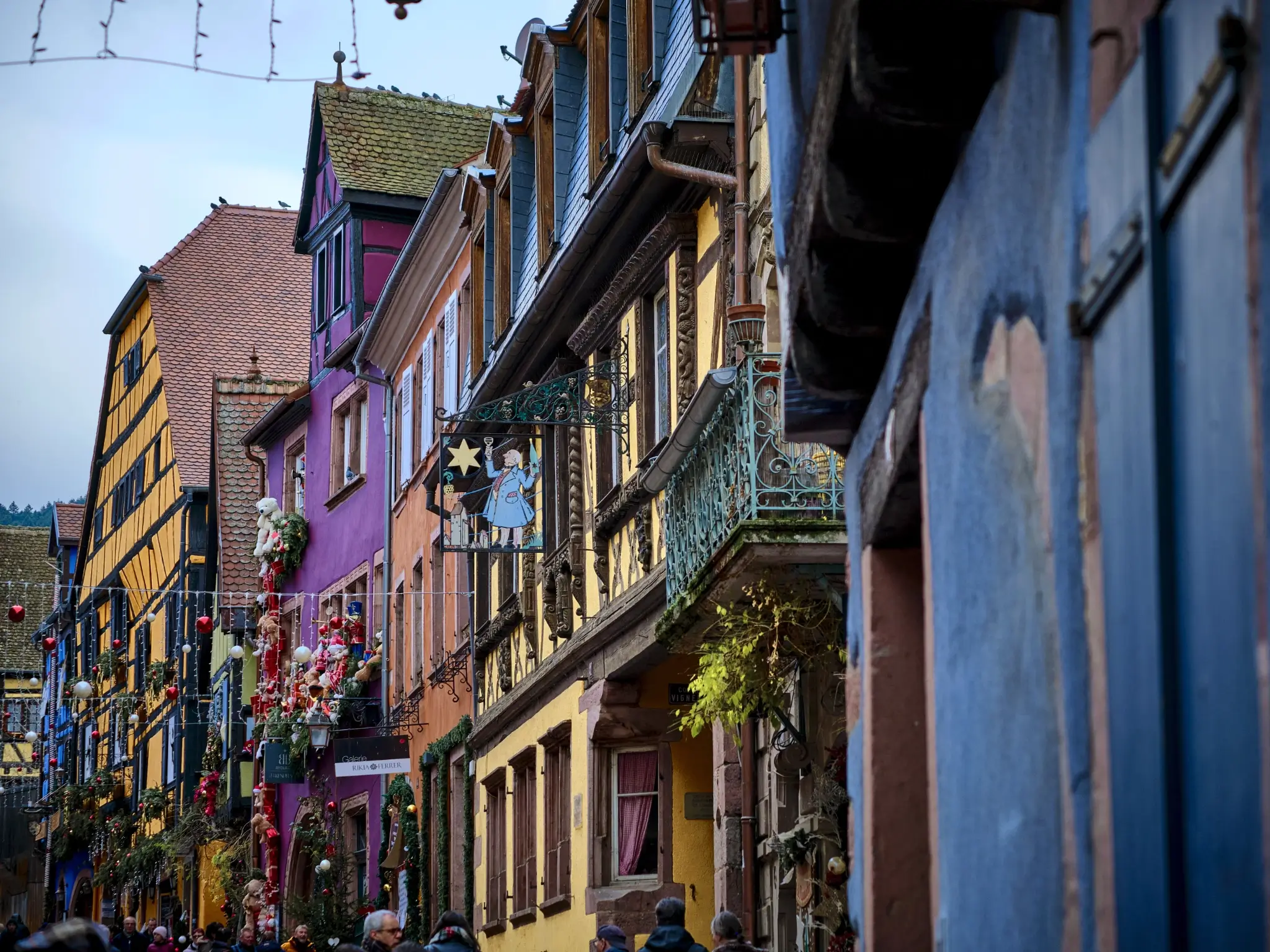
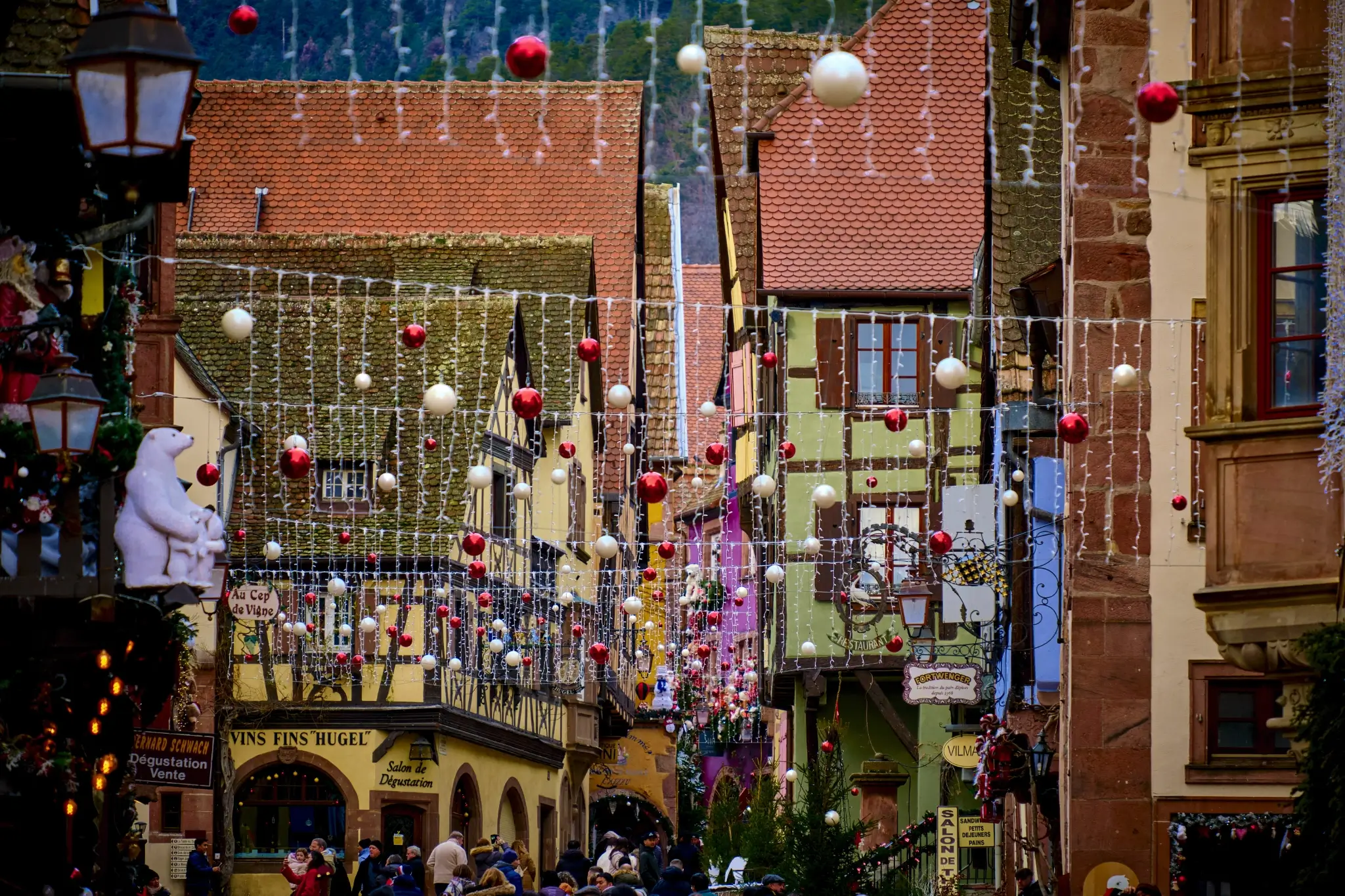
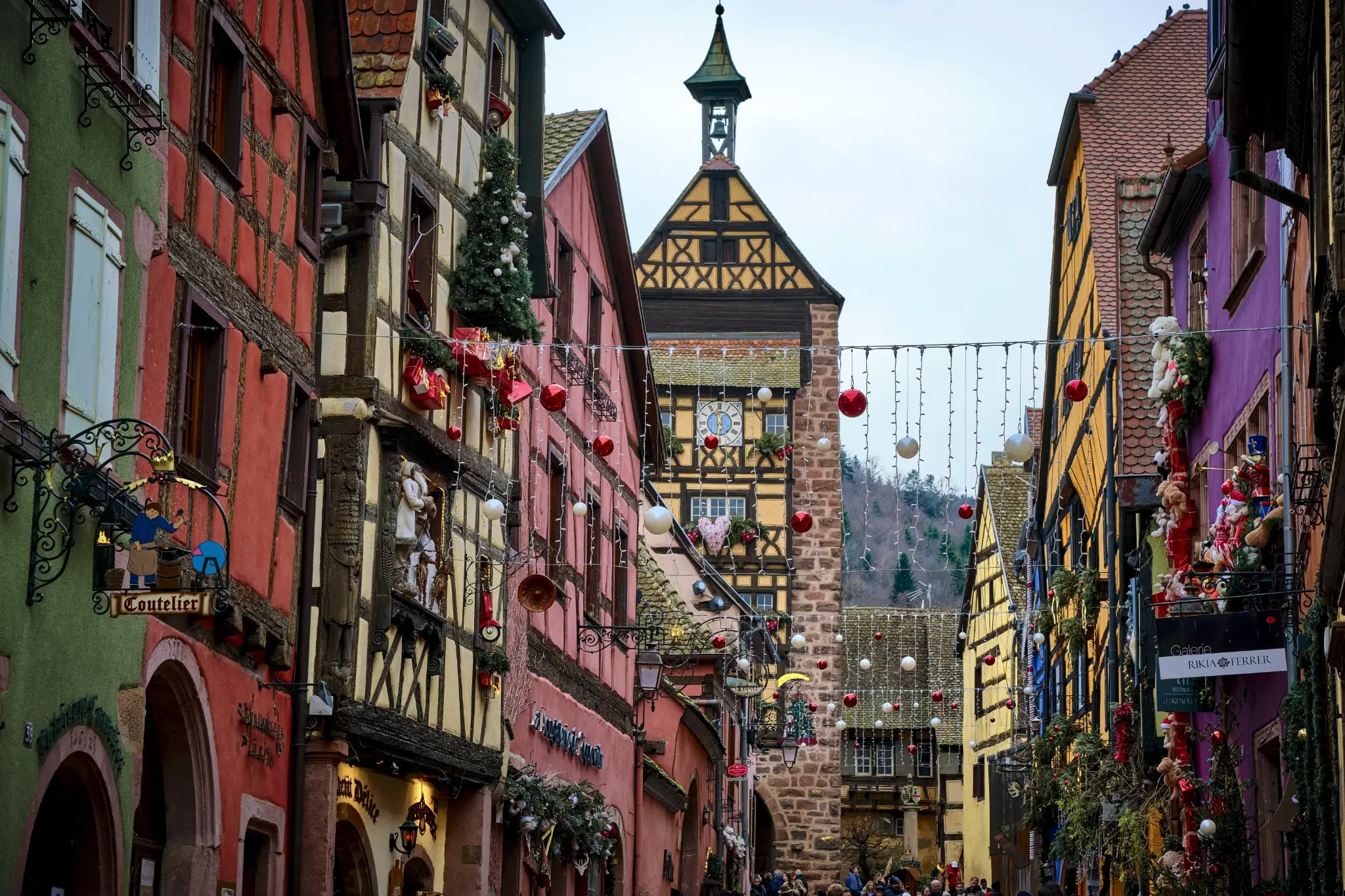
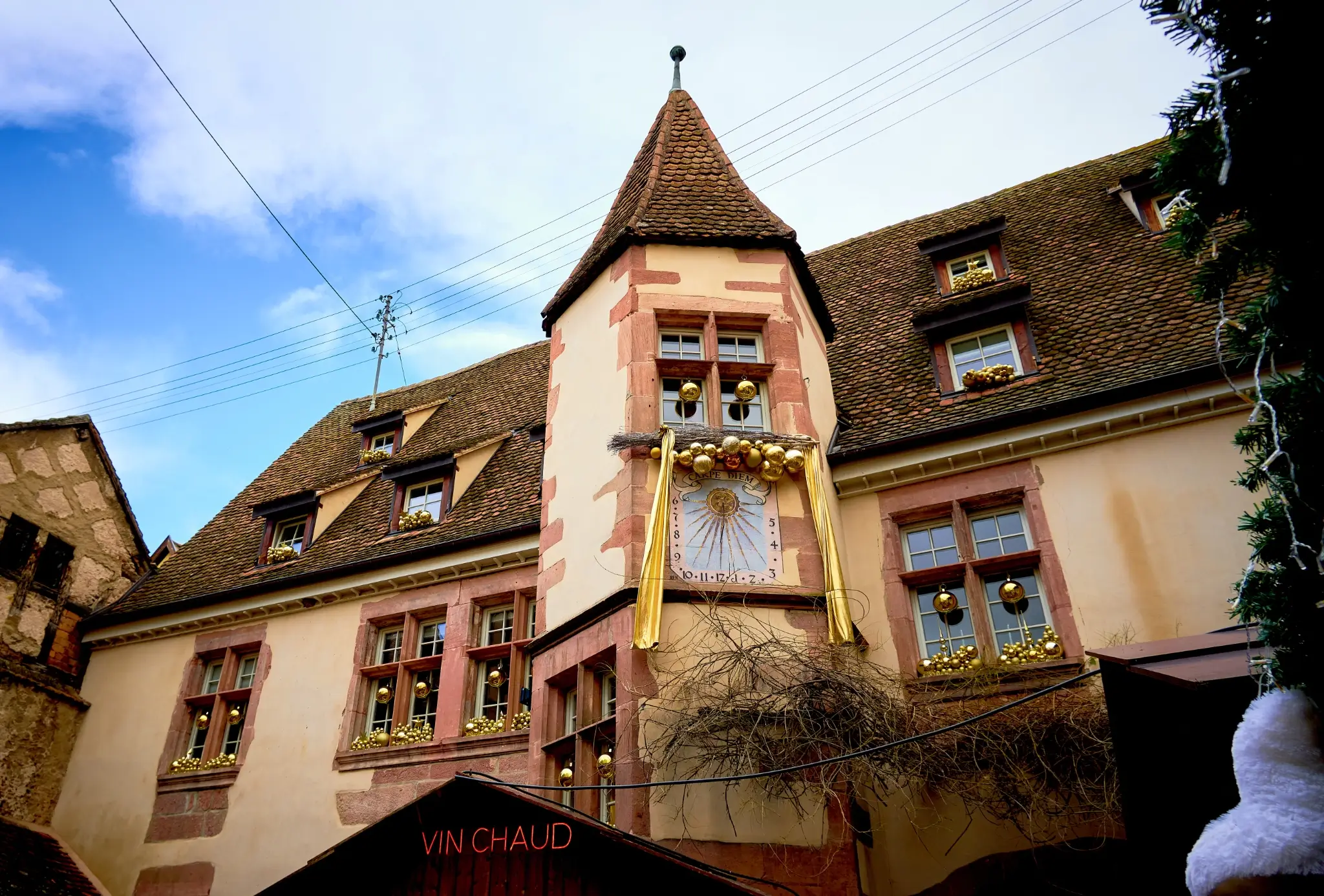
Cobbled streets wind between pastel-colored houses, and the uneven rooftops seem to await Belle leaning out with a book, or the bold laughter of Gaston drifting from the taverns.
In Eguisheim, I walk around the octagonal Saint-Léon castle, under golden beams falling from the lampposts.
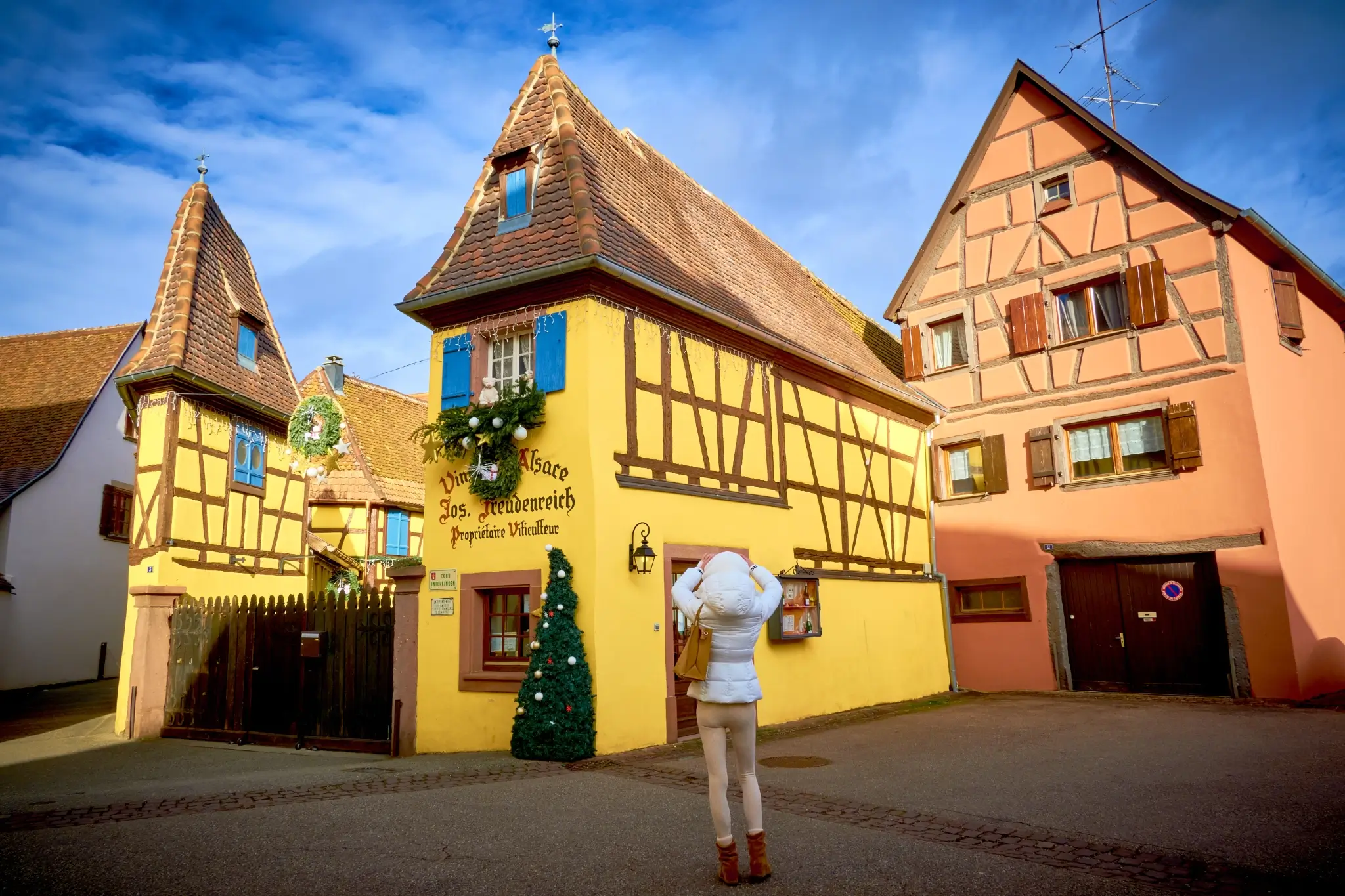
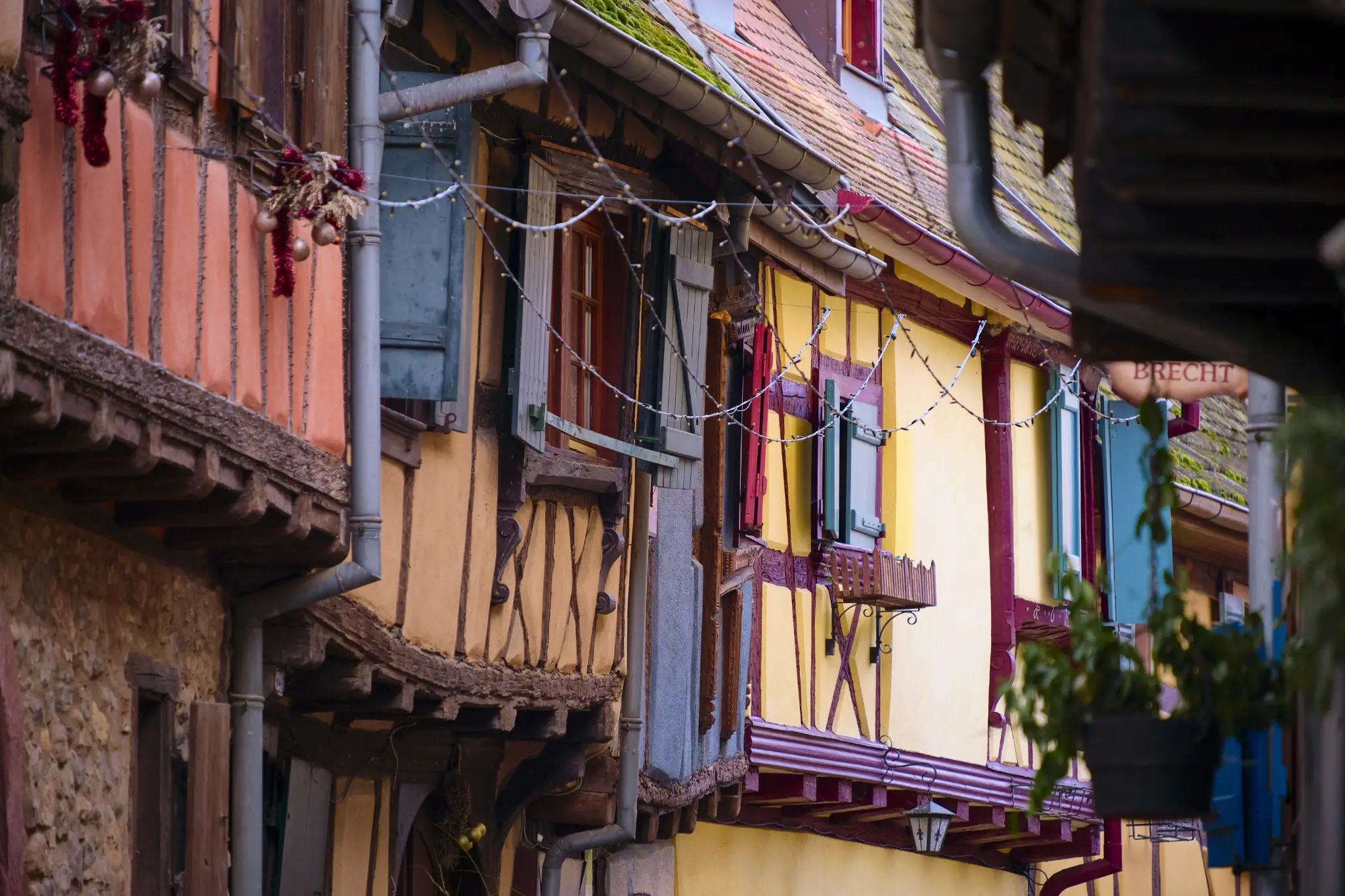
The facades emerge in dusty yellows, warm greens, earthy reds, cobalt blues: shades that once marked prestige and prosperity. Painting a house was expensive; the more intense the color, the higher the owner’s rank.
Even today, those hues tell of the identity and ambitions of those who chose them.
In Colmar, on Christmas Day, a thousand dazzling lights dance over the canals; holly wreaths sway between frost-dusted rooftops.
A hint of imminent snow mingles with the vapors of jus de pomme chaud4. The buildings seem sculpted from sugar and poured into marzipan.
My steps crunch on the frost-glossed cobblestones like caramelized sugar, while my gaze loses itself in the ice crystals hanging from the gutters; there the path reopens toward fabulous worlds my childish imagination once knew how to shape.
It is a marvel that disarms.
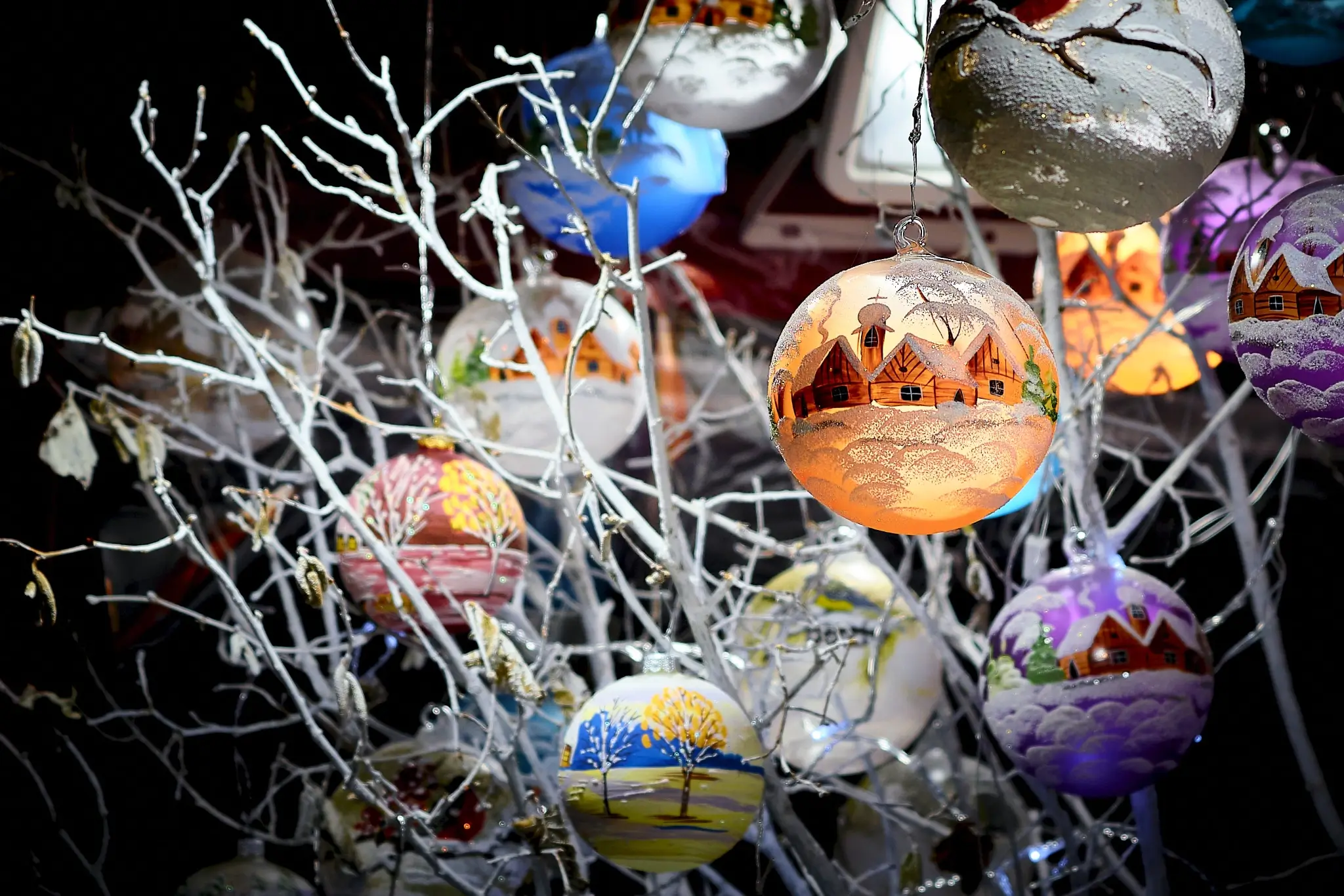
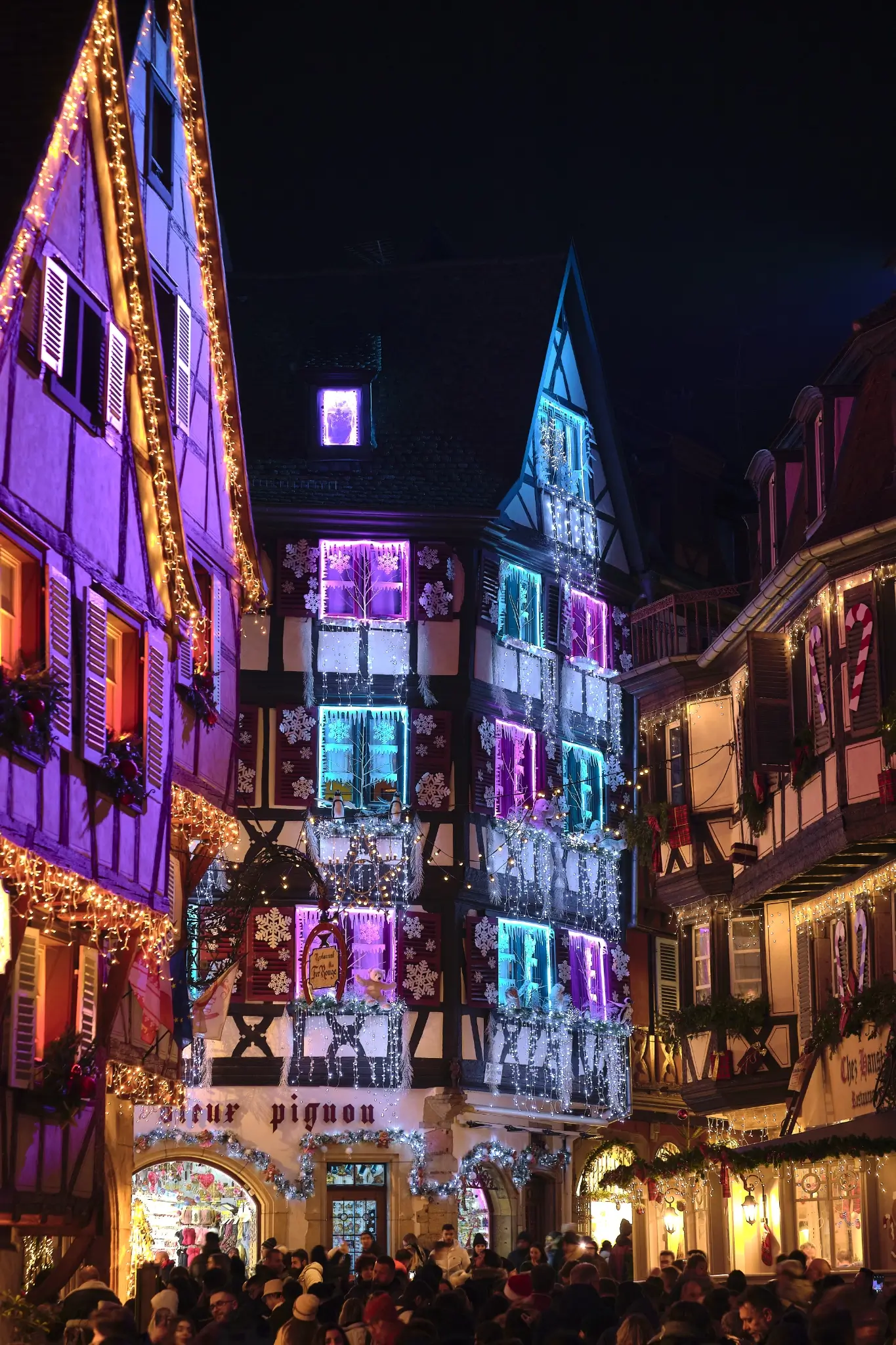
Sparks of childhood return to illuminate the present with the same enchanted excitement of December evenings, when the grandparents’ house echoed with happy voices, anticipation, and nights as sweet as the certainty that every wish could truly come true at the stroke of midnight.
An idyll that spills into the mirror of the canals of Petite Venise.
The small pieds-dans-l’eau5 cafés spread the flickering candlelight over the water, where the glow ripples along with the bridges. On the parapet, an iridescent unicorn walks hand in hand with a little girl, perhaps coming from one of those toy shops capable of turning a gaze into pure wonder.
I stop at Place de l’Ancienne Douane, admiring the customs tower rising like a pen nib poised to rewrite history.
The arcades hold shadows of lost eras; on the walls, frescoes tell biblical and secular stories: kings and beggars, angels and merchants.
From here departed the trades that made the fortune of Colmar’s merchants. Their images seem to have petrified in the 106 heads on the façade of the Maison des Têtes6, a monument to the ever-changing face of wealth.
Under the play of LED lights, the stone comes alive; colors float between light and memory, turning the building into a pulsating dream.
Children clap their hands, adults hold their breath: for a moment, everything hangs suspended.
Then the crowd leads me to Place des Dominicains and the austere Dominican church, guardian of Martin Schongauer’s7 Madonna of the Rose Garden.
That masterpiece radiates the same amber glow that envelops the streets.
From a small wooden house, a lady hands me a piece of kougelhopf8, still warm, while a little boy with a red nose looks at me and blows on a steaming cup of hot chocolate too large for his hands.
Coats and scarves color the queues outside the restaurants; fingers clutch gift packages and smiles mingle with chatter suspended in the cold. A man opens the door of a brasserie: red tablecloths around the decorated tree, while silver ribbons and sparkling baubles catch the flicker of candles. Glasses ready to be raised in toast, the smells of roast and the music of Jingle Bells announce the enchantment of the Christmas dinner.
On the last day, I arrive in Kaysersberg, hidden among the mountains like a secret.
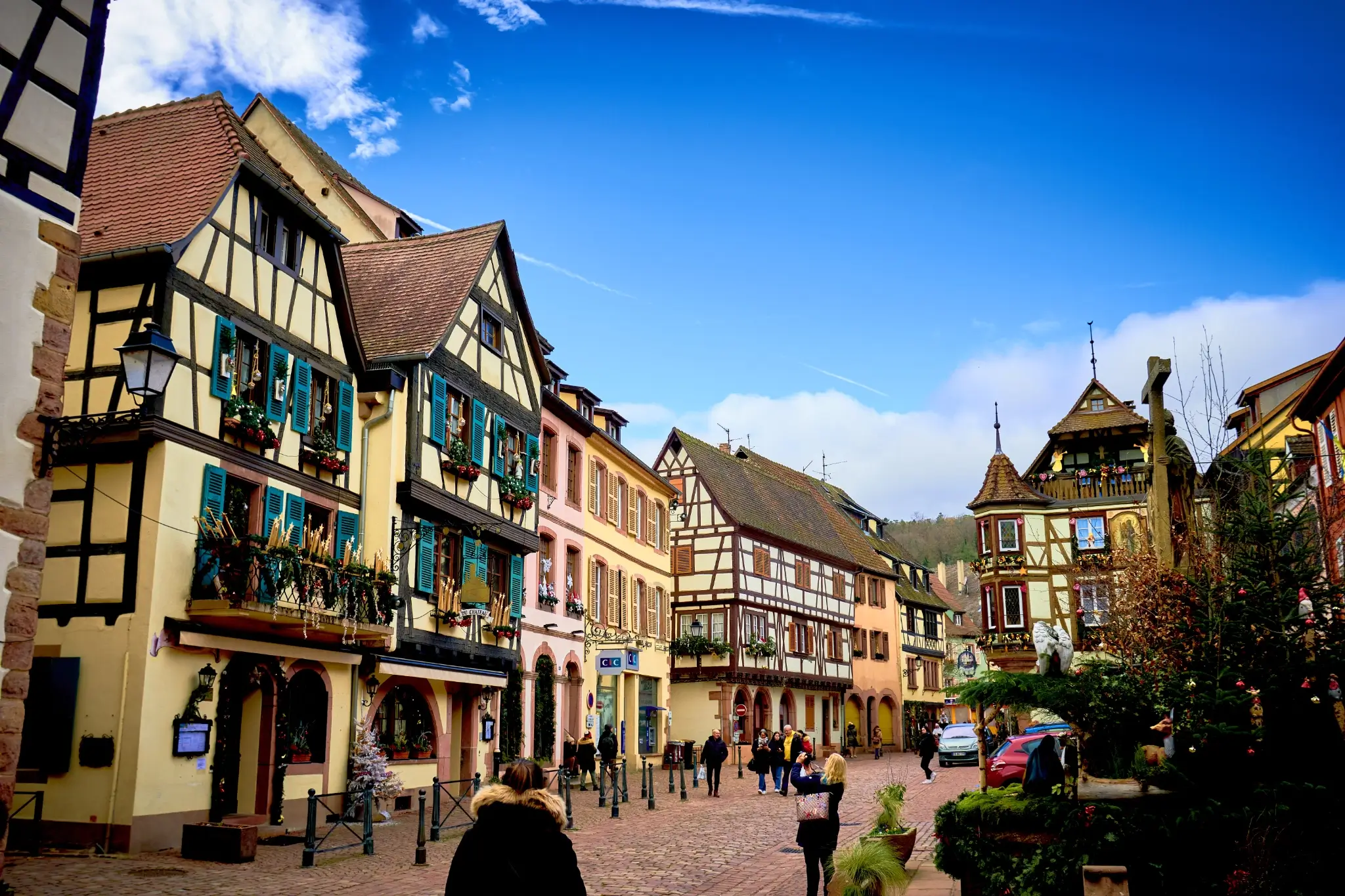
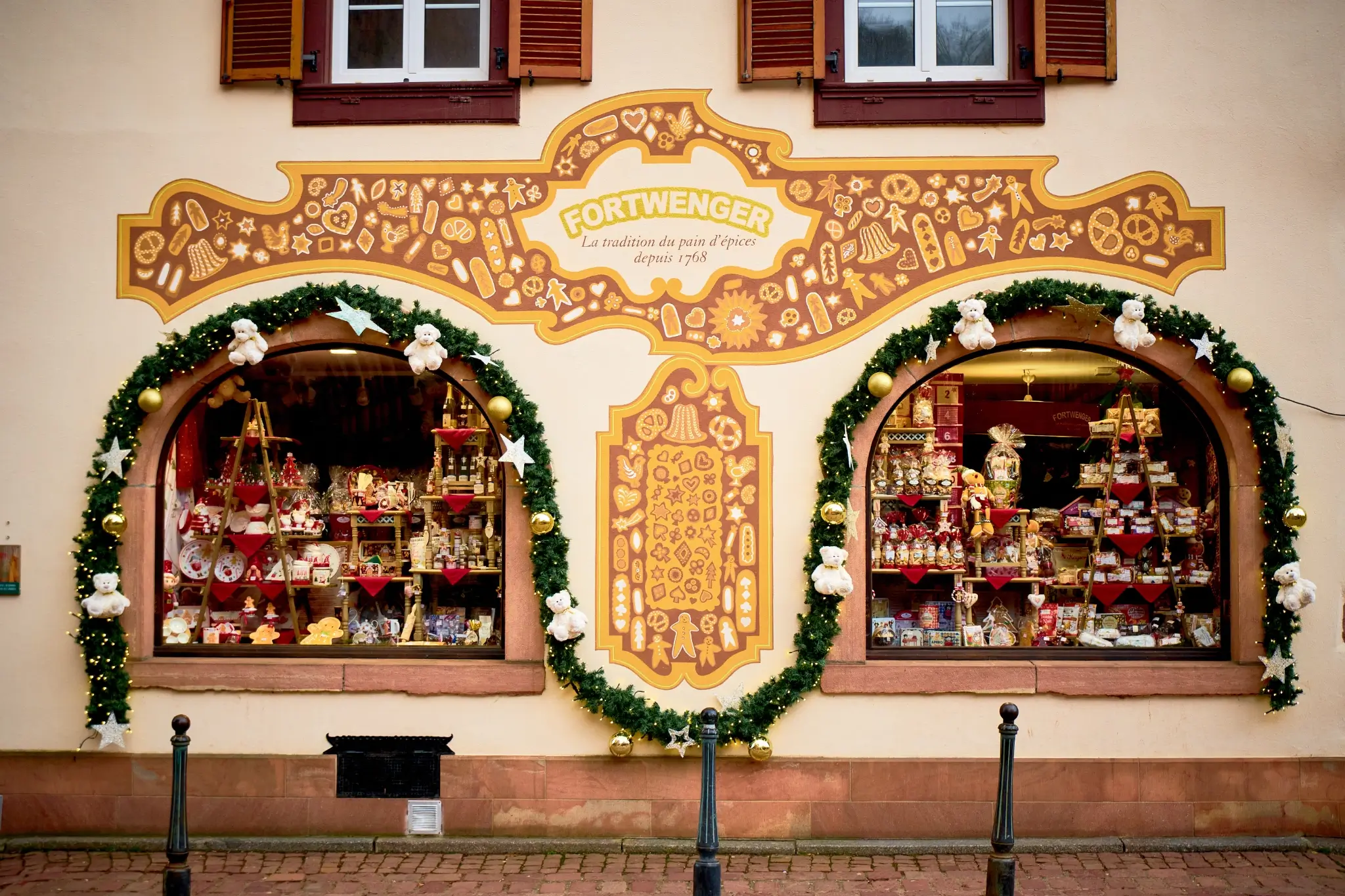
The Weiss River flows slowly through the stone alleys, and the houses, dressed for the holidays, sigh beneath padded bows and fabric hearts. Huge teddy bears watch from the windows like silent guardians. The chime of the bell tower cuts through the air scented with butter and hazelnuts, announcing noon. I stop at a tavern to taste the choucroute garnie9, warm and enveloping like a childhood memory.
And I find myself thinking that, perhaps, the secret of these villages is exactly this: to make us believe, even if only for one night, that time can truly stop to make room for wonder.
Take care and talk soon!
- Vin brûlé – French mulled wine, typically heated with spices. ↩︎
- Vin chaud – Hot spiced wine, the French equivalent of mulled wine. ↩︎
- Lebkuchen – Traditional German spiced cookies associated with Christmas. ↩︎
- Jus de pomme chaud – Hot apple juice, often prepared with spices during winter festivities. ↩︎
- Pieds-dans-l’eau cafés – Literally “feet in the water”; cafés located right beside the canals. ↩︎
- Maison des Têtes – “House of Heads,” a famous 17th-century building decorated with 106 sculpted heads. ↩︎
- Martin Schongauer – German Renaissance painter and engraver active in Alsace. ↩︎
- Kougelhopf – Traditional Alsatian brioche-like cake baked in a distinctive tall mold. ↩︎
- Choucroute garnie – Alsatian sauerkraut served with sausages, meats, and potatoes. ↩︎