
Happy Tuesday and welcome back to another, exciting appointment with My Travel Diary Chronicles.
This new episode is the second part of Tamara‘s summer trip to the Lofoten Islands. You can find the first part here.
This story, beside describing the landscape of the place, reveals the more intimate part of the trip. It’s a powerful picture of how this harsh and difficult land can be at the same time also beautiful and emotional.
Here you go — enjoy the read, then close your eyes and imagine.
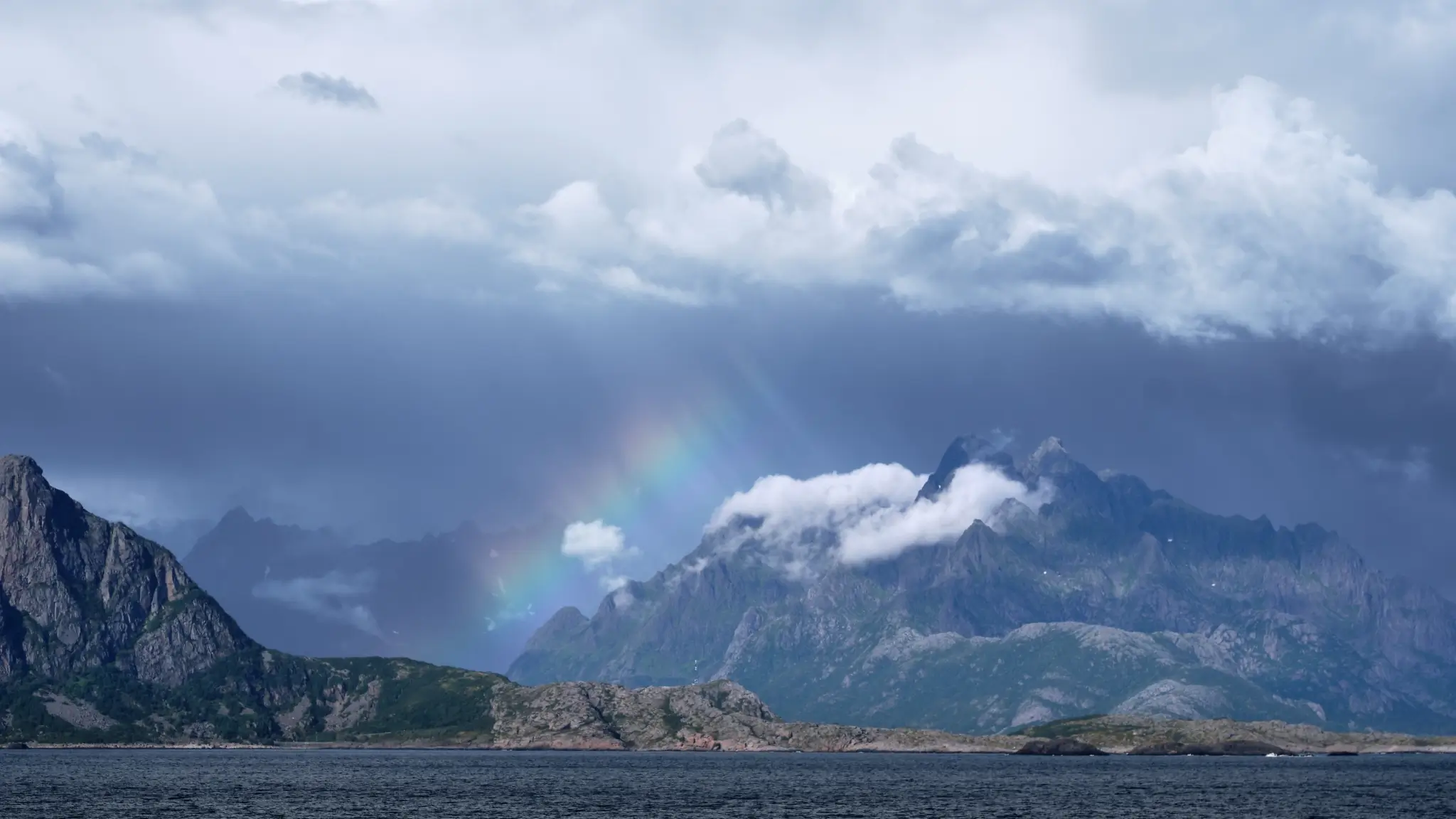
The rubber boat glides over the emerald waters of the Trollfjord. It is a fissure carved into the mountain.
On the shore, a red rorbu resists time and the elements. It is the home of a retiree who has chosen to live where few remain, among meadows mirrored by the water like a liquid mirror.
A human refuge in a landscape that, according to legend, not even the trolls could conquer without paying the price.
According to the tale, two giant trolls, in love with the same valley, fought over it to let their flocks graze there.
The quarrel turned into a titanic battle. Boulders were hurled as weapons, and mountains shifted like toys.
Eventually, when dawn broke, the light caught them and turned them to stone for eternity.
The mountains looming over the fjord today are said to be their motionless bodies — colossal forms of granite and schist, crystallized in an instant of fury.
Even now, on stormy nights, when the wind roars between the rocky walls, fishermen say it is the echo of their interrupted quarrel — an ancient murmur that the mountain returns to the sea.
Suddenly, a powerful beating of wings tears the silence.
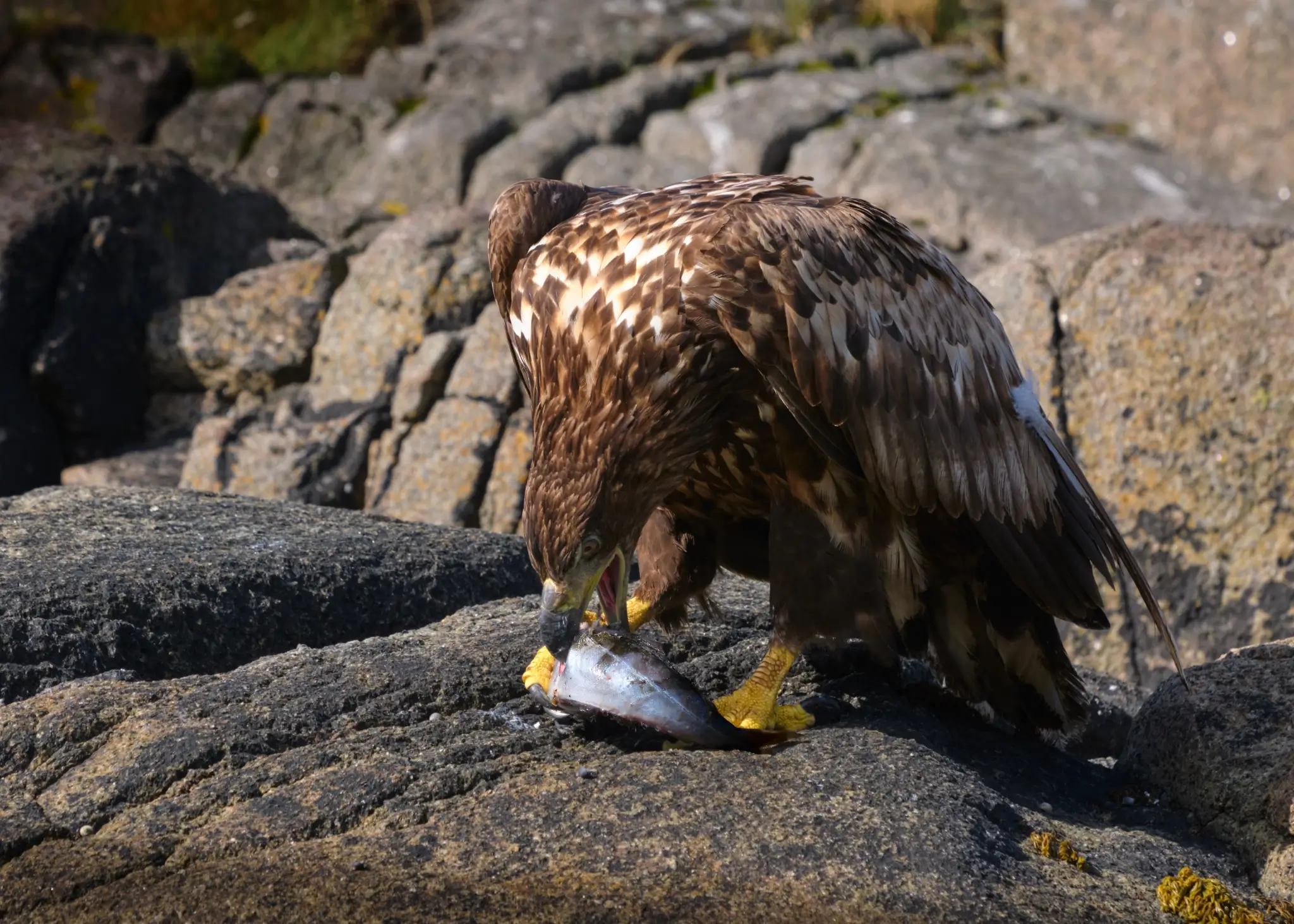
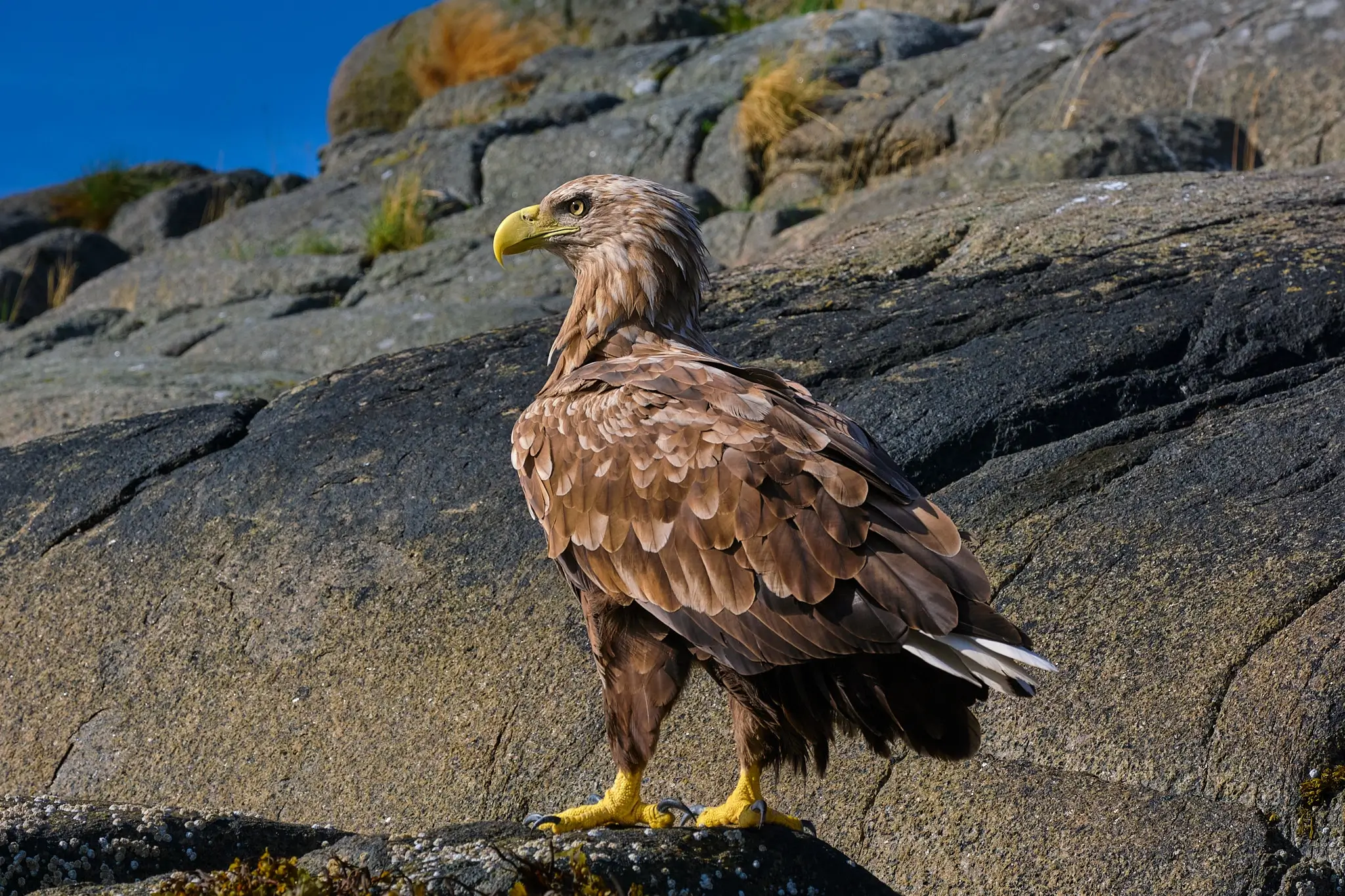
A white-tailed sea eagle dives toward the water with claws outstretched, then reemerges in a flash, clutching a silvery cod.
It is a scene as ancient as the fjord itself — the same gesture that has fed generations of raptors and set the rhythm of these life-filled waters.
Indeed, watching it hunt is like witnessing a natural rite, a ceremony that renews the bond between sky and sea.
That connection between nature and spirit has revealed itself to me many times during my treks across these islands.
Every trail in the Lofoten leads not only to a view but to a form of revelation.
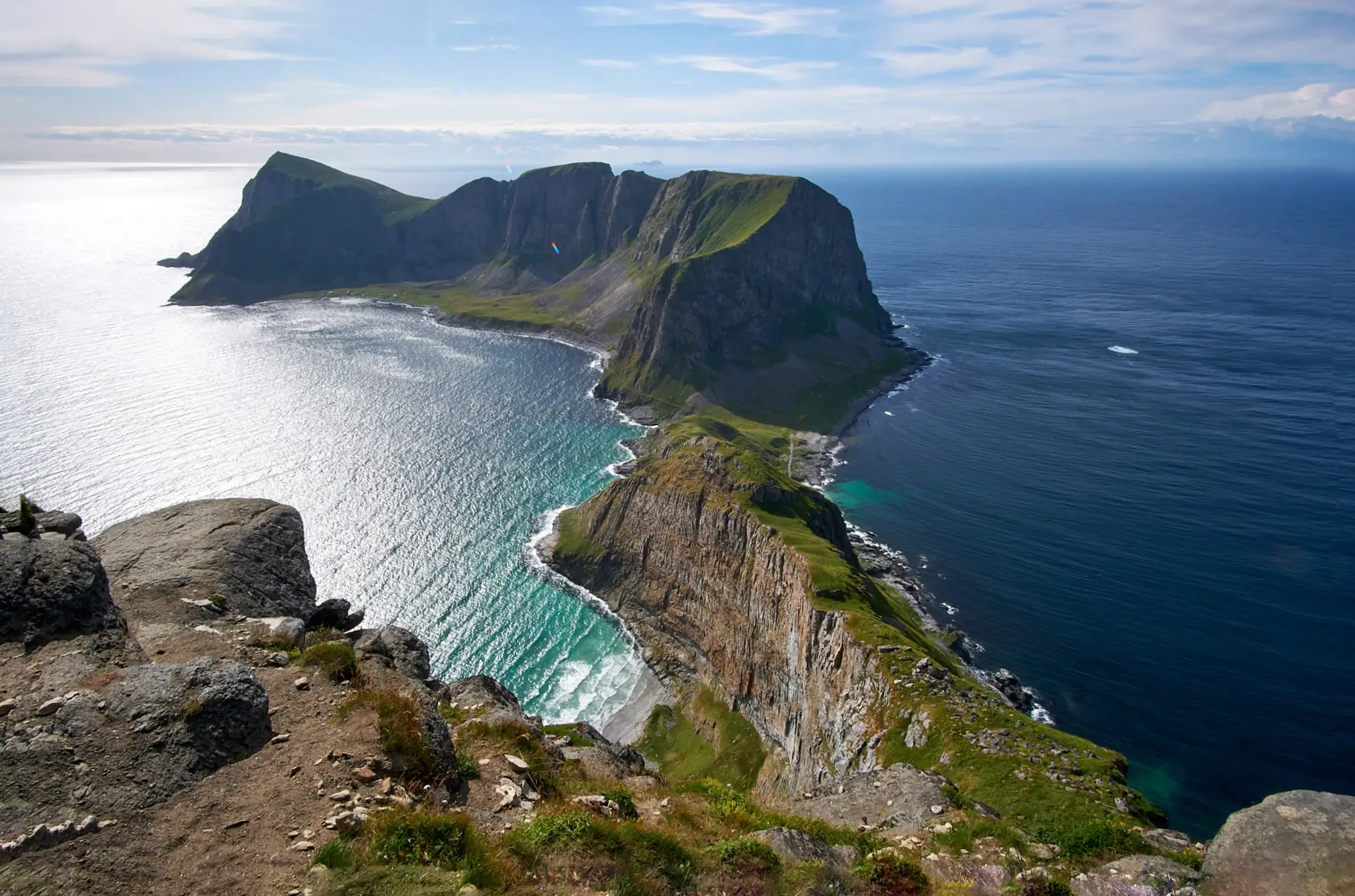
On Værøy, the remotest of the islands, the path to the summit of Heia is an ascent through silence and wind.
I walk among low grasses and dark stones, the scent of damp earth mingling with the smell of the sea.
The sound of the waves fades as I climb, giving way to the rustle of air.
It grows in intensity until it becomes a steady rhythm in my ears.
When I reach the crest, the landscape opens up suddenly and dizzyingly.
There are no barriers. Only bare rock beneath my feet and gusts that push the body, testing its balance.
The cliffs plunge into turquoise water, and the sea merges with the boundless sky.
In that moment, the Lofoten reveal themselves for what they truly are: pure, essential — a visual poem in which the land beats to the rhythm of the ocean.
I remain poised, overwhelmed by beauty and by a sense of euphoria that blends into vertigo.
It is an intoxication of freedom coursing through my body.
For a moment, one almost becomes addicted to what one feels — a lucid ecstasy, a sudden infatuation with life itself.
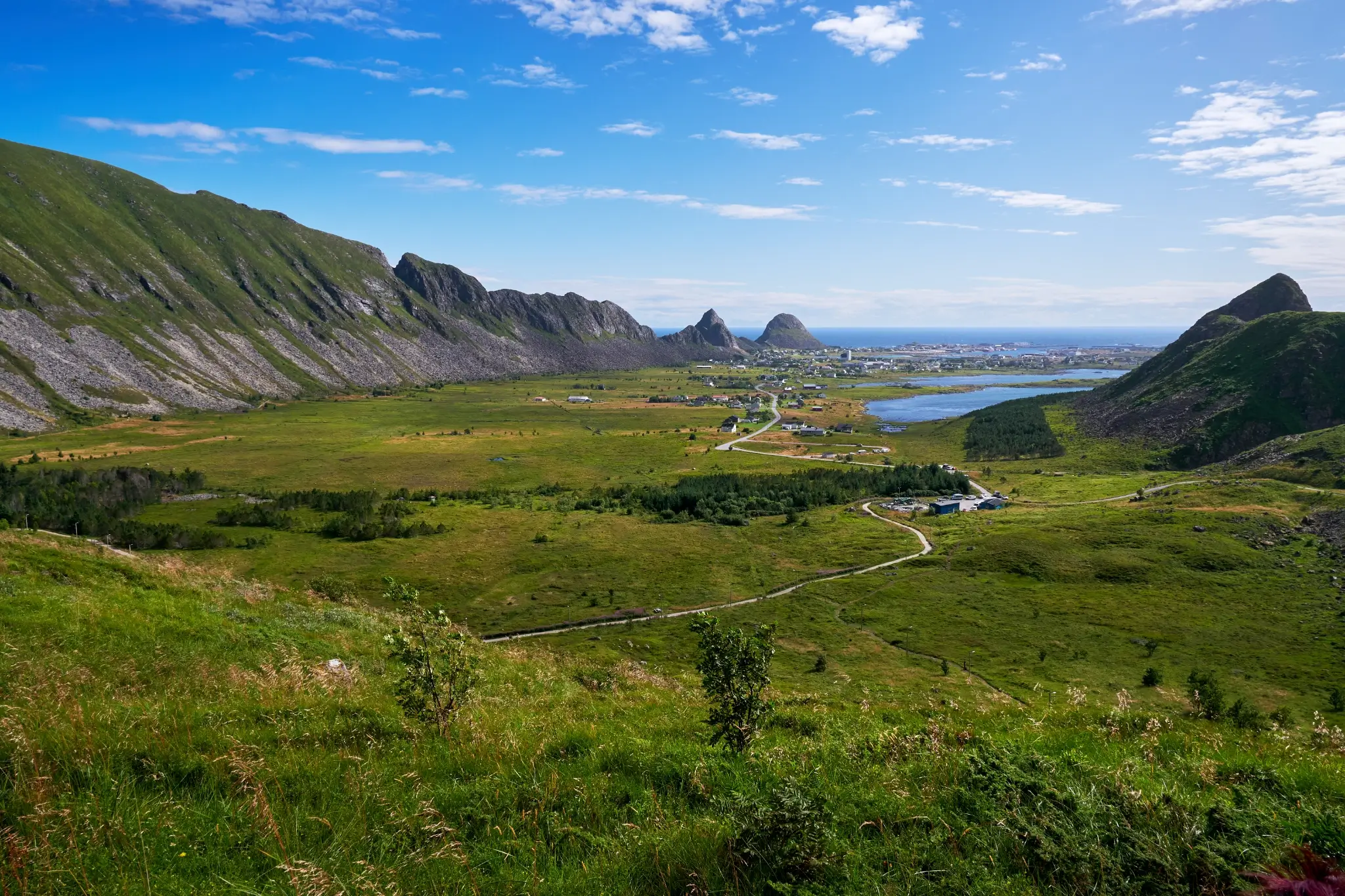
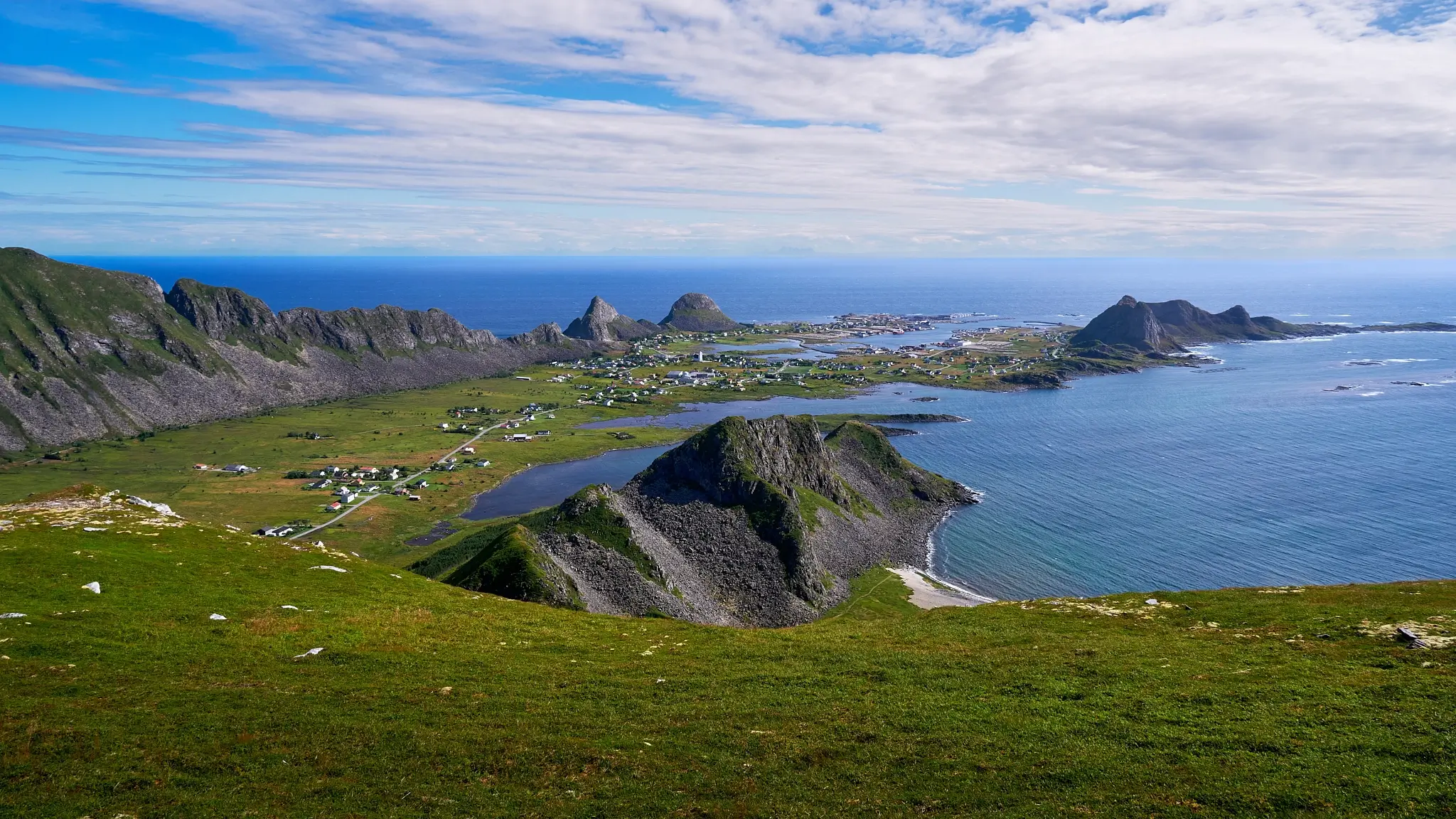
A powerful magnetism makes me reluctant to descend. It calls me back, wanting me still up there, suspended in the wind.
Yet, the Lofoten have their own way of drawing you ever forward.
They ask you not to stop — to follow their breath, to move from one island to the next, as one moves from a thought to a dream.
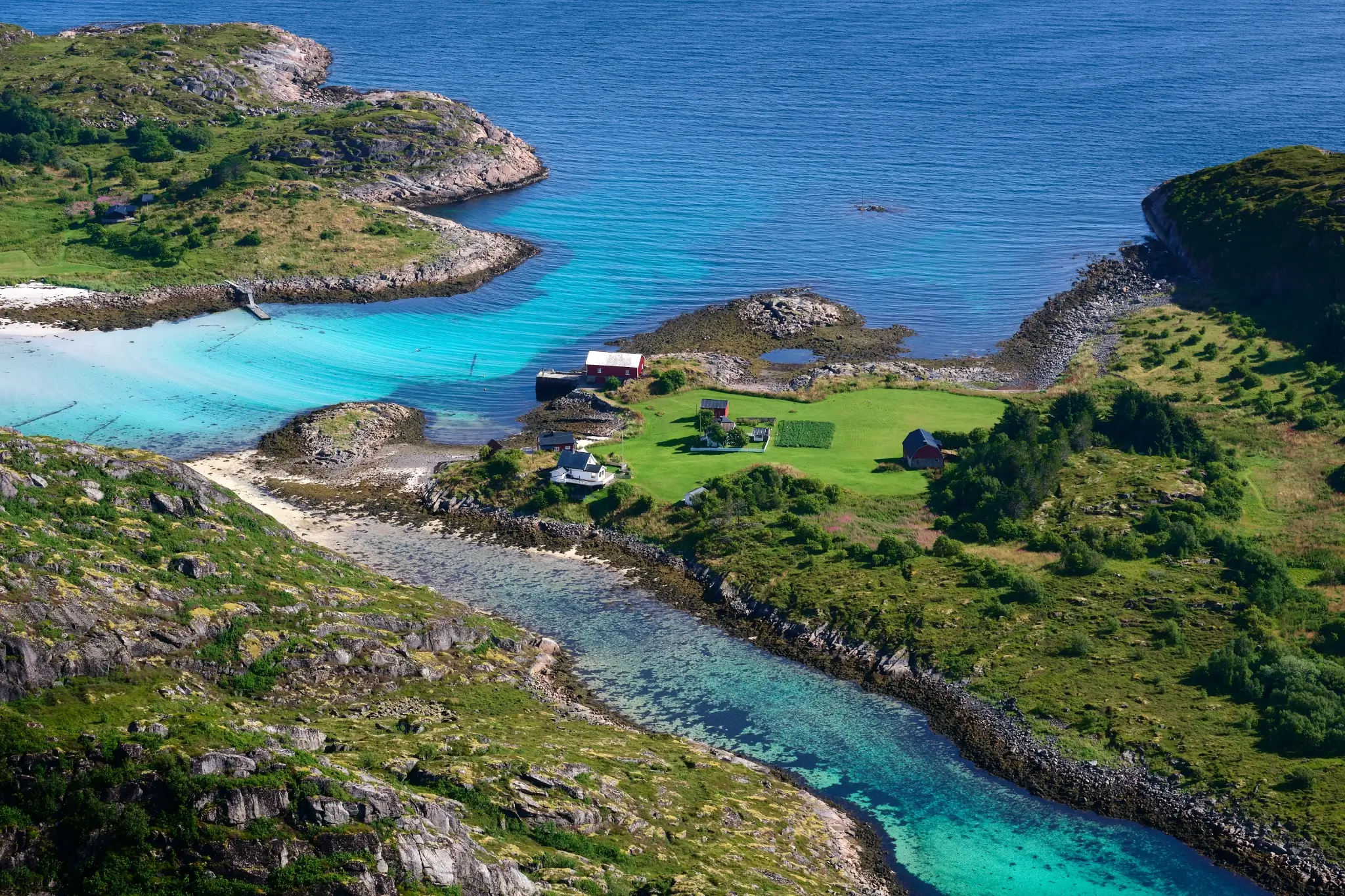
Later, I arrive on Skrova, my boots sinking softly into silver lichens, among bushes of blueberries and wild strawberries.
Behind me, the village houses shrink into a cluster of red dots.
Farther away, shards of land emerge like fragments of a sunken world.
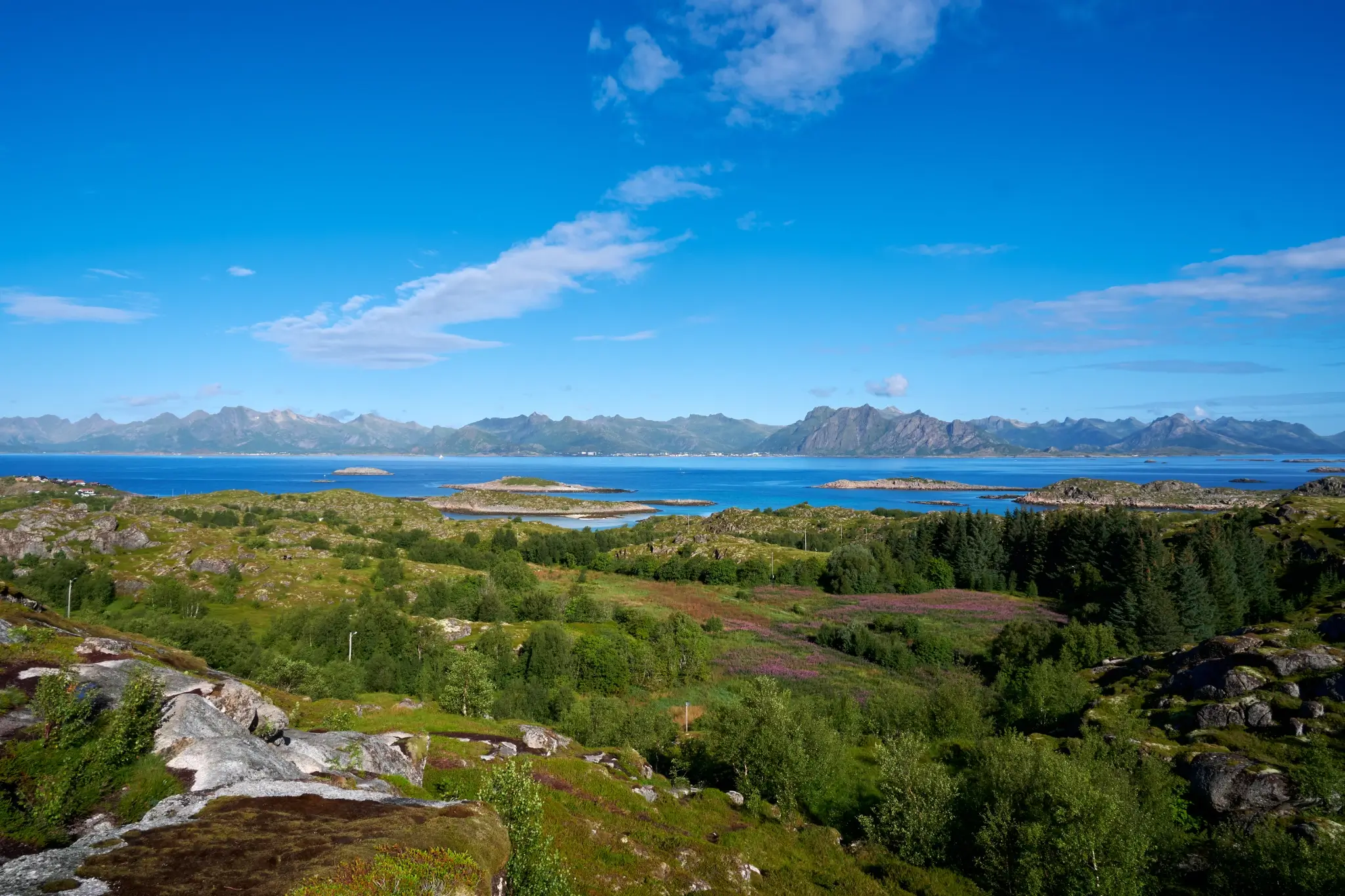
From the summit of Mount Høgskrova, the gaze embraces a tangle of disorienting colors.
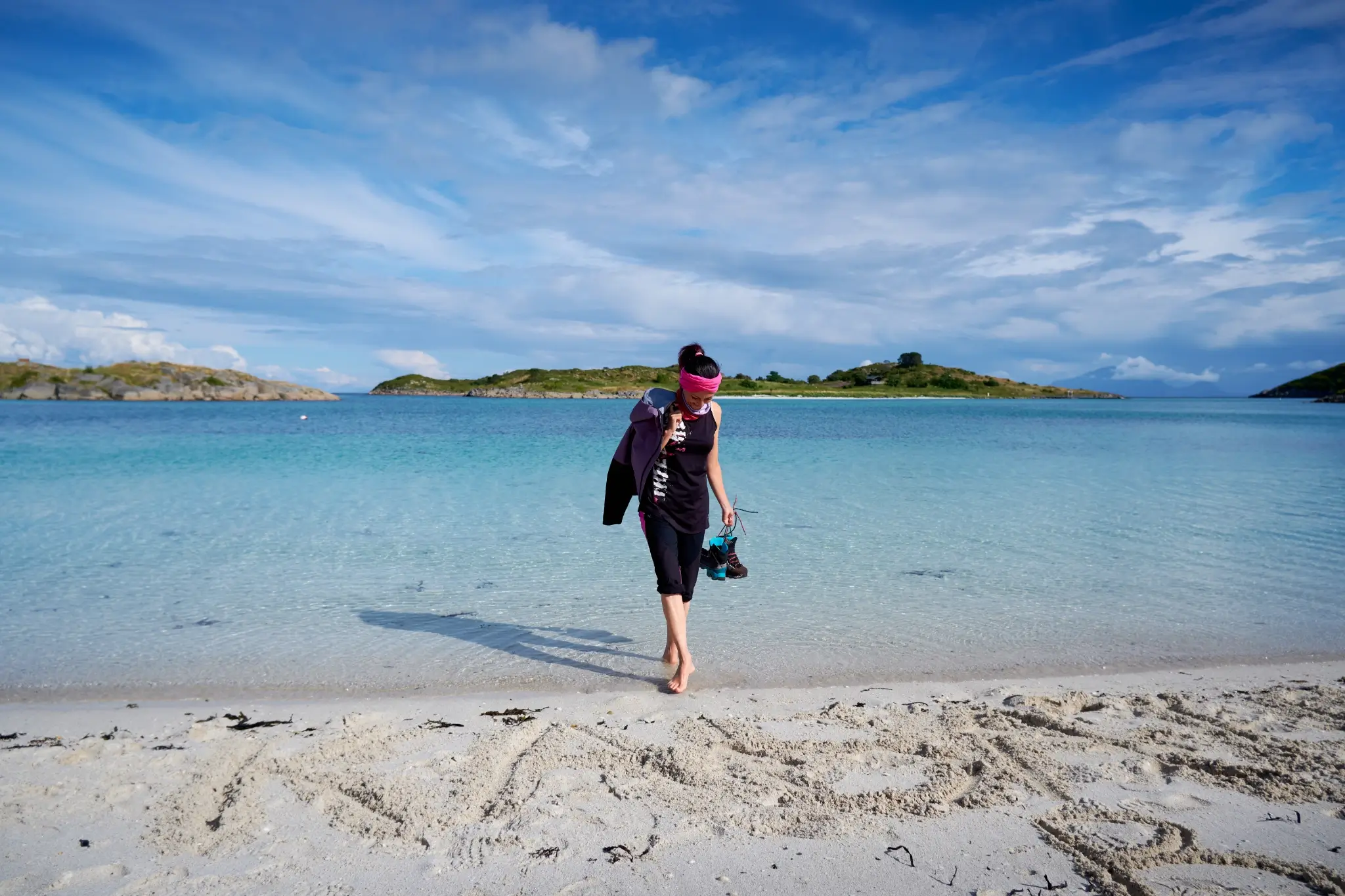
The cobalt blue of the ocean merges with the turquoise of the bays, which open among strips of ivory-colored sand and patches of moss-green grass.
In the distance, an irregular arc of jagged silhouettes traces the profile of the Lofoten Islands on the horizon.
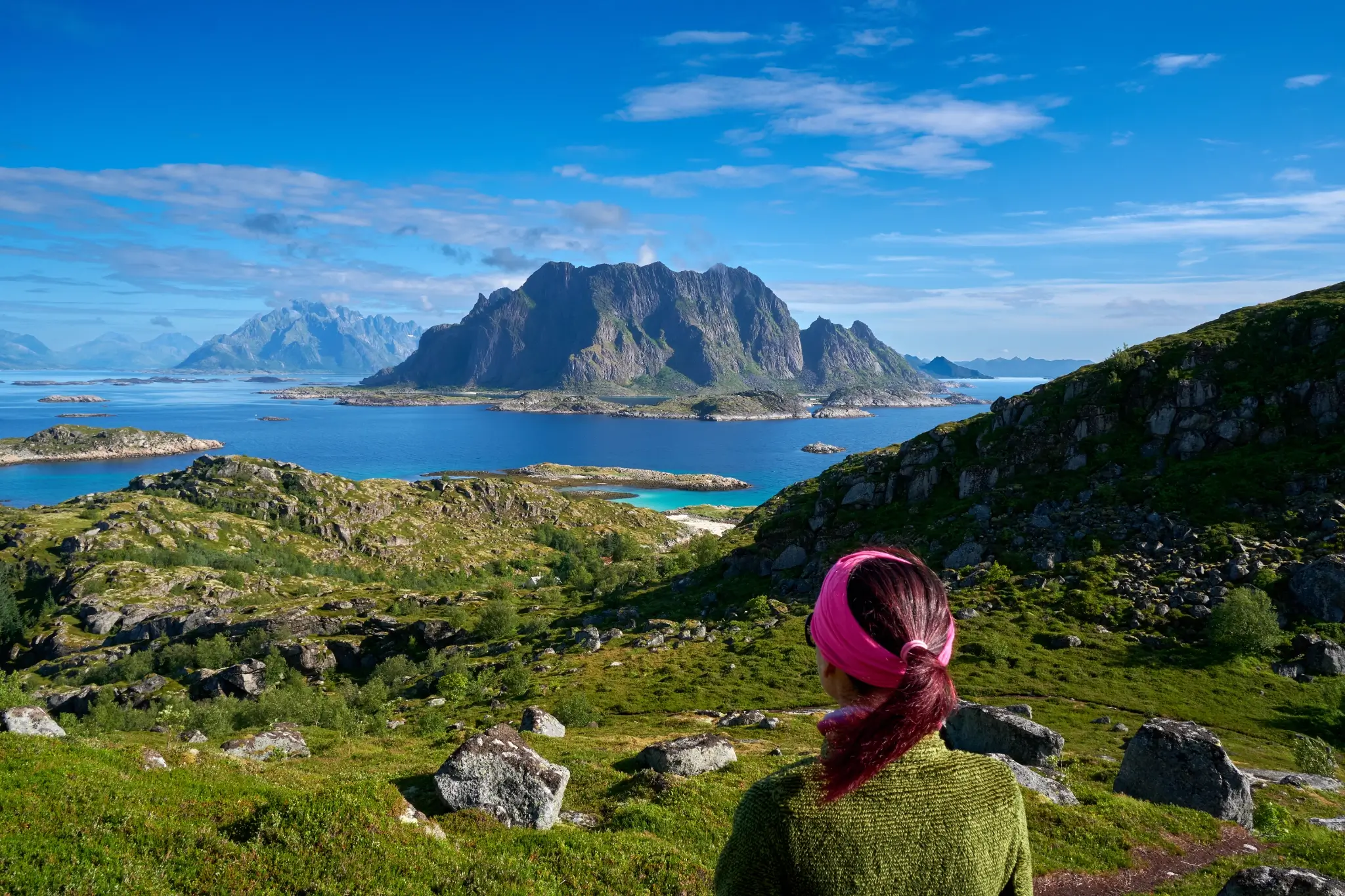
I dare not claim these are the most beautiful lands in the world.
After all, beauty cannot be measured, weighed, or compared.
I can only say that here I have found my sea — a liquid space that reveals itself in shifting reflections.
White sand welcomes each step. Water breathes in emerald transparencies. Granite peaks hang suspended in amber light.
Here there is no sea that exhausts, no sea that burns the skin or leaves sticky salt behind.
Instead, the northern wind blows dry. It dries clothes after a sudden shower and sweeps away the haze even from weary thoughts.
It is a purifying wind — one that does not oppress, a rough caress that gives breath back again.
Take care and talk soon!